
Prevent staining, protect your appliances, and restore clear water — with the right system from the start.
Orange stains, black streaks, a metallic taste, or discoloration of the water are typical signs of iron and manganese in water from private wells. These problems aren’t just a nuisance—they can leave stains in bathrooms, damage appliances, clog filters, affect laundry quality, and raise concerns about water safety.
At DryZone, we design residential iron and manganese removal systems based on water testing, not guesswork. We work with homeowners across Clare, Limerick, Galway, and surrounding areas, where private wells are common and water composition can vary significantly. Before recommending equipment, we check what is actually present in your water, how it behaves, and what treatment process is required for your home.
This means you’re not just installing a filter. You’re getting a properly selected well water treatment system designed to reduce staining, protect your plumbing, improve water clarity, and maintain consistent water quality in your home over the long term.
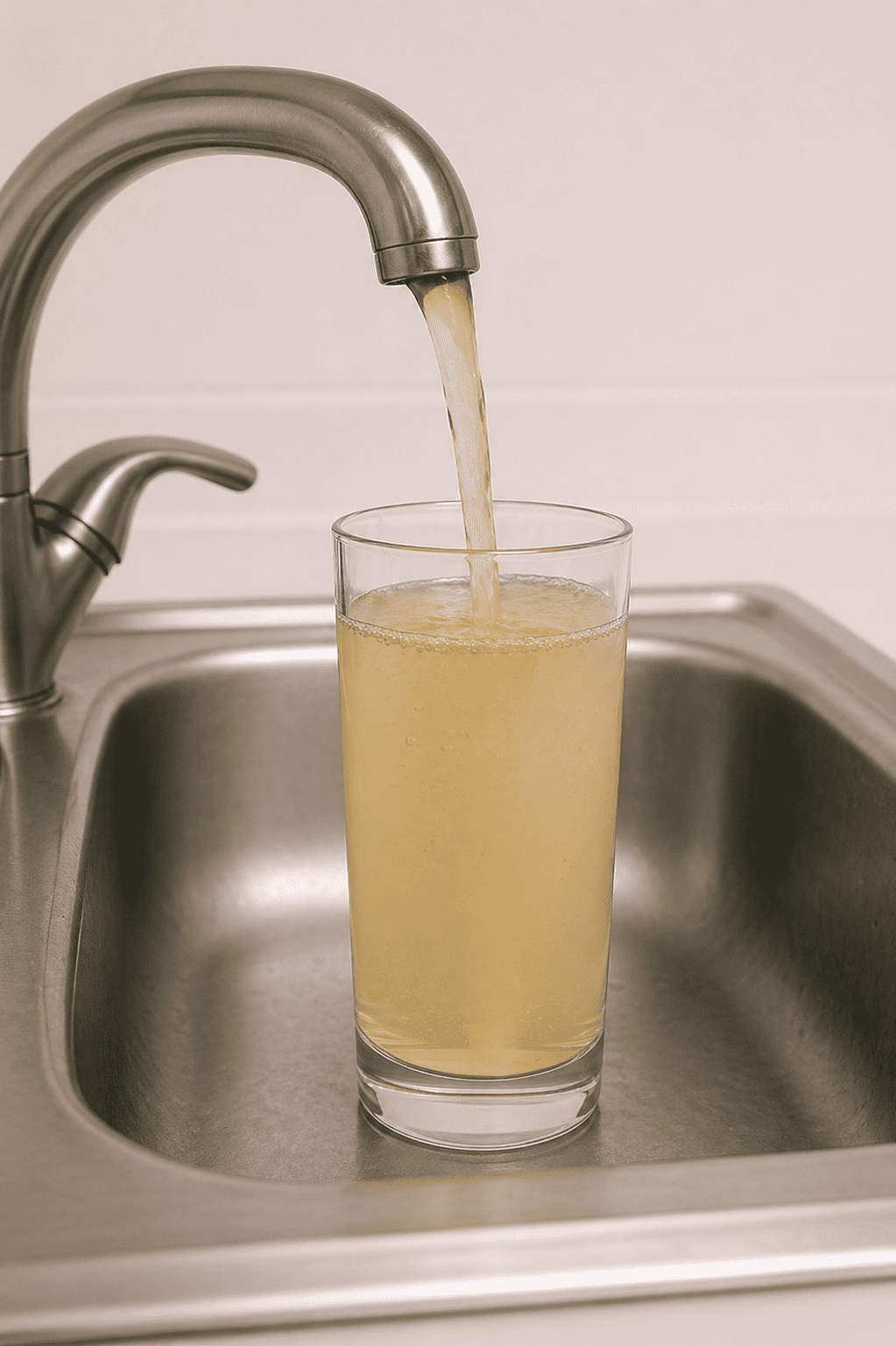
Common Signs of Iron and Manganese in Your Water
Iron and manganese problems are most often identified by visible and noticeable changes in everyday water use. While these issues are especially common in private well supplies, they can also appear in homes connected to mains water — particularly where pipework, storage conditions, or local supply variations affect water quality.
One of the clearest signs is brown or orange staining around sinks, taps, toilets, and showers. This type of staining is typically caused by iron in the water and tends to worsen over time, becoming harder to remove. Manganese presents differently — it usually causes dark grey or black staining, often visible on bathroom fixtures, grout lines, and inside appliances.
You may also notice a metallic smell or taste when using your water, especially from kitchen taps. In addition, filters and cartridges can become blocked much faster than expected due to iron particles accumulating in the system. Laundry is another common indicator — white clothes may turn yellow, grey, or develop uneven discoloration after washing.
These symptoms are not just cosmetic inconveniences. They indicate that your water contains dissolved or oxidised metals that require a properly designed treatment system.
Not sure what is causing staining in your water?
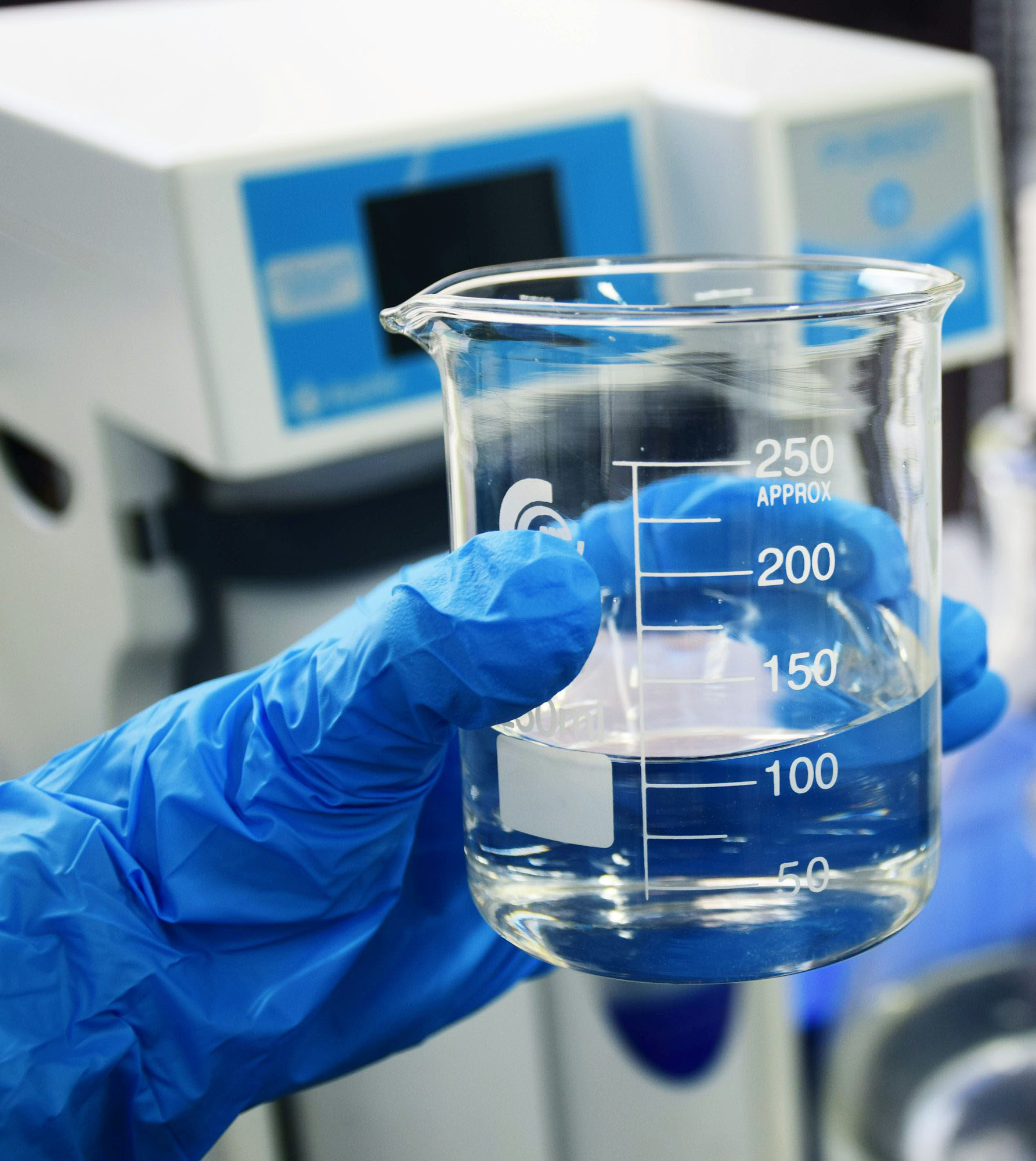
What’s Actually in Your Water?
Iron and manganese in water are not always visible, and their behaviour can change depending on conditions inside your plumbing system. This is why the same water source can appear clear at one moment and cause problems later.
In many cases, iron is present in a dissolved form, meaning it passes through the system without being immediately noticeable. Once exposed to oxygen or changes in pressure, it begins to oxidise, forming solid particles that can then be captured — or pass through — depending on the filtration method used. Manganese behaves in a similar way but is typically more stable and requires more specific treatment conditions to remove effectively.
Another key factor is how water chemistry interacts with your system. Flow rate, oxygen exposure, and pipework conditions all influence when and how these elements become visible. This is why some systems appear to work at first but fail over time — the treatment method does not match the actual form of contamination.
Without proper testing, it is not possible to determine which treatment approach is required. Effective iron and manganese removal depends on understanding these behaviours and selecting a system designed for your specific water conditions.

Why Generic Water Filters Don’t Solve Iron and Manganese Problems
Many homeowners try to fix iron and manganese issues by installing standard water filters or replacing cartridges more frequently. While this may provide a short-term improvement, it rarely solves the problem at its source.
The main issue is that most basic filtration systems are not designed to handle dissolved iron or manganese. These elements often pass straight through standard filters unless they are first properly oxidised and converted into a removable form. Without this step, filters can clog quickly, lose efficiency, or appear to work inconsistently.
Why Iron and Manganese Problems Are Often Misdiagnosed
| Common Situation | Why It Doesn’t Work | What’s Actually Needed |
|---|---|---|
| Installing a standard filter | Dissolved iron and manganese pass through untreated | Oxidation stage before filtration |
| Replacing cartridges frequently | Filters clog without solving the root issue | Correct treatment process, not just filtration |
| Using a water softener as a fix | Not effective for all forms of iron/manganese | System selected based on water composition |
| Choosing a system without testing | Water conditions vary between properties | Water analysis before system selection |
| Trying multiple “quick fixes” | Symptoms return because the cause is untreated | Designed multi-stage solution |
Most iron and manganese issues are not caused by a lack of equipment, but by using the wrong approach.
Effective treatment depends on understanding how your water behaves and applying the correct process — not just installing a product.
Key Water Treatment Technologies and What They Remove
Different water treatment technologies are designed to remove specific types of contaminants. The overview below shows what each system typically removes and its main limitations.In many real-world installations, multiple technologies are combined to address different water quality issues effectively.
| Technology | Removes | Limitations |
|---|---|---|
| Sediment Filtration | Sand, rust, particles | Does not remove dissolved contaminants |
| Activated Carbon | Chlorine, odour, organic compounds | Limited effect on bacteria and nitrates |
| Water Softener | Hardness (calcium, magnesium) | Does not remove bacteria or chemicals |
| Iron Removal Systems | Iron, manganese | Requires proper oxidation and filtration |
| UV Disinfection | Bacteria, viruses | Requires clear water and pre-filtration |
| Reverse Osmosis | Nitrates, heavy metals, dissolved solids | Typically used for drinking water only |
These technologies are not used in isolation.
The correct combination depends entirely on how iron and manganese behave in your water — which is why testing is essential before any system is selected.

How We Solve Iron and Manganese Problems in Your Water
Effective iron and manganese removal is not based on a single product — it is a step-by-step process designed around your specific water conditions. At DryZone, we follow a structured approach to ensure the system works reliably, not just initially, but over time.
The first step is water testing. This allows us to identify the exact form of iron and manganese present, along with other factors such as pH, oxygen levels, and overall water chemistry. These details determine whether the solution requires oxidation, specialised filtration media, or a combination of treatment stages.
Based on this data, we design and install a system matched to your home’s water supply, usage, and flow conditions. This ensures that the treatment process is properly sized and configured, rather than relying on generic setups that may only partially address the issue.
After installation, we verify system performance to confirm that the treatment is working as intended. This step is often overlooked, but it is essential to ensure that iron and manganese levels are reduced effectively and that the system remains stable under real operating conditions.
This approach ensures that your water is not just temporarily improved, but consistently treated using a solution designed specifically for your property.

Is Your Home at Risk of Iron and Manganese Problems?
Iron and manganese issues are most commonly associated with private water supplies, but they can affect a wider range of homes depending on local conditions and infrastructure.
Homes using private wells or boreholes across County Clare, County Limerick, and County Galway are particularly at risk due to natural mineral content in groundwater. In these areas, water composition can vary not only between regions but even between neighbouring properties.
Properties with older plumbing systems may also experience iron-related issues, even when connected to mains water. Over time, internal pipe corrosion or sediment buildup can introduce discolouration, metallic taste, and deposits within the system.
Homes with low or inconsistent water usage — such as holiday properties or houses with storage tanks — may notice issues becoming more visible after water sits in the system. Changes in pressure, seasonal variation, or maintenance work on the supply network can also affect how iron and manganese behave.
If your home falls into any of these categories, it is important to understand that these problems rarely resolve on their own. Identifying the source and behaviour of the issue is the first step toward a reliable, long-term solution.
How We Match the Right Solution to Your Water
| Step | What We Look At | Why It Matters | Typical Solution Approach |
|---|---|---|---|
| Water Testing | Hardness levels, mineral content | Confirms if a water softener is needed | Water softener if hardness is high |
| Additional Water Factors | Iron, manganese, odour, clarity | A softener alone may not solve these issues | Combined system (e.g. filtration + softener) |
| Water Source | Private well or mains supply | Well water often has more complex issues | Tailored multi-stage treatment if required |
| Household Usage | Property size, water demand | Ensures system capacity is correct | Properly sized system for consistent performance |
| Plumbing Setup | Existing system and layout | Affects installation and long-term reliability | Correct integration with minimal disruption |
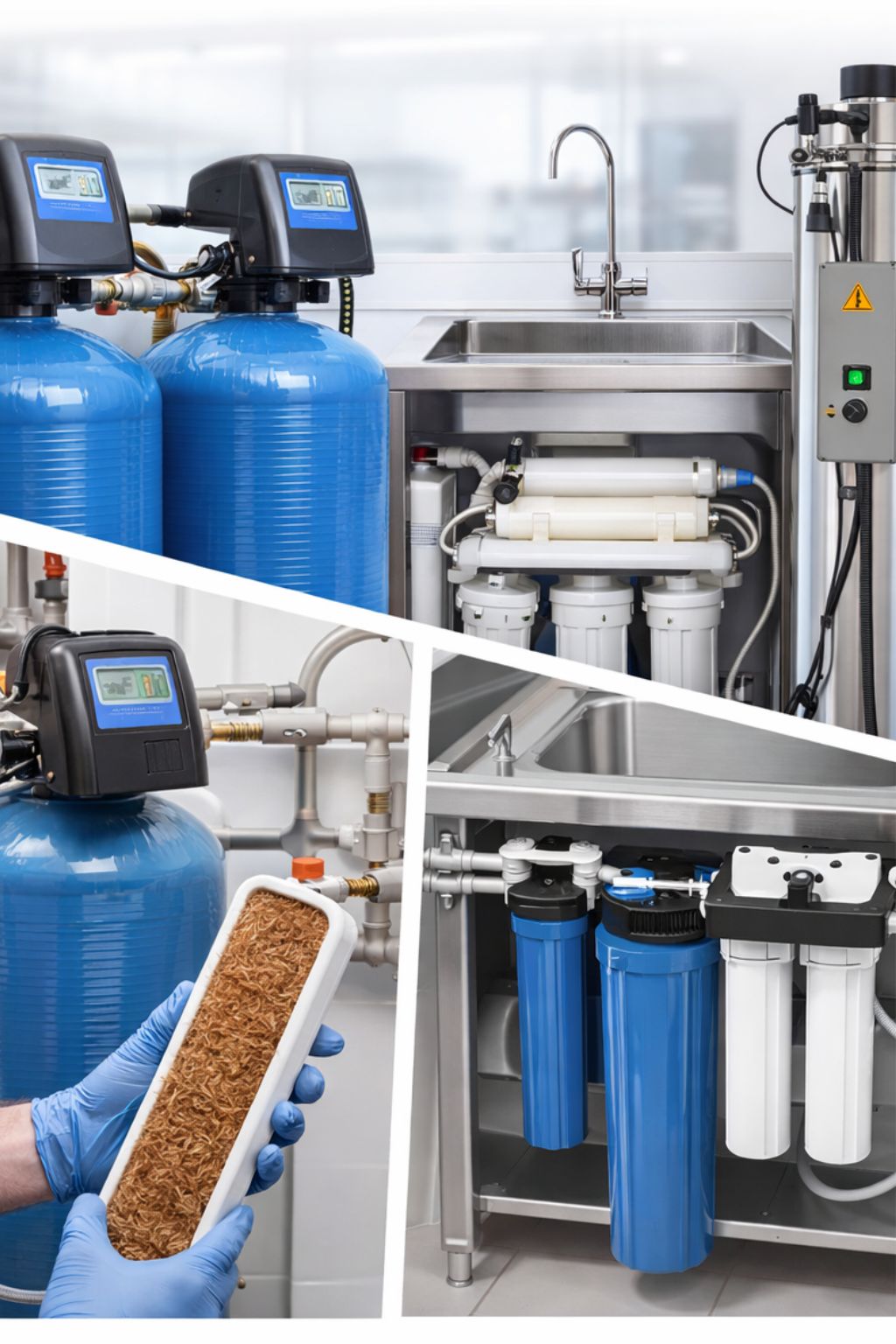
Complete Water Treatment Solutions for Your Home
We provide tailored water treatment solutions designed around your specific water quality.
As a result, you get a system that solves real problems — not a one-size-fits-all setup.
Every property is different.
For example, private wells in rural areas often require a combination of filtration, softening, and UV disinfection.
That is why we start with professional water testing.
Then, we design a system based on actual results, ensuring each component works together effectively.
Hard water is one of the most common water quality issues in both homes and businesses, leading to limescale buildup in pipes, heating systems, and appliances. Water softeners are designed to remove calcium and magnesium, helping to protect equipment and improve overall system performance.
✔️ Reduce limescale in pipes, boilers, and appliances
✔️ Improve efficiency of heating and water systems
✔️ Extend the lifespan of equipment
✔️ Suitable for residential and commercial properties
Filtration systems are used to remove sediment, particles, and other impurities that affect water clarity and quality. These systems are often installed at the main water entry point to provide whole-property protection.
✔️ Remove sediment and suspended particles
✔️ Protect pipework and water-using equipment
✔️ Improve water clarity and consistency
✔️ Suitable for a wide range of water conditions
Iron and manganese are commonly found in groundwater and private wells. These minerals can cause staining, unpleasant taste, and buildup in plumbing systems if not properly treated.
✔️ Prevent staining on fixtures and surfaces
✔️ Improve water appearance and taste
✔️ Protect plumbing and equipment
✔️ Ideal for private well water supplies
→ Learn About Iron & Manganese Removal
Nitrates can be present in certain water sources, particularly in rural areas and private wells. Dedicated treatment systems help reduce nitrate levels and improve overall water quality for safe daily use.
✔️ Reduce nitrate levels in water
✔️ Improve water safety and quality
✔️ Suitable for private wells and rural properties
✔️ Reliable long-term solution
→ Learn About Nitrate Removal
UV disinfection systems provide chemical-free protection against bacteria and microorganisms. They are widely used where microbiological safety is a concern, especially in private water supplies.
✔️ Effective protection against bacteria and viruses
✔️ Continuous disinfection without chemicals
✔️ Works alongside filtration systems
✔️ Ideal for well water and untreated sources
The right water treatment solution depends on the specific characteristics of your water. Since many issues are not visible, professional water testing is the most reliable way to identify the problem and select the correct technology or combination of systems.
A test-based approach ensures that your investment delivers effective, long-term results — without unnecessary costs or guesswork.
• Professional Water Testing (Home & Business)
• Private Well Water Analysis
• Bacteria, Nitrate, Iron & Hardness Testing
• Pre-Installation Water Assessment
• Post-Treatment Verification Testing
• Water Softeners (Hard Water Treatment)
• Whole-Property Filtration Systems
• Iron & Manganese Removal
• Nitrate Reduction Systems
• UV Water Disinfection
• Well Disinfection (Shock Chlorination)
• Sediment & Borehole Filtration
• Bacteria Protection Systems
• Combined Treatment for Multiple Issues
• Custom Water Treatment System Design
• Professional Installation
• System Configuration for Optimal Performance
• Integration of Multiple Technologies
• Post-Installation Performance Checks
• Scheduled Servicing & System Checks
• Filter Replacement Programmes
• UV Lamp Replacement
• System Performance Monitoring
• Water Quality Re-Testing
• Long-Term Support
Serving Clare, Limerick, Galway & Tipperary
- County Clare (Shannon, Ennis, Killaloe, Kilrush, Scarriff, Tulla, Newmarket‑on‑Fergus, Sixmilebridge, Bunratty, Clarecastle, Quin , Cratloe and more)
- County Limerick (including Limerick city and surrounding areas)
- County Galway (Gort & especially the southern and eastern areas)
- County Tipperary (Nenagh, Borrisokane, and nearby)
If you’re not sure whether we serve your area, just send us a message — we’ll do our best to assist.

FAQ Iron and Manganese Removal
In most residential water supplies, iron is not considered a direct health risk. It mainly affects water quality, causing staining, taste issues, and buildup within plumbing systems.
Manganese, however, is treated more cautiously. While small amounts are naturally present and not harmful, elevated levels over time may have an impact on health, particularly in sensitive groups such as children.
For this reason, both iron and manganese are monitored not only for appearance and taste, but also to ensure that water remains within recommended guidelines.
Iron removal depends on its form. In many cases, dissolved iron must first be oxidised and then filtered out using specialised media. The correct method can only be selected after water testing, as different conditions require different treatment approaches.
Even low levels of iron can cause staining and taste issues. While small amounts are not always considered a health risk, they can still affect water quality, appliances, and plumbing systems over time.
Not necessarily. Water softeners can help with certain types of iron, but they are not a complete solution in most cases. Using the wrong system may reduce performance without fully resolving the issue.
Yes. Manganese is often more stable in water and requires more specific conditions for effective removal. This is why systems designed only for iron may not work properly if manganese is also present.
This is usually a sign that iron or manganese is not being properly treated before filtration. Without the correct process, filters become overloaded and need frequent replacement without solving the underlying problem.
Yes, although less common. Iron and manganese issues can still occur due to pipe corrosion, sediment, or local supply conditions, especially in older systems.
Whether you’re just curious or urgently need answers — we’re here to help.
Tell us about your home, well, or business, and we’ll recommend the right test or filtration solution.
