
UV Water Treatment for Safe Home Water
Protect your home from bacteria and invisible water contamination with professionally designed UV disinfection systems.
Ideal for private wells and rural water supplies across Clare, Limerick, Galway and Tipperary.
Every system begins with professional water testing, ensuring the right treatment is installed for your water conditions.
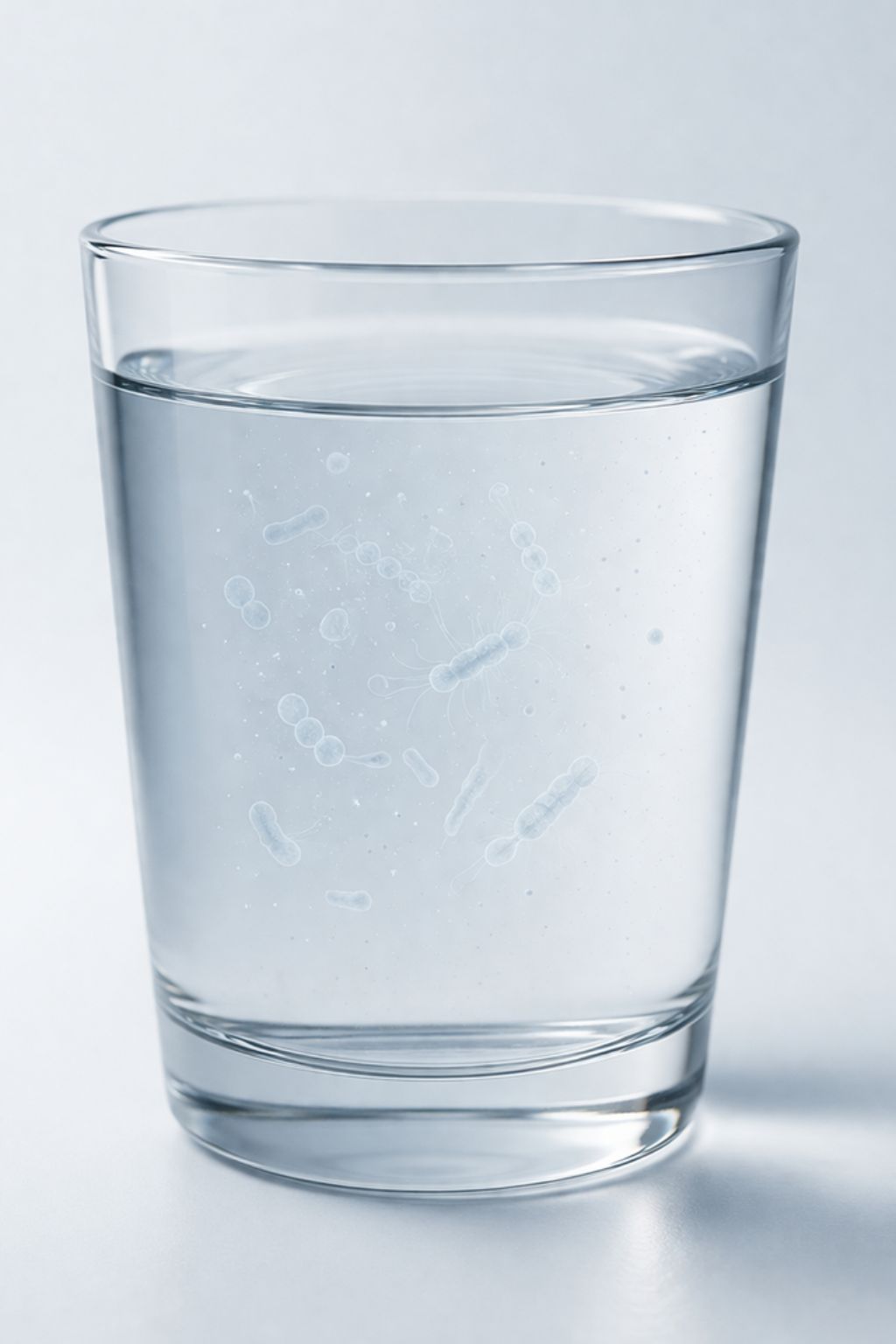
Signs Your Water May Need UV Disinfection
Water can appear clear and still contain harmful microorganisms.
In many homes — especially those supplied by private wells — bacteria may be present without any visible warning signs.
Unlike issues such as iron staining or limescale, microbiological contamination often does not affect the taste, smell, or appearance of water. As a result, problems may remain unnoticed until proper testing is carried out.
Certain situations increase the likelihood that bacteria or microorganisms may be present in the water supply.
You may need UV water disinfection if:
• your home uses a private well as the main water source
• a previous water test detected bacteria such as E. coli or coliforms
• water quality changes after heavy rainfall or flooding
• contamination problems appear intermittently over time
• you want to ensure microbiological safety for your household
In many rural areas across Clare, Limerick, Galway, and Tipperary, these conditions are relatively common because private water supplies are more exposed to environmental influences.
However, the only reliable way to confirm whether UV disinfection is necessary is through professional water testing.
Testing identifies the actual microbiological risks and ensures that the correct treatment system is selected.
This approach helps avoid unnecessary equipment and ensures that the solution installed in your home addresses the real water quality issue.
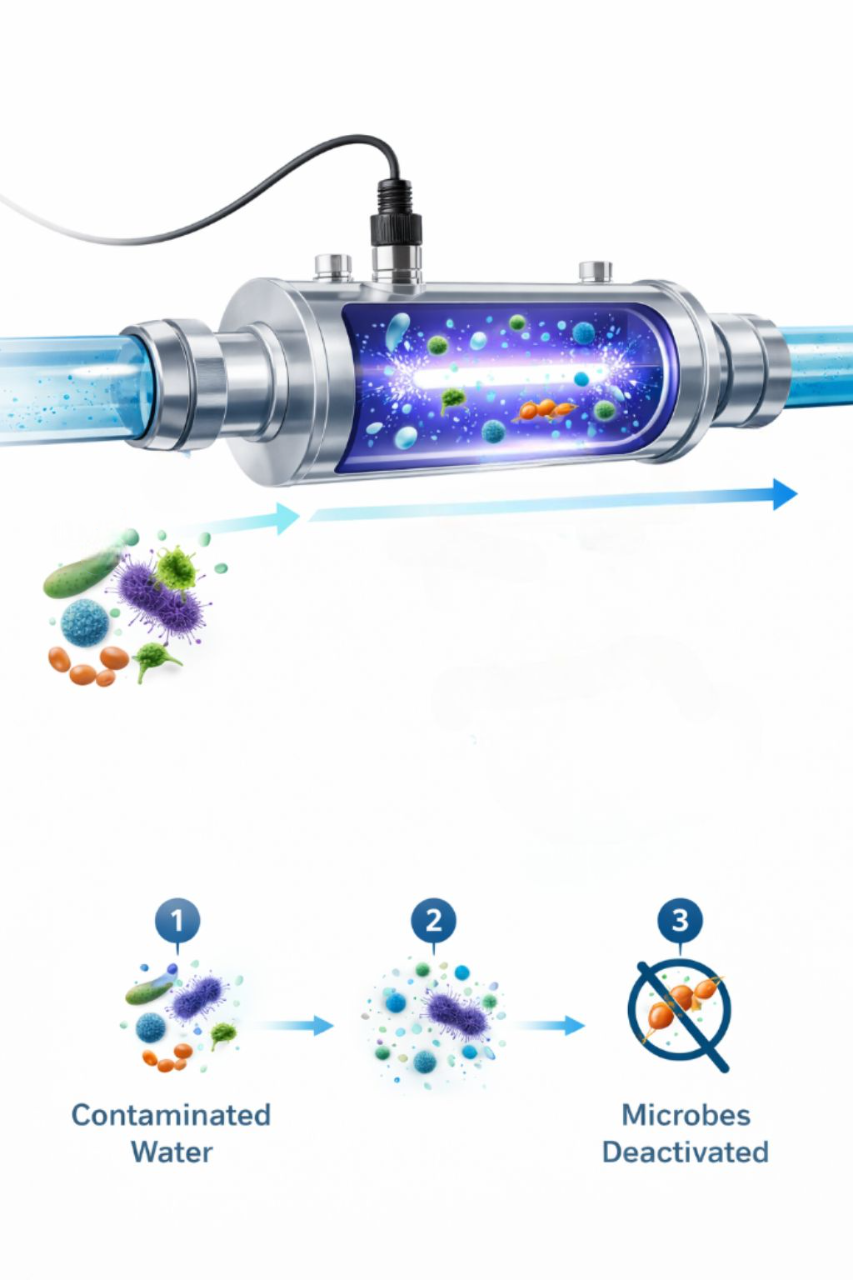
What Is UV Water Disinfection?
UV water disinfection is a safe and effective way to treat water without using chemicals.
It uses ultraviolet light to neutralise harmful microorganisms as water flows through the system.
As water passes through the UV chamber, bacteria and viruses are exposed to UV light.
As a result, they are unable to reproduce or cause harm.
Unlike chlorine or other treatments, UV does not change the taste, smell, or composition of your water.
Therefore, it is ideal for homes that want clean water without added chemicals.
However, UV treatment works best when combined with proper filtration.
That is why a correctly designed system is essential for reliable results.
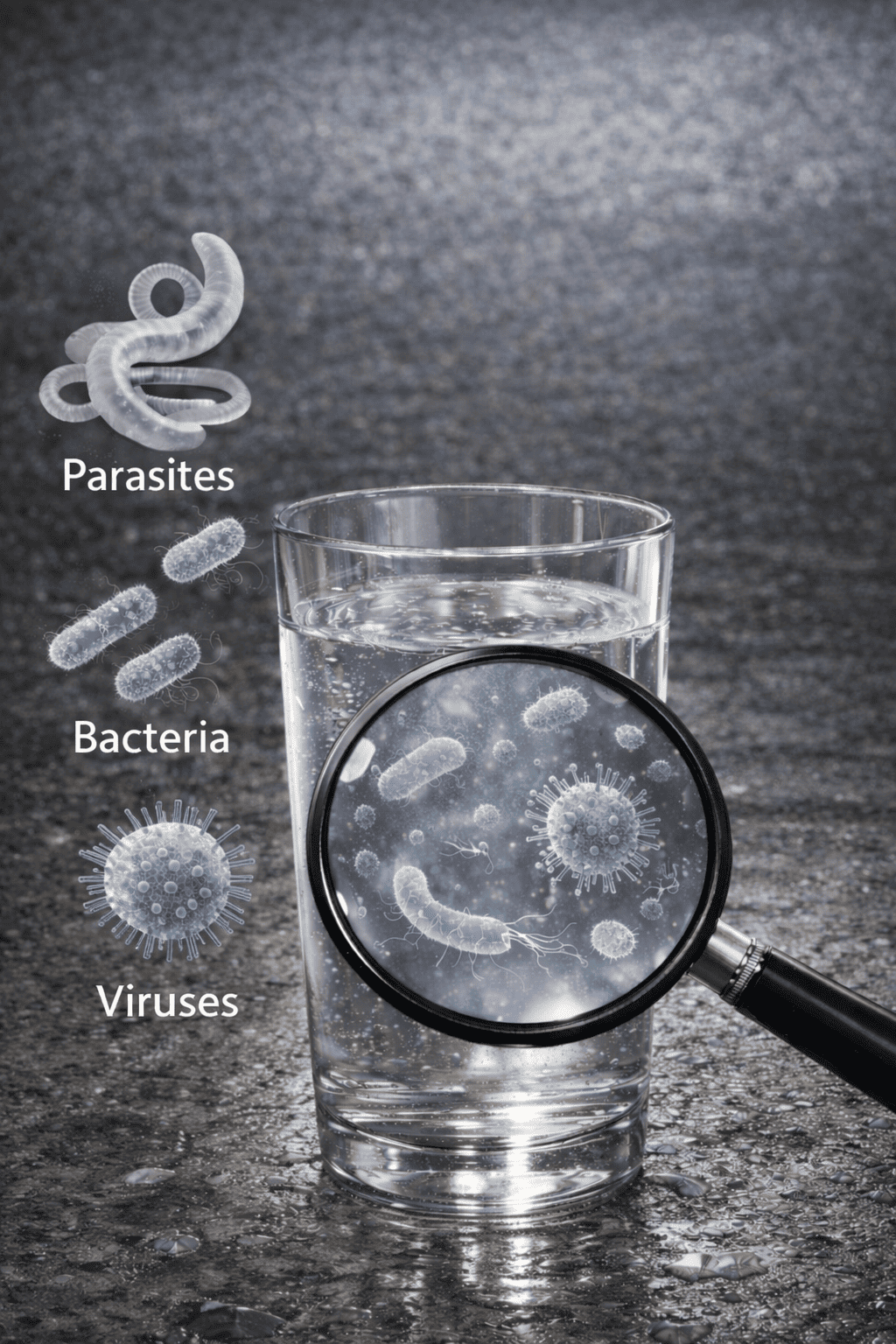
What Does UV Water Disinfection Protect Against?
UV systems are designed to neutralise harmful microorganisms that may be present in your water.
Below is a simple overview of what UV treatment can and cannot do.
What UV Can and Cannot Remove
| Contaminant Type | Removed by UV | Notes |
|---|---|---|
| Bacteria (E. coli) | ✔ Yes | Neutralised instantly by UV light |
| Viruses | ✔ Yes | Prevents reproduction and spread |
| Parasites | ✔ Yes | Effective with correct system design |
| Sediment / particles | ✖ No | Requires pre-filtration |
| Iron & manganese | ✖ No | Needs separate treatment system |
| Hardness (limescale) | ✖ No | Requires water softener |
| Chemicals / nitrates | ✖ No | Requires advanced filtration (e.g. RO) |
After reviewing this, it becomes clear that UV focuses on microbiological safety.
However, for full water quality improvement, additional filtration may be required.
Therefore, proper testing is essential before choosing a system.
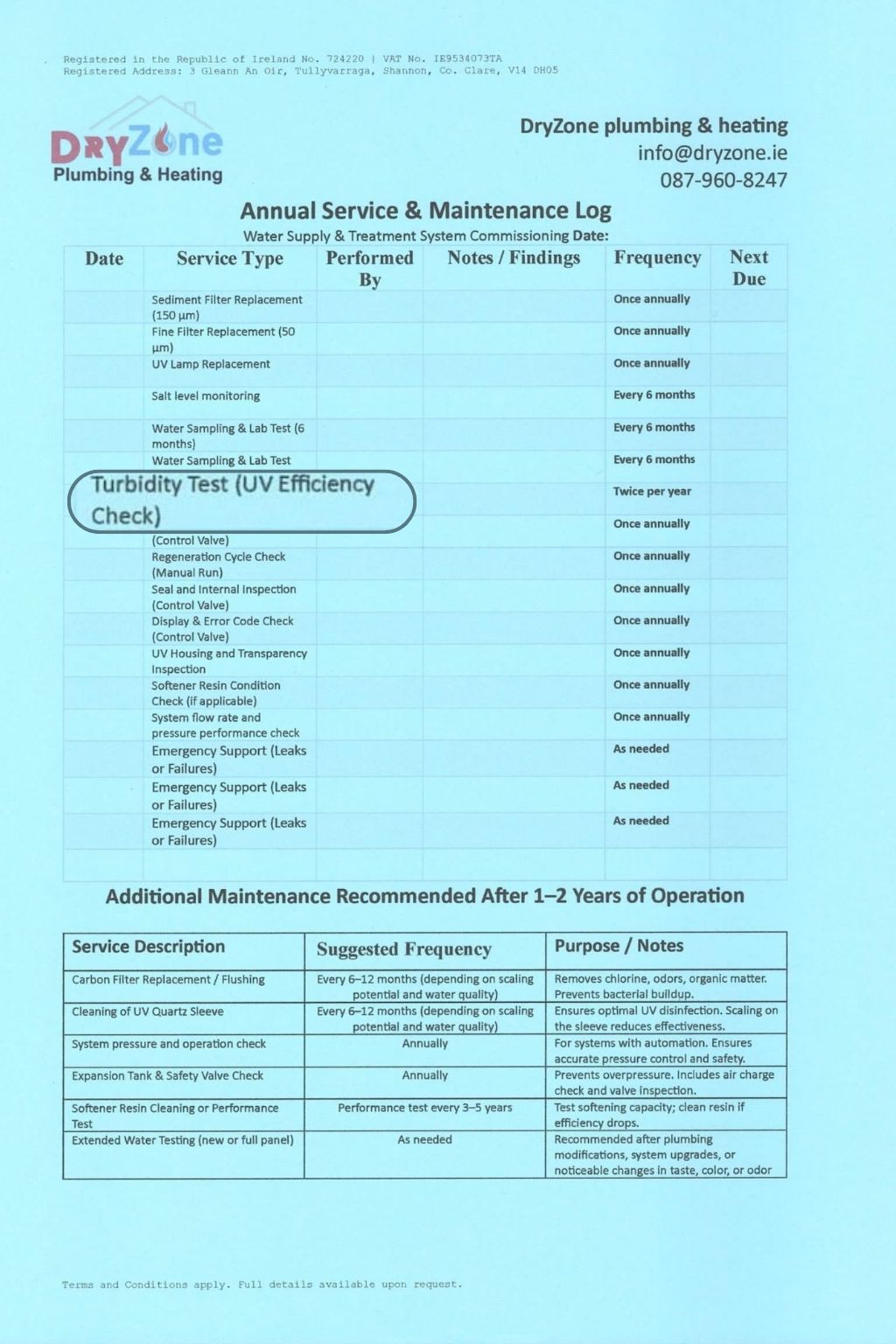
Water Conditions Required for UV Disinfection
Ultraviolet disinfection works by exposing microorganisms to high-intensity UV light as water passes through the treatment chamber. For this process to be effective, the water must be clear enough for the UV light to penetrate.
If the water contains suspended particles, sediment, or dissolved metals, these materials can block or scatter the UV radiation. In practice, this means bacteria may remain protected inside tiny particles and pass through the system untreated.
For reliable operation, UV systems normally require the water to meet several basic quality conditions.
Typical recommended conditions include:
• Low turbidity — ideally below 1 NTU (nephelometric turbidity units). When turbidity rises above 5 NTU, UV disinfection becomes significantly less effective because particles prevent light from reaching microorganisms.
• Minimal suspended sediment — particles in the water can shield bacteria from UV exposure.
• Low iron and manganese levels — these minerals can coat the quartz sleeve inside the UV chamber and reduce the intensity of the UV light reaching the water.
• Good water clarity, often expressed as UV transmittance (UVT). Most systems require UVT above 75–80% for reliable performance.
Because of these technical requirements, UV disinfection is typically installed after appropriate pre-treatment, which may include:
- sediment filtration to remove particles
- iron and manganese removal systems
- cartridge filtration to improve water clarity
However, the only reliable way to determine whether a UV system will work properly in your home is through professional water testing before installation.
Water testing identifies factors such as turbidity, sediment levels, iron content, and microbiological contamination. These results make it possible to design a treatment system where the UV unit operates under the correct conditions.
Without proper testing, UV systems are often installed in water that does not meet these requirements — which can significantly reduce their effectiveness.
For this reason, the safest and most reliable approach is always the same:
test the water first, design the treatment system based on real results, and then verify that the system is working correctly after installation.
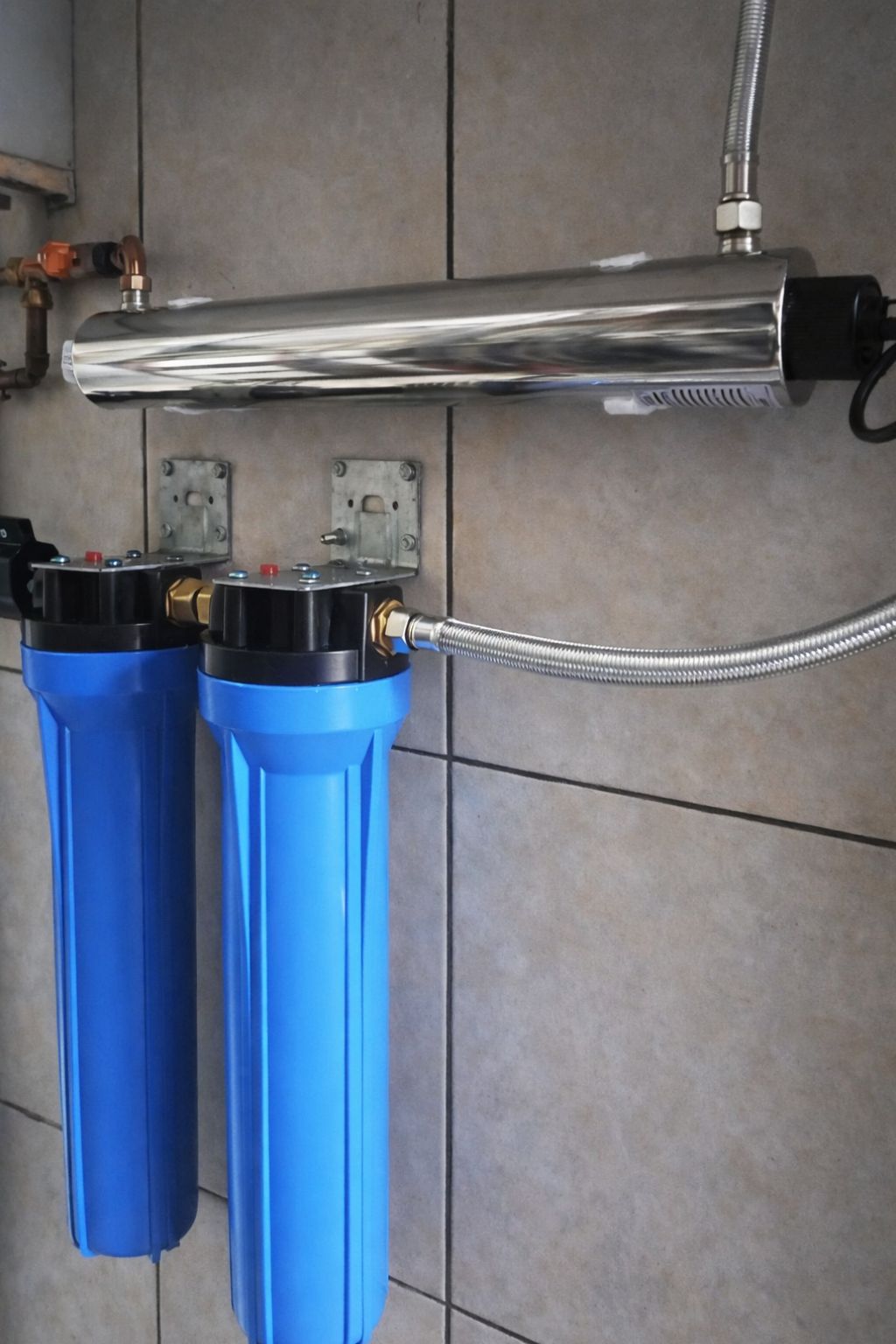
Correct UV System Design and Installation
For UV disinfection to provide reliable protection, the system must be correctly designed and installed within the home water supply.
In most residential installations, the UV unit is placed at the point where water enters the property. This ensures that all water used in the house — for drinking, cooking, washing, and showering — passes through the disinfection chamber before reaching taps and appliances.
However, the UV unit is rarely installed on its own. A properly designed system usually includes several treatment stages working together.
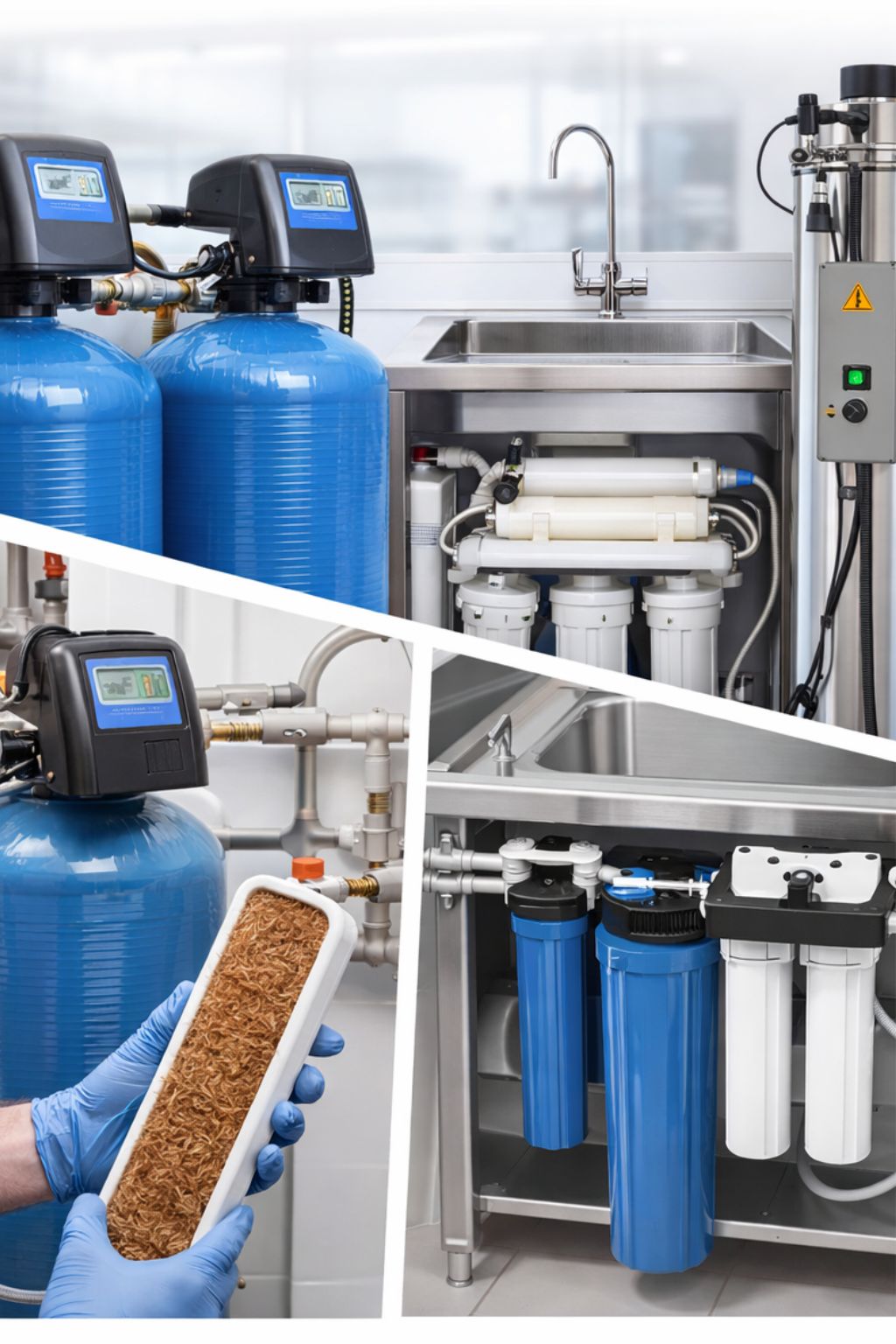
A typical whole-house UV setup may include:
1️⃣ Sediment filtration – removes sand, silt, and fine particles that can block UV light.
2️⃣ Additional treatment if required – such as iron or manganese removal systems when these minerals are present.
3️⃣ UV disinfection chamber – where ultraviolet light neutralises bacteria and microorganisms as water flows through the reactor.
This sequence ensures that the water reaching the UV unit is clear enough for effective disinfection.
Another critical factor is correct system sizing.
UV systems are designed to deliver a specific disinfection dose based on the flow rate of water passing through the chamber.
If water flows too quickly, microorganisms may not receive sufficient UV exposure.
For this reason, the system must be matched to the household’s peak water demand, taking into account factors such as:
• number of bathrooms in the house
• typical water usage patterns
• pump capacity in private well systems
• maximum flow rate entering the property
When the system is correctly sized and installed in the proper sequence, UV treatment can provide continuous microbiological protection for the entire household water supply.
Because every water supply is different, the correct configuration should always be determined after professional water testing and system assessment. This ensures that the UV unit operates under the right conditions and performs as intended in real-world use.
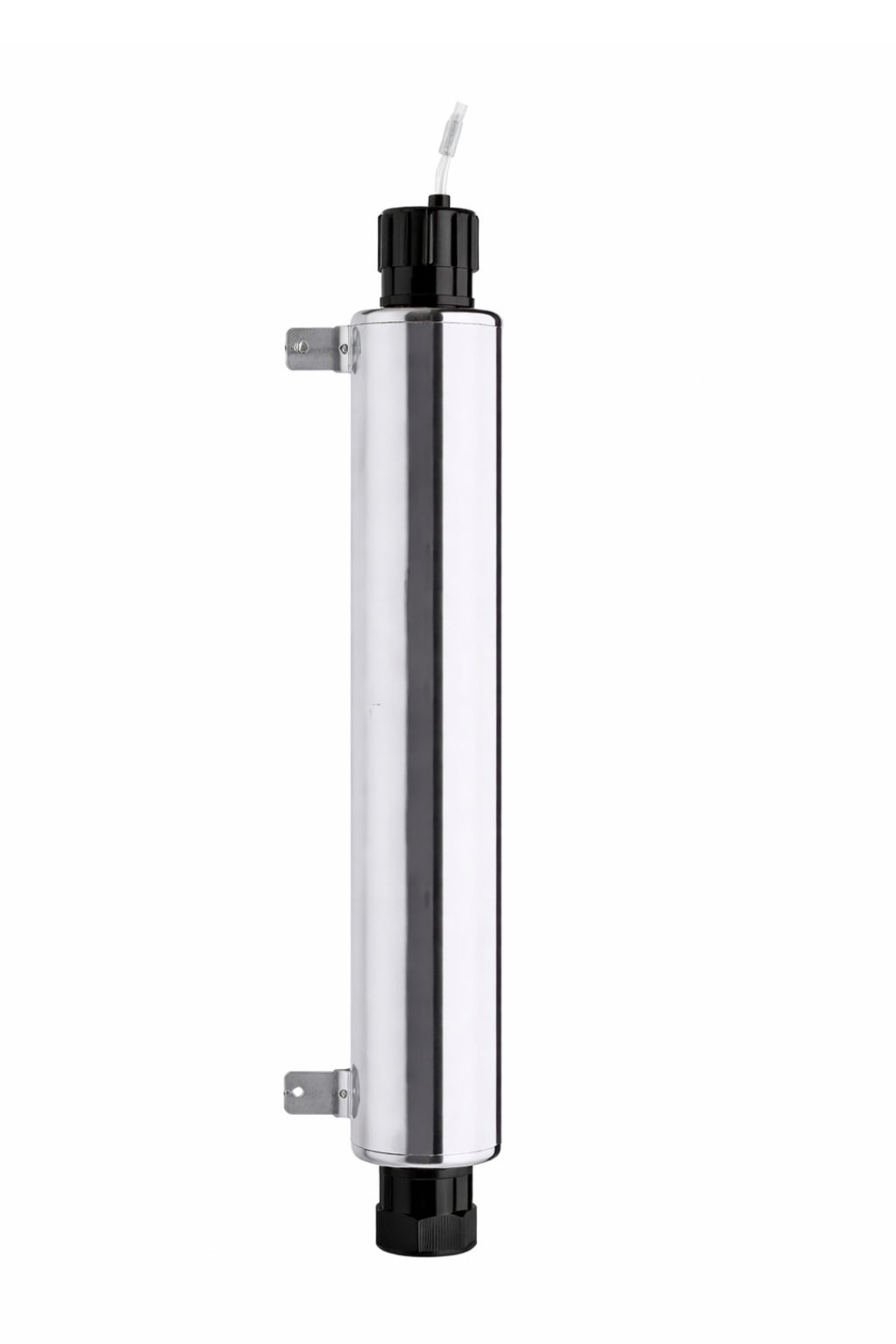
System Maintenance and Long-Term Performance
Even when a UV system is correctly designed and installed, its effectiveness depends on proper maintenance and operating conditions over time.
The most important component of any UV disinfection system is the UV lamp, which produces the ultraviolet radiation used to neutralise microorganisms. While the lamp may continue to glow for many years, the intensity of ultraviolet light gradually decreases as the lamp ages.
Because of this natural decline in UV output, most residential systems require annual lamp replacement to maintain the disinfection dose needed to neutralise bacteria and microorganisms.
Another critical component is the quartz sleeve that surrounds the lamp inside the reactor chamber. This transparent sleeve protects the lamp from direct contact with water while allowing UV light to pass through.
Over time, minerals such as iron, manganese, or hardness can form deposits on the quartz sleeve. These deposits reduce the amount of ultraviolet light reaching the water and may gradually lower the effectiveness of the system if the sleeve is not cleaned periodically.
For this reason, routine servicing usually includes:
• annual UV lamp replacement
• inspection and cleaning of the quartz sleeve
• checking system alarms and electrical components
• verifying that the system is operating correctly
Why UV Systems Fail in Some Homes
In many cases, UV systems that appear to be functioning are actually delivering reduced disinfection performance because maintenance has been neglected.
Some of the most common causes include:
• ageing UV lamps that no longer produce sufficient UV intensity
• mineral deposits on the quartz sleeve that block UV light
• sediment buildup reducing water clarity
• lack of regular servicing or system inspection
In these situations, the system may still be running, but the level of microbiological protection may be significantly reduced.
Regular servicing and periodic water testing help ensure that the UV system continues to provide the level of protection it was designed to deliver.
For this reason, maintaining a UV system should be viewed as an ongoing part of protecting your home water supply, not simply a one-time installation.
Benefits of UV Water Disinfection
A properly designed UV system does more than treat water.
It gives you confidence in the safety of your entire home water supply.
Reliable Health Protection
UV systems neutralise harmful microorganisms instantly as water flows.
As a result, you reduce the risk of bacteria-related health issues.
In addition, this level of protection is especially important for children and vulnerable users.
Therefore, UV is often used where water safety is a priority.
Chemical-Free Water Treatment
Unlike chlorine-based systems, UV does not add anything to your water.
As a result, the natural taste and smell remain unchanged.
This makes it a preferred option for homeowners who want safe water without chemicals.
In addition, it avoids ongoing chemical handling or dosing.
Continuous, Whole-Home Protection
UV systems work automatically as water enters your home.
Therefore, every tap benefits from the same level of protection.
Over time, this provides consistent safety for drinking, cooking, and washing.
In addition, the system operates quietly and with minimal maintenance.
How UV Water Disinfection Improves Your Home
After understanding the benefits, it helps to see how UV treatment improves everyday water use. As a result, UV treatment is not just a technical upgrade.It improves everyday safety and comfort across your entire home.
| Area of Use | Without UV Treatment | With UV Disinfection | Why It Matters |
|---|---|---|---|
| Drinking water | Potential bacteria risk | Safer, microbiologically treated water | Protects your health every day |
| Cooking | Uncertain water quality | Clean water for food preparation | Reduces contamination risk |
| Shower & bathing | Exposure to microorganisms | Safer daily use for the whole family | Important for skin and hygiene |
| Children’s use | Higher sensitivity to bacteria | Reduced health risks | Extra protection for vulnerable users |
| Peace of mind | Doubt about water safety | Confidence in your water quality | Removes uncertainty and stress |

Our UV Water Installation Process
We follow a clear, step-by-step process to ensure your water is treated properly.
As a result, you get a system that works reliably — not just installed equipment.
Step 1 – Professional Water Testing
First, we analyse your water to check for bacteria and clarity.
This step is essential because UV systems require the right conditions to work effectively.
In addition, testing helps identify any pre-filtration needs.
Therefore, the system is designed based on real data, not assumptions.
Step 2 – Tailored System Design
Next, we select the correct UV unit and supporting filtration.
Every system is matched to your water quality and household needs.
As a result, the system performs efficiently and avoids common installation mistakes.
This ensures long-term reliability and consistent protection.
Step 3 – Professional Installation
Then, our team installs the system at the point of entry to your home.
This ensures that all water is treated before it reaches your taps.
In addition, we set up the system for optimal performance from day one.
Therefore, you receive full-home protection without disruption.
Step 4 – Post-Installation Verification
Finally, we carry out follow-up testing to confirm the results.
This step proves that the system is working as intended.
As a result, you get clear, evidence-based confirmation of water safety.
This is what sets our approach apart.
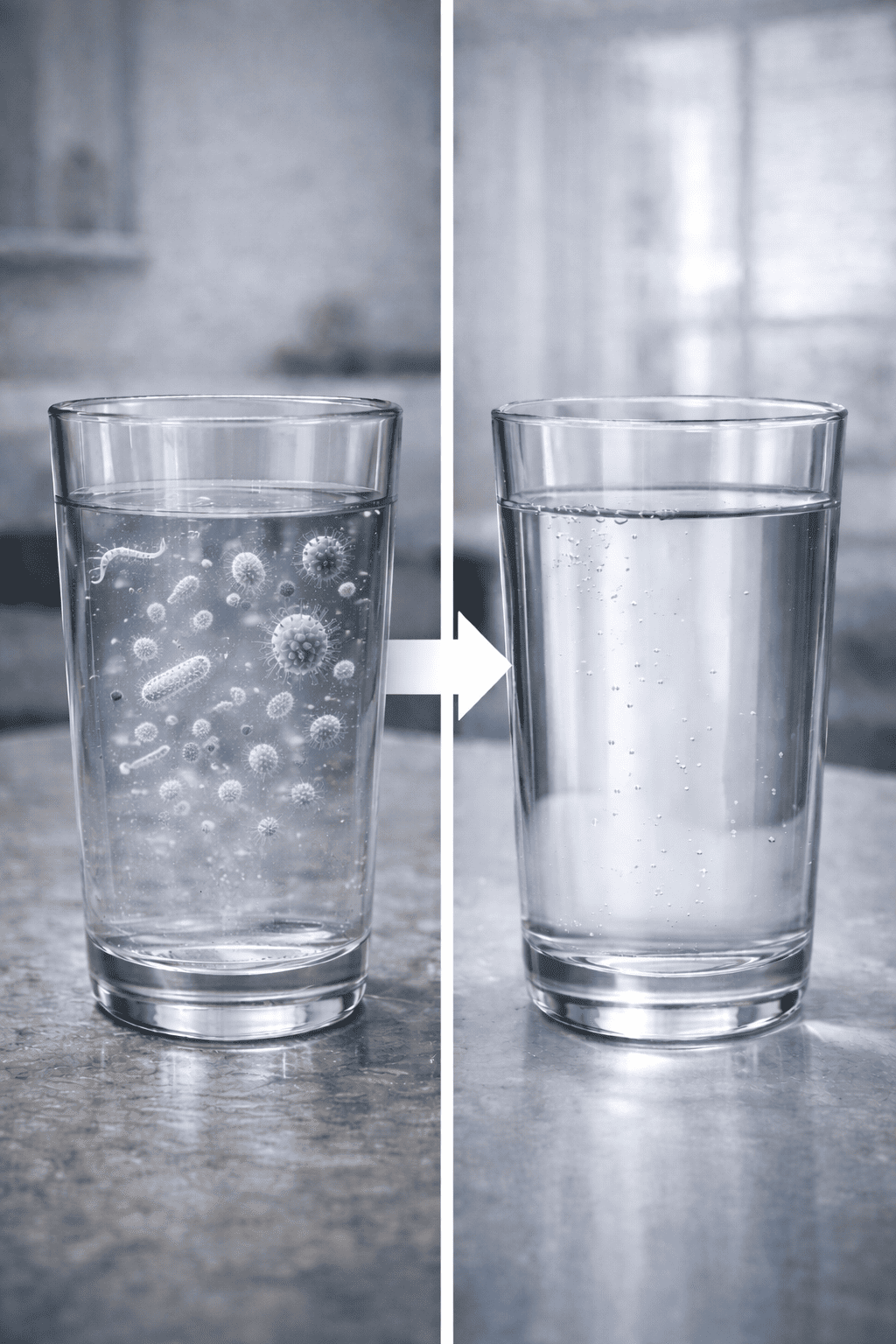
Is UV Water Disinfection Enough on Its Own?
UV water disinfection is highly effective for treating bacteria and microorganisms.
However, it does not solve all water quality issues on its own.
For example, UV does not remove sediment, iron, or dissolved minerals.
As a result, water may still contain particles that affect clarity and system performance.
In addition, untreated water can reduce UV efficiency.
Therefore, proper pre-filtration is often required to ensure reliable results.
When UV Works Best
UV systems perform best when combined with the right supporting treatment.
This may include:
- Sediment filtration to improve water clarity
- Iron and manganese removal systems
- Water softeners to reduce limescale
- Advanced filtration for chemicals or nitrates
As a result, the entire system works together to deliver safe and clean water.
A Complete, Tailored Approach
At DryZone, we do not install UV systems in isolation.
Instead, we design complete water treatment solutions based on your test results.
This ensures that every part of your system supports the others.
As a result, you get consistent performance and long-term reliability.
Complete Water Treatment Solutions for Your Home
We provide tailored water treatment solutions designed around your specific water quality.
As a result, you get a system that solves real problems — not a one-size-fits-all setup.
Every property is different.
For example, private wells in rural areas often require a combination of filtration, softening, and UV disinfection.
That is why we start with professional water testing.
Then, we design a system based on actual results, ensuring each component works together effectively.
Filtration systems improve overall water quality across your property. They remove sediment and particles that can affect clarity, system performance, and equipment reliability.
- Improve water clarity and consistency
- Protect pipework and internal systems
- Support performance of UV and other treatments
- Suitable for full-property water supply
Hard water can cause limescale buildup in pipes, appliances, and heating systems.
While UV treats bacteria, water softeners improve overall water quality and system efficiency.
✔️ Reduce limescale in pipes and appliances
✔️ Improve efficiency of heating systems
✔️ Extend lifespan of household equipment
✔️ Often combined with UV systems for full protection
Iron and manganese are common in private wells and can affect both water quality and UV performance.
If present, they should be treated before installing a UV system.
✔️ Prevent staining on sinks, baths, and laundry
✔️ Improve taste and appearance of water
✔️ Protect pipes and household systems
✔️ Ensure effective UV disinfection
→ Learn About Iron & Manganese Removal
Nitrates can affect private water supplies, especially in rural areas.
While UV treats bacteria, nitrate removal systems address chemical contamination.
✔️ Reduce nitrate levels in drinking water
✔️ Improve overall water safety
✔️ Suitable for private wells and rural homes
✔️ Works alongside UV as part of a complete system
→ Learn About Nitrate Removal
The right solution depends on your water quality.
That is why professional testing is always the first step.
At DryZone, we test your water, identify risks, and design a system that works in real conditions.
As a result, you avoid unnecessary installations and get the right treatment
• Professional Water Testing (Home & Business)
• Private Well Water Analysis
• Bacteria, Nitrate, Iron & Hardness Testing
• Pre-Installation Water Assessment
• Post-Treatment Verification Testing
• Water Softeners (Hard Water Treatment)
• Whole-Property Filtration Systems
• Iron & Manganese Removal
• Nitrate Reduction Systems
• UV Water Disinfection
• Well Disinfection (Shock Chlorination)
• Sediment & Borehole Filtration
• Bacteria Protection Systems
• Combined Treatment for Multiple Issues
• Custom Water Treatment System Design
• Professional Installation
• System Configuration for Optimal Performance
• Integration of Multiple Technologies
• Post-Installation Performance Checks
• Scheduled Servicing & System Checks
• Filter Replacement Programmes
• UV Lamp Replacement
• System Performance Monitoring
• Water Quality Re-Testing
• Long-Term Support
Serving Clare, Limerick, Galway & Tipperary
- County Clare (Shannon, Ennis, Killaloe, Kilrush, Scarriff, Tulla, Newmarket‑on‑Fergus, Sixmilebridge, Bunratty, Clarecastle, Quin , Cratloe and more)
- County Limerick (including Limerick city and surrounding areas)
- County Galway (Gort & especially the southern and eastern areas)
- County Tipperary (Nenagh, Borrisokane, and nearby)
If you’re not sure whether we serve your area, just send us a message — we’ll do our best to assist.

FAQ UV Disinfection Systems
Yes, in many cases. Water can appear clear but still contain harmful bacteria or microorganisms. Because these contaminants are invisible, the only reliable way to detect them is through proper water testing. As a result, UV treatment is often recommended even when there are no obvious signs.
No, UV systems are designed to treat microorganisms only. They do not remove iron, hardness (limescale), or chemical contaminants. However, UV can be combined with filtration systems to create a complete water treatment solution. This ensures both safety and overall water quality.
In most cases, the UV lamp should be replaced once per year. In addition, the system should be checked regularly to ensure proper performance. With correct maintenance, UV systems provide consistent and reliable protection over time.
Yes, UV is widely used for safe drinking water treatment. It does not add chemicals or change the taste or smell of your water. As a result, it is a safe and effective solution for households looking to improve water quality.
The best way to know is through professional water testing. This identifies whether bacteria or microbiological contamination are present.
If the UV system is not functioning, water will not be properly disinfected. As a result, bacteria may remain in your water supply. Most systems include alarms or indicators to alert you. In addition, regular servicing helps prevent unexpected issues.
No, UV systems are energy-efficient and use a small amount of electricity. In most cases, the running cost is low compared to the level of protection provided. As a result, they are a cost-effective long-term solution for safe water.
In most cases, yes. However, the system must be correctly sized and installed based on your water supply and usage. In addition, some homes may require pre-filtration before UV installation. This ensures the system works effectively.
Yes, UV is one of the most common solutions for private well water in Ireland. This is because wells are more vulnerable to microbiological contamination. As a result, UV systems are widely used across rural areas such as Clare, Limerick, Galway, and Tipperary.
Whether you’re just curious or urgently need answers — we’re here to help.
Tell us about your home, well, or business, and we’ll recommend the right test or filtration solution.
