
Reliable Water Treatment for Irish Farms
Farm water systems must handle more than basic filtration. Livestock supply, washdown water, sediment loading, bacterial risk, iron fouling and seasonal borehole changes all affect system performance and operational reliability.
DryZone designs and installs evidence-based agricultural water treatment systems using laboratory analysis, flow-rate assessment and application-specific filtration for farms across Clare, Limerick, Galway and Tipperary.
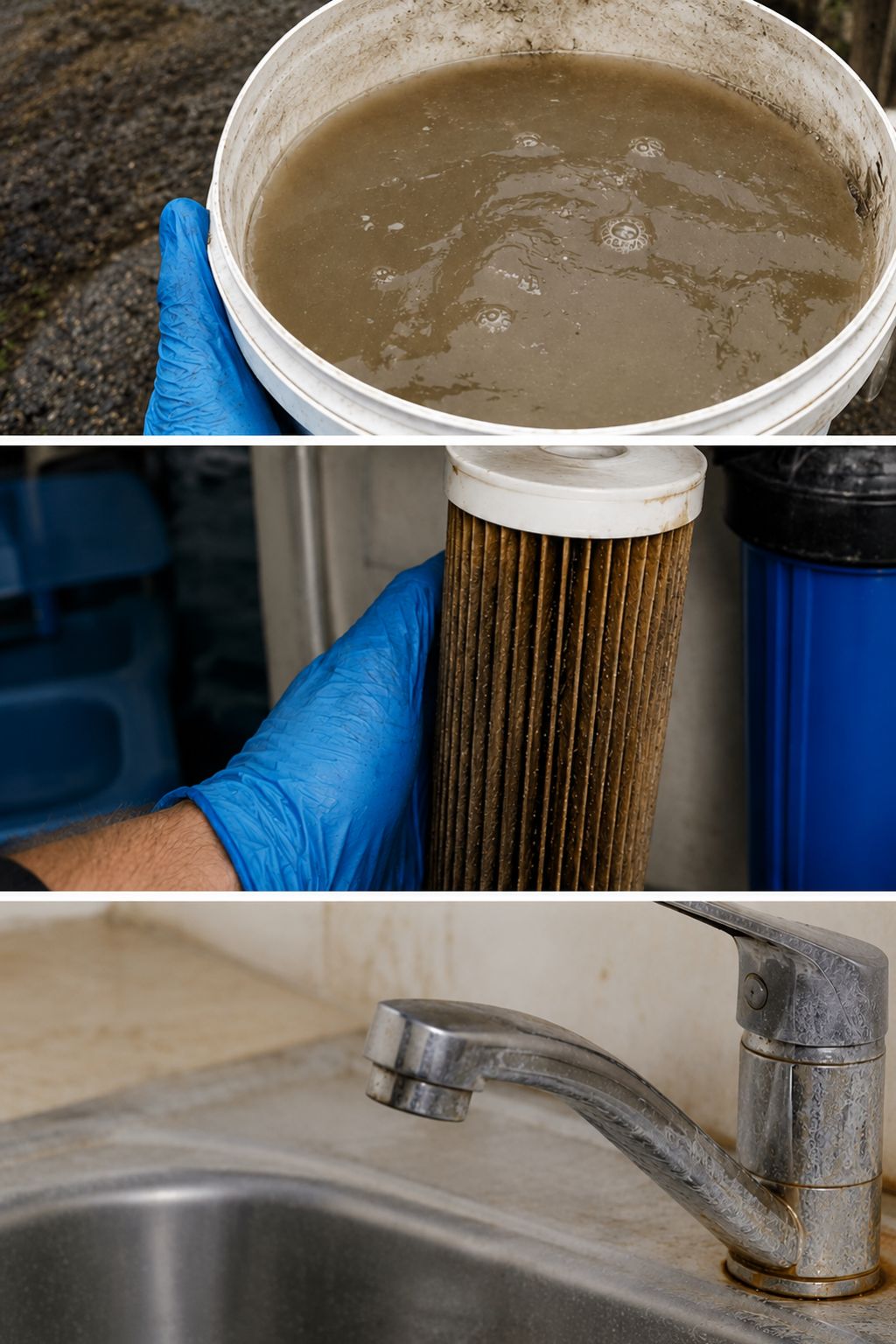
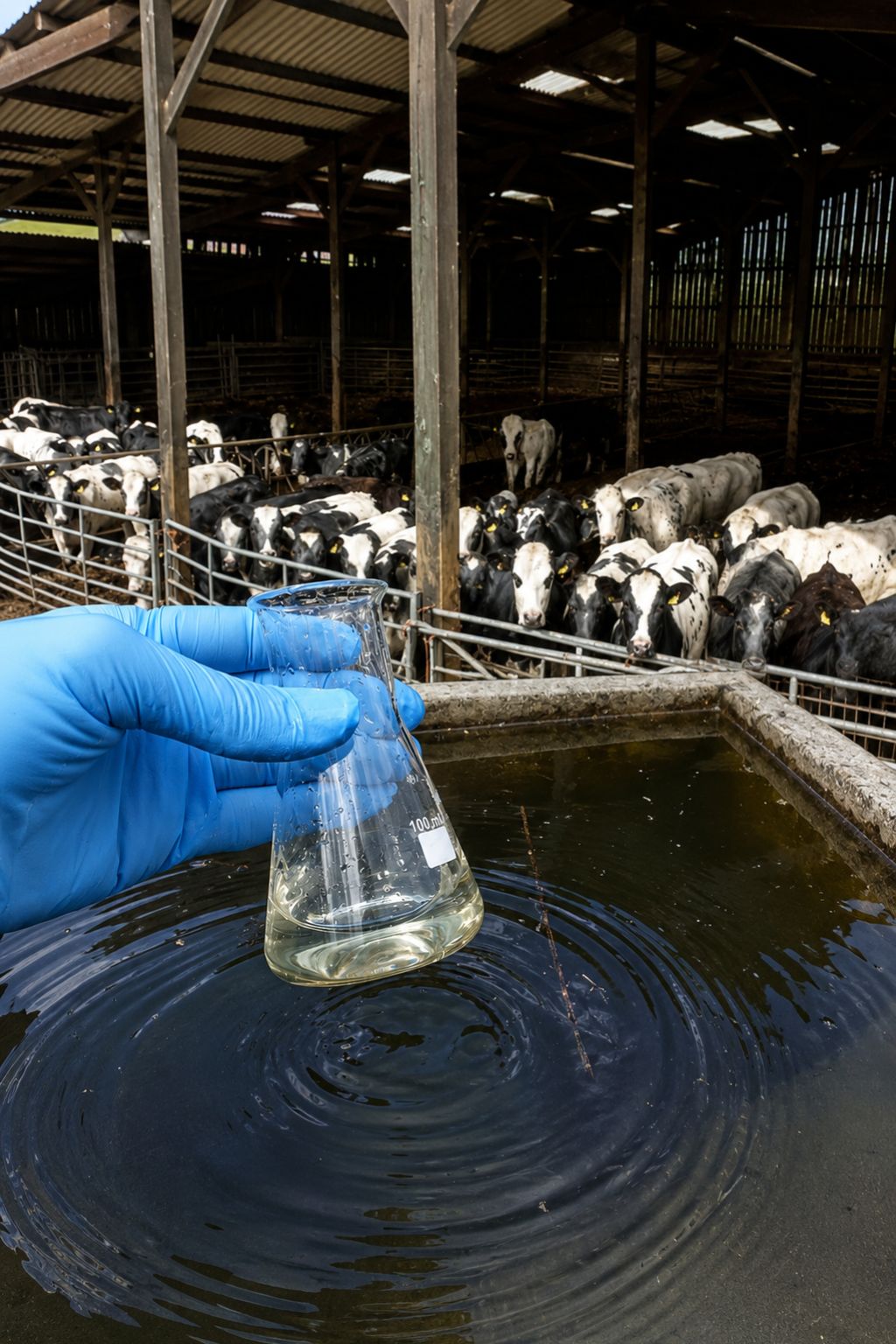
Common Water Problems on Farms and Agricultural Properties
Iron and Manganese in Borehole Water
Ferrous iron and dissolved manganese are common in private agricultural boreholes across Ireland. Once oxidised, these minerals can foul pipework, stain troughs, reduce UV transmittance and create buildup inside valves and drinker systems.
In higher concentrations, iron bacteria and manganese fouling may also increase maintenance requirements and reduce filtration efficiency.
Sediment, Turbidity and Surface Influence
Heavy rainfall, shallow wells and surface water influence can increase turbidity and suspended solids in agricultural water supplies.
High sediment loading may:
- reduce UV effectiveness
- block automatic valves
- damage dosing pumps
- increase backwash frequency
- shorten filter media lifespan
Bacterial Contamination Risks
Coliform bacteria, E. coli and other microbiological contaminants may enter private farm water systems through poorly sealed boreholes, cracked chambers or runoff pathways near livestock areas.
In these situations, UV disinfection systems often require pre-treatment to maintain sufficient UV transmittance and contact reliability.
Hardness and Scaling
Hard water with elevated calcium and magnesium levels may lead to scaling in plate coolers, washdown systems, heating elements and pipework.
Over time, scale buildup can reduce flow performance and increase energy consumption.
Nitrates and Agricultural Runoff
Nitrate contamination is often associated with agricultural runoff, fertiliser use and shallow groundwater influence.
Where elevated nitrate levels are confirmed through laboratory analysis, treatment may involve ion exchange or reverse osmosis depending on water chemistry and daily demand requirements.
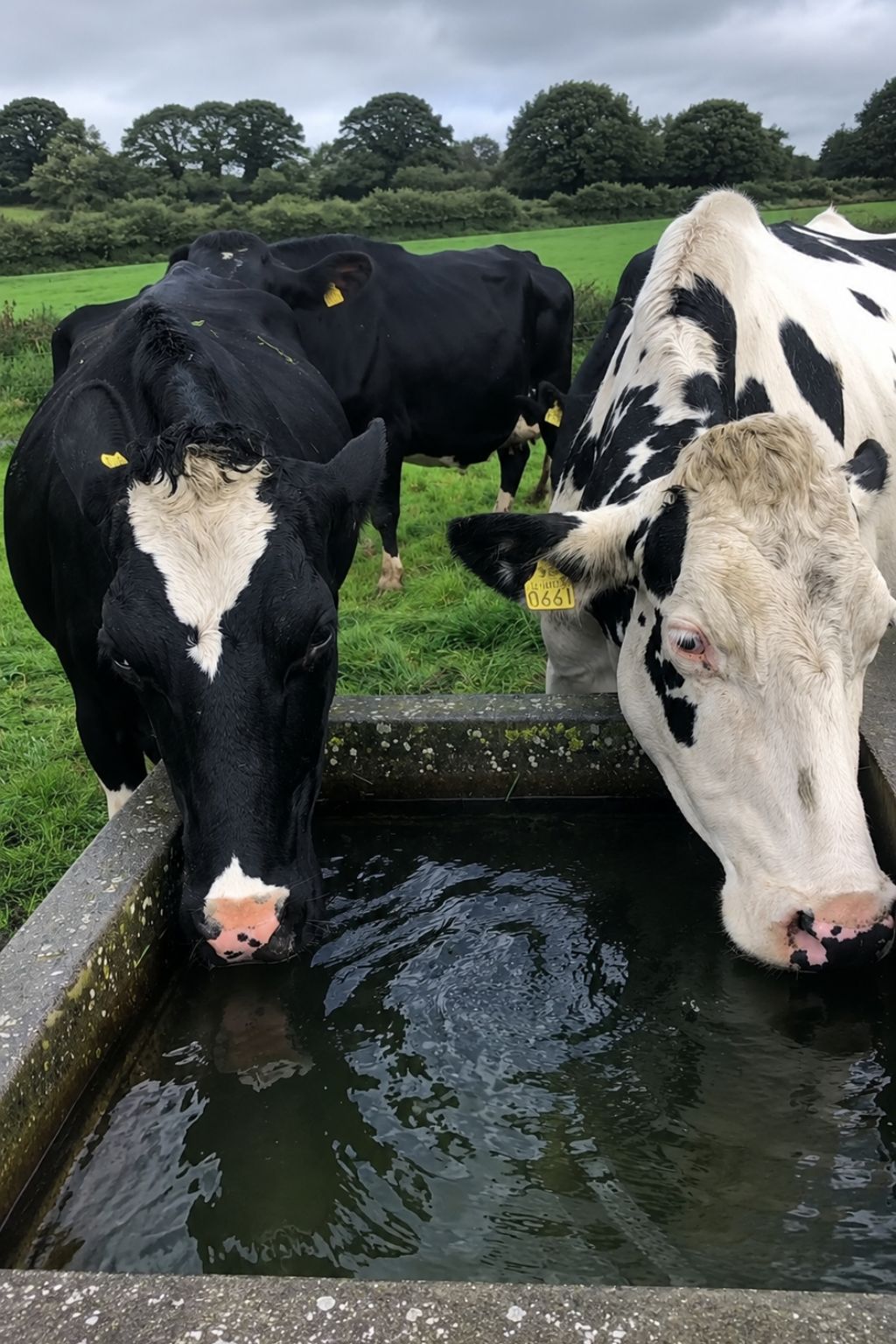
How Untreated Water Can Affect Agricultural Operations?
Water quality problems do not only affect the appearance of water itself. On farms and agricultural properties, untreated water may gradually affect equipment reliability, cleaning systems, maintenance requirements and overall day-to-day operations. In many cases, the operational consequences become noticeable long before the source of the problem is properly identified.
| Water Condition | Possible Operational Impact |
|---|---|
| Iron and manganese | Staining, sediment buildup, blocked drinkers and fouling inside pipework or equipment |
| Hard water | Scale formation inside dairy equipment, heating systems, washdown systems and plate coolers |
| Sediment and turbidity | Reduced filtration performance, blocked systems and poor UV disinfection conditions |
| Bacterial contamination | Concerns relating to drinking water safety, hygiene and private well reliability |
| Nitrates | Water suitability concerns for domestic use and residential areas connected to the farm supply |
| Unstable groundwater conditions | Fluctuating water quality, recurring maintenance issues and inconsistent system performance |
Equipment Reliability and Maintenance
Untreated water conditions may increase wear on pumps, valves, filtration systems and water distribution equipment over time. Sediment, mineral buildup and fouling can gradually reduce efficiency and increase servicing requirements across the property.
Washdown and Cleaning Systems
Water used for washdown and cleaning should remain consistent and reliable. Mineral buildup, sediment and staining contaminants may gradually affect cleaning systems, nozzles and water distribution infrastructure in agricultural environments.
Long-Term Operational Costs
Recurring water problems may contribute to:
- Increased maintenance
- More frequent equipment servicing
- Filter replacement issues
- Reduced system lifespan
- Unexpected operational downtime
Correctly designed treatment systems help reduce these long-term operational risks.
Need to understand what may be affecting your farm water supply?
Start with professional water testing before choosing any treatment system.
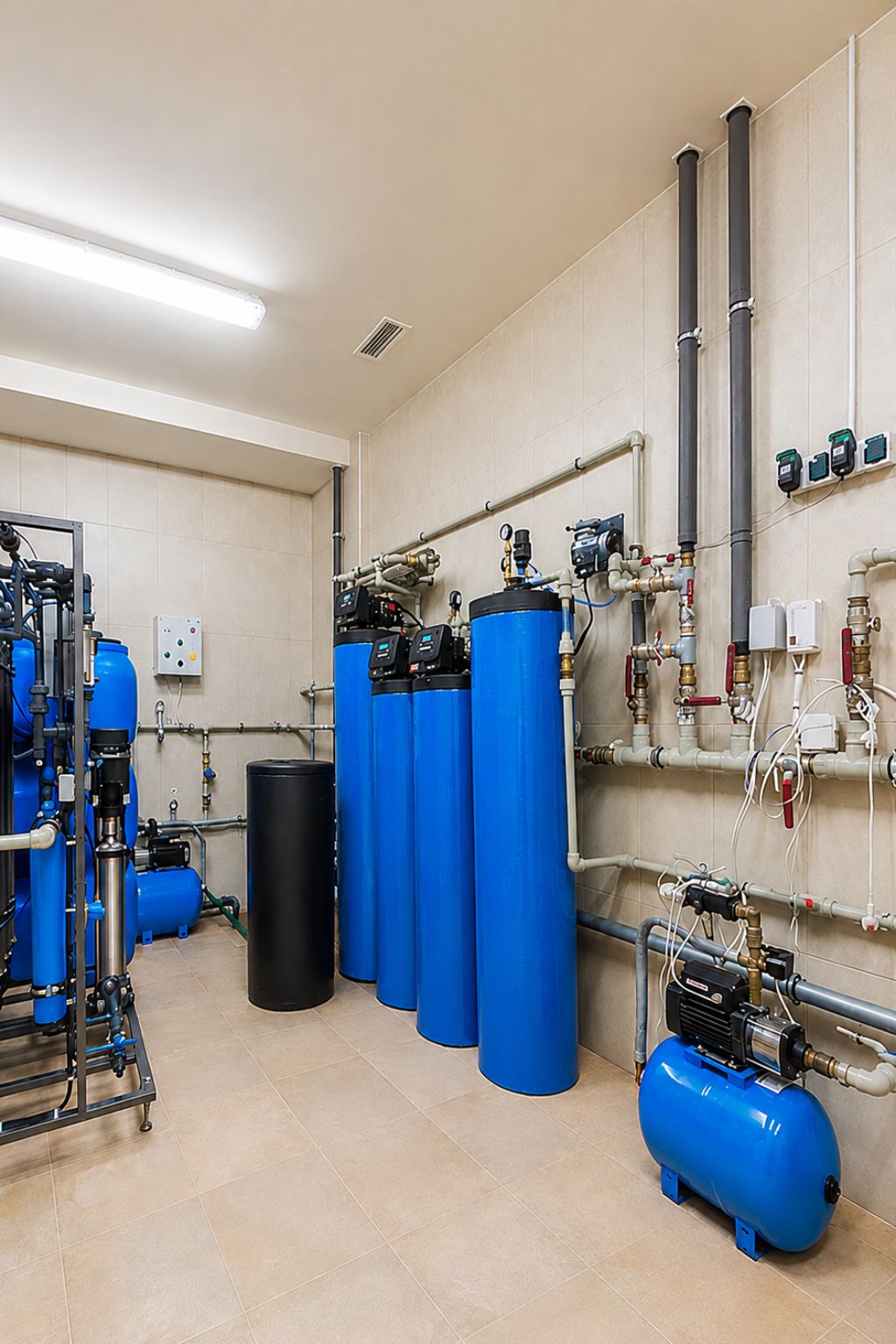
Farm Water Treatment Systems We Install
Agricultural water treatment often requires more than a single filter or standalone device. Farm water conditions can include multiple overlapping issues such as bacteria, sediment, hardness, iron, manganese or nitrates, which is why systems are typically designed in stages based on water analysis and operational demand.
DryZone installs and services farm water treatment systems for private wells, boreholes and agricultural properties across Ireland, with solutions tailored to the actual conditions of the water supply.
UV Disinfection Systems
UV systems are commonly used on farms to reduce microbiological contamination risks in private well water. Correct UV performance depends on proper pre-filtration, suitable flow rates and regular servicing. UV systems are often installed where testing identifies coliform bacteria, E. coli or ongoing contamination risks in groundwater supplies.
Iron and Manganese Removal Systems
High iron and manganese levels can cause staining, sediment buildup, blocked drinkers and fouling inside agricultural equipment and pipework. Depending on water chemistry, treatment may involve oxidation systems, media filtration or multi-stage filtration designed specifically for the concentration levels present in the supply.
Sediment Filtration Systems
Sediment filtration helps protect pumps, pipework, UV systems and downstream equipment from suspended solids, sand, silt and turbidity. This stage is especially important for boreholes and private wells affected by seasonal groundwater changes or dirty water after rainfall.
Activated Carbon Filtration
Carbon filtration may be used to reduce unpleasant taste, odour, chlorine residues or certain organic compounds affecting water quality. In some agricultural settings, carbon filtration is also used as part of a multi-stage treatment approach to improve overall water usability.
Nitrate Reduction Systems
Where laboratory testing identifies elevated nitrate levels, dedicated nitrate treatment systems may be required. Because nitrates cannot be removed with standard sediment or carbon filtration, specialised treatment methods such as ion exchange or reverse osmosis may be necessary depending on the application and water usage requirements.
Water Softeners for Agricultural Properties
Hard water can create significant scale buildup inside dairy equipment, washdown systems, heating systems and pipework. Water softeners help reduce limescale formation and improve long-term equipment reliability in agricultural environments with elevated hardness levels.
Break Tanks and Booster Systems
Some farms require additional water storage, pressure management or flow stabilisation depending on the property layout and water demand. Break tanks and booster pump systems can help improve supply consistency for livestock facilities, washdown systems and multi-building agricultural properties.
Reverse Osmosis Drinking Water Systems
In some cases, separate reverse osmosis systems may be installed for drinking water inside farmhouses, offices or staff areas. These systems are typically used where additional drinking water treatment is required beyond the main agricultural supply.
Multi-Stage Farm Water Treatment Systems
Many agricultural properties require a combination of technologies working together.
Example System Configurations:
Sediment filtration + Activated Carbon
Basic treatment for municipal water to remove particles, chlorine, and improve taste and odor.
Sediment filtration + Activated Carbon + Reverse Osmosis
Typical drinking water purification system used to remove dissolved contaminants such as nitrates, heavy metals, and high TDS.
Sediment filtration + Activated Carbon + Reverse Osmosis + Remineralization
Advanced drinking water treatment where purified water is rebalanced with essential minerals to improve taste and stability.
Sediment filtration + Water Softener + UV Disinfection
Common whole-house configuration for hard well water with microbiological risk.
Sediment filtration + Water Softener + Carbon filtration + UV Disinfection
Multi-stage treatment used when water contains hardness, chlorine or organic contaminants, and potential bacterial contamination.
Sediment filtration + Aeration + Activated Carbon (sometimes with chemical oxidation)
System designed to treat iron, manganese, and hydrogen sulfide odors commonly found in groundwater.
Aeration + Sediment filtration + KDF media + Water Softener + UV Disinfection
Complex multi-stage system used where water contains metals, hardness, and microbiological contamination risks.
Sediment filtration + Oxidation + Water Softener + UV Disinfection
Typical configuration for well water with dissolved iron and hardness, combined with final microbiological protection.
 Important:
These configurations are only examples of system combinations.
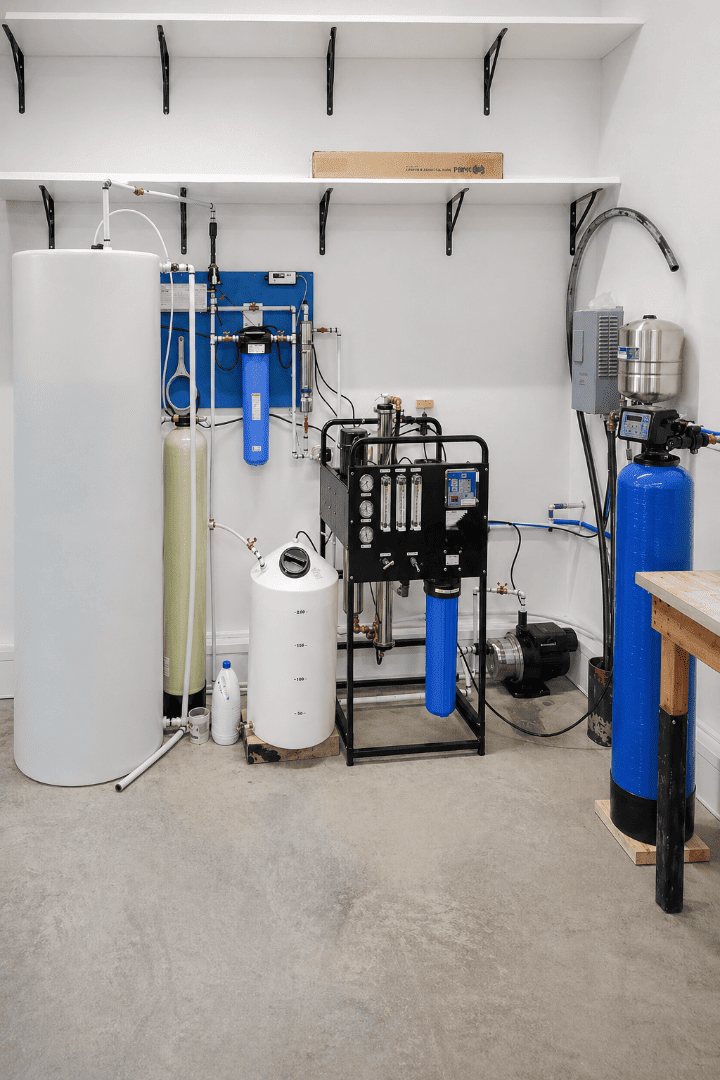
Private Well Water Treatment for Farms
Most agricultural properties in rural Ireland rely on private wells or boreholes as their primary water source. While private groundwater supplies can provide long-term independence and reliable access to water, they also place full responsibility for water quality, monitoring and treatment on the property owner.
Unlike public water supplies, private wells are not continuously monitored by a utility provider, which makes proper testing and treatment especially important for farms and agricultural operations.
Why Farm Wells Can Change Over Time
Private well water is not always chemically stable. Water conditions may change gradually or seasonally due to:
- Heavy rainfall
- Groundwater movement
- Agricultural runoff
- Changes in surrounding land use
- Borehole depth and geology
- Surface water intrusion
- Seasonal sediment fluctuations
Because of this, a water supply that previously appeared acceptable may later develop contamination or treatment issues without obvious warning signs.
Shallow Wells vs Deep Boreholes
Different types of private water sources may present different risks.
Shallow Wells
Shallow wells are generally more vulnerable to:
- Surface contamination
- Bacterial intrusion
- Rainfall-related changes
- Nitrate migration
Deep Boreholes
Deep drilled boreholes are often more stable microbiologically, but may still experience:
- Iron and manganese problems
- Hardness
- Sediment issues
- Sulphur odours
- Mineral imbalance
Proper testing helps determine which risks are relevant to the individual property.
Agricultural Activity and Water Quality
Agricultural environments naturally increase the importance of protecting groundwater supplies. Livestock activity, fertiliser use, slurry management and surrounding land conditions may all influence private well vulnerability depending on the location and construction of the water source.
This does not automatically mean contamination is present, but it reinforces the importance of regular monitoring and evidence-based water treatment.
Why Regular Water Testing Matters
Because many contaminants cannot be seen, smelled or tasted, visual inspection alone is not enough to determine whether farm water is safe or suitable for use. Regular testing helps identify:
- Bacterial contamination
- Nitrate risks
- Iron and manganese levels
- Hardness and scaling potential
- Sediment and turbidity changes
- Treatment system performance
Testing is particularly important for farms using water for livestock, staff facilities, washdown systems or residential areas connected to the agricultural supply.
Ongoing Service and Maintenance for Farm Water Systems
Installing a water treatment system is only one part of maintaining reliable farm water quality. Agricultural water systems operate under demanding conditions, often handling high water usage, sediment load, fluctuating groundwater conditions and continuous daily operation. Without regular servicing, even properly designed systems may gradually lose effectiveness over time.
DryZone provides ongoing servicing and maintenance for farm water treatment systems to help ensure reliable long-term performance.
UV System Maintenance
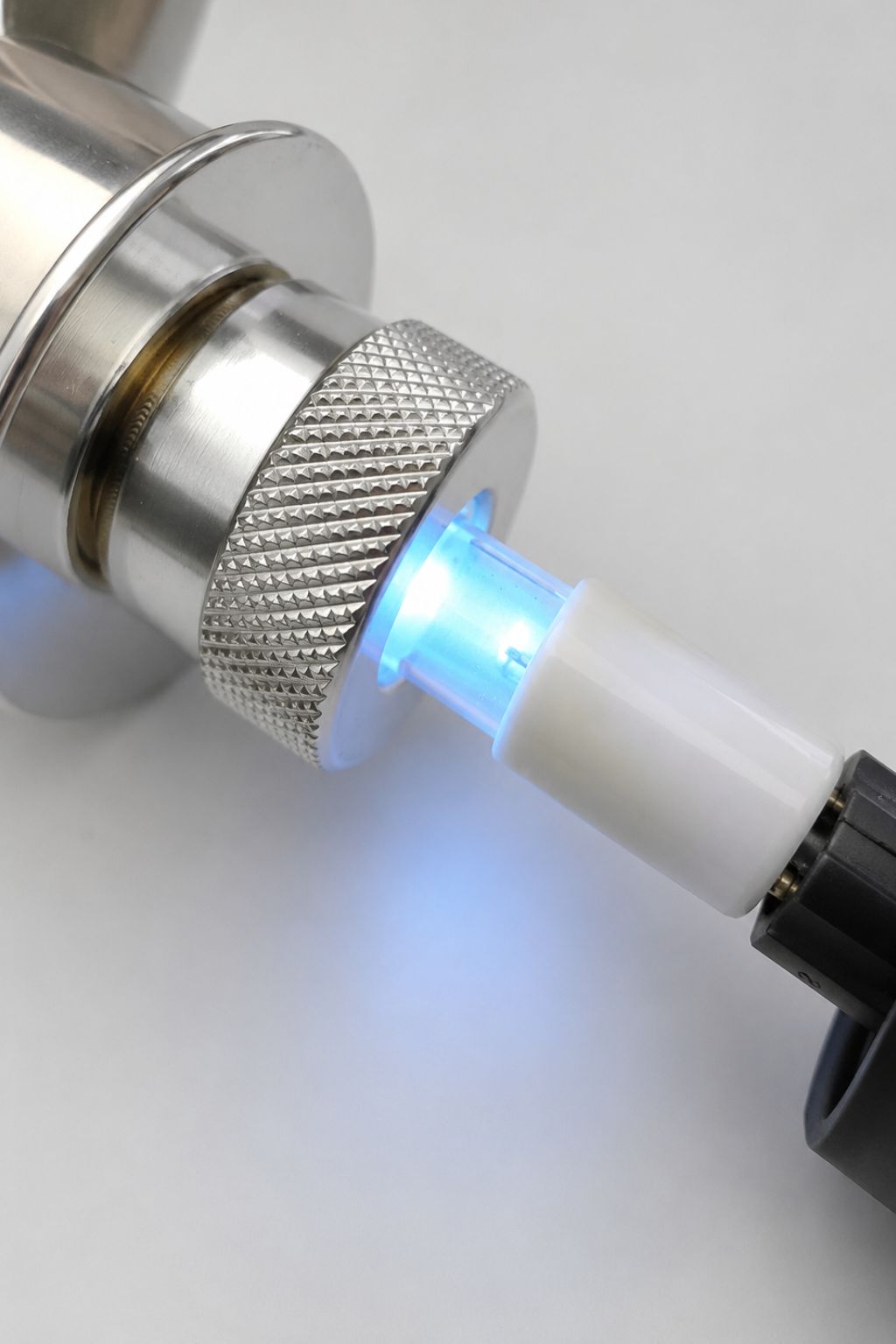
UV disinfection systems require regular inspection and servicing to remain effective. Even if the UV lamp still appears operational, its disinfection performance decreases over time and lamps typically require scheduled replacement.
Maintenance may include:
- UV lamp replacement
- Quartz sleeve cleaning
- UV intensity checks
- Ballast inspection
- System sanitisation
- Flow and operational verification
This is especially important on farms where microbiological protection is critical for private well supplies.
Filter Replacement and Media Servicing
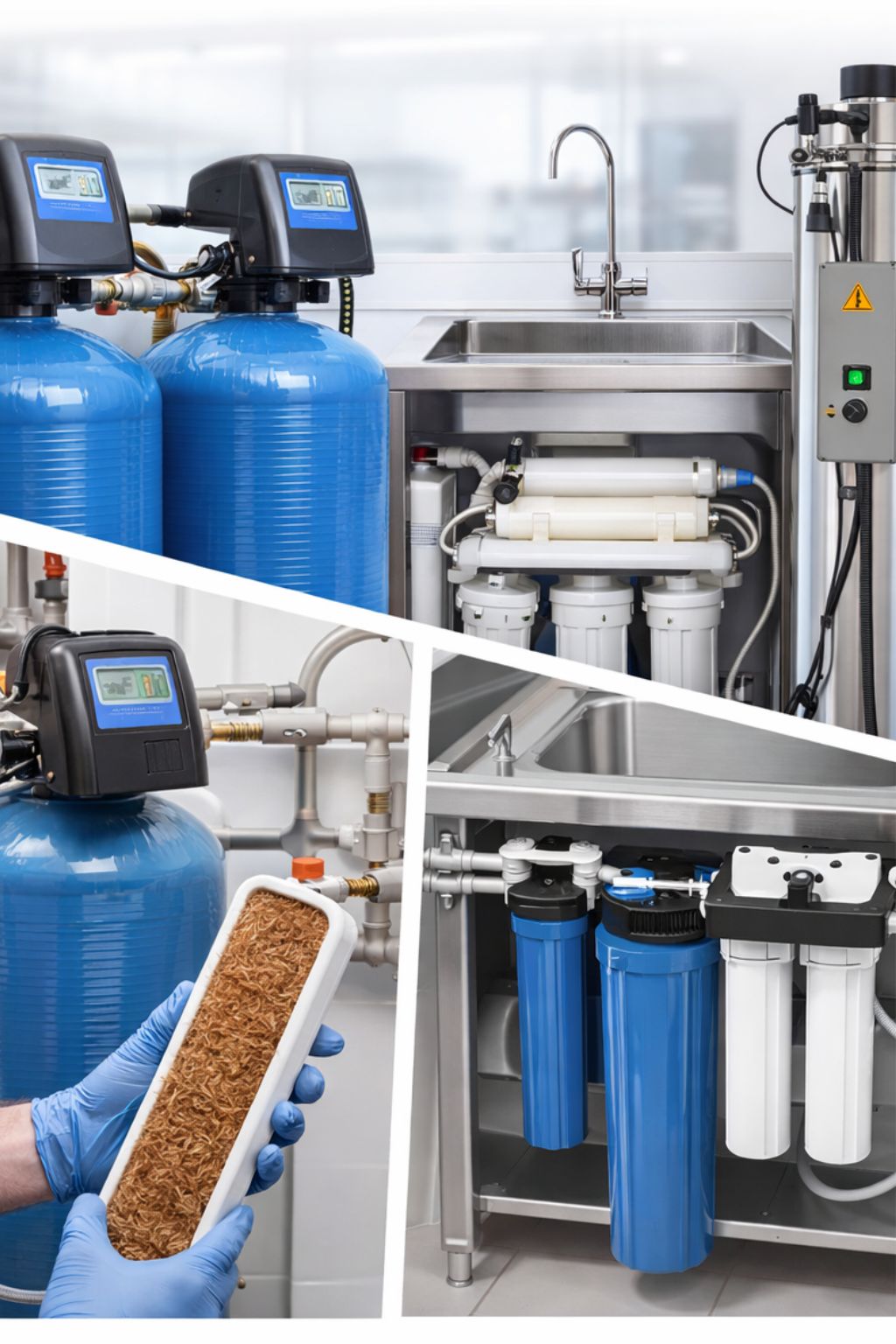
Filtration systems gradually accumulate sediment, iron, manganese and other contaminants during normal operation. Depending on the treatment setup, maintenance may involve:
- Sediment filter replacement
- Carbon media servicing
- Backwash system checks
- Iron and manganese media inspection
- Water softener servicing
- Valve and control head inspection
Regular maintenance helps maintain the effectiveness of treatment.
Monitoring Changes in Water Conditions
Private well water can change over time due to rainfall, groundwater movement or changing agricultural conditions. A treatment system that worked correctly several years ago may eventually require adjustment, upgrades or additional treatment stages.
Periodic testing helps confirm:
- Water quality stability
- UV suitability conditions
- Ongoing nitrate levels
- Iron and hardness changes
- Overall treatment performance
Preventing Equipment Downtime
Unexpected water system failures on farms can affect livestock supply, washdown systems, staff facilities and day-to-day operations. Preventive maintenance helps identify potential problems before they develop into larger operational issues.
This may reduce:
- Emergency callouts
- Equipment damage
- Pressure problems
- UV alarm issues
- Blocked filtration systems
- Unplanned downtime
Service Records and Documentation
For some agricultural and commercial environments, maintaining service records and documented testing may also support operational management and compliance requirements.
Documentation may include:
- Service logs
- Filter replacement history
- Water test reports
- UV maintenance records
- Post-service verification checks
Annual Farm Water Servicing Plans
Many agricultural properties benefit from scheduled annual servicing rather than waiting for visible system problems to appear. Planned maintenance helps ensure that treatment systems continue operating correctly throughout the year and remain matched to the actual conditions of the water supply.
Agricultural Sectors We Support
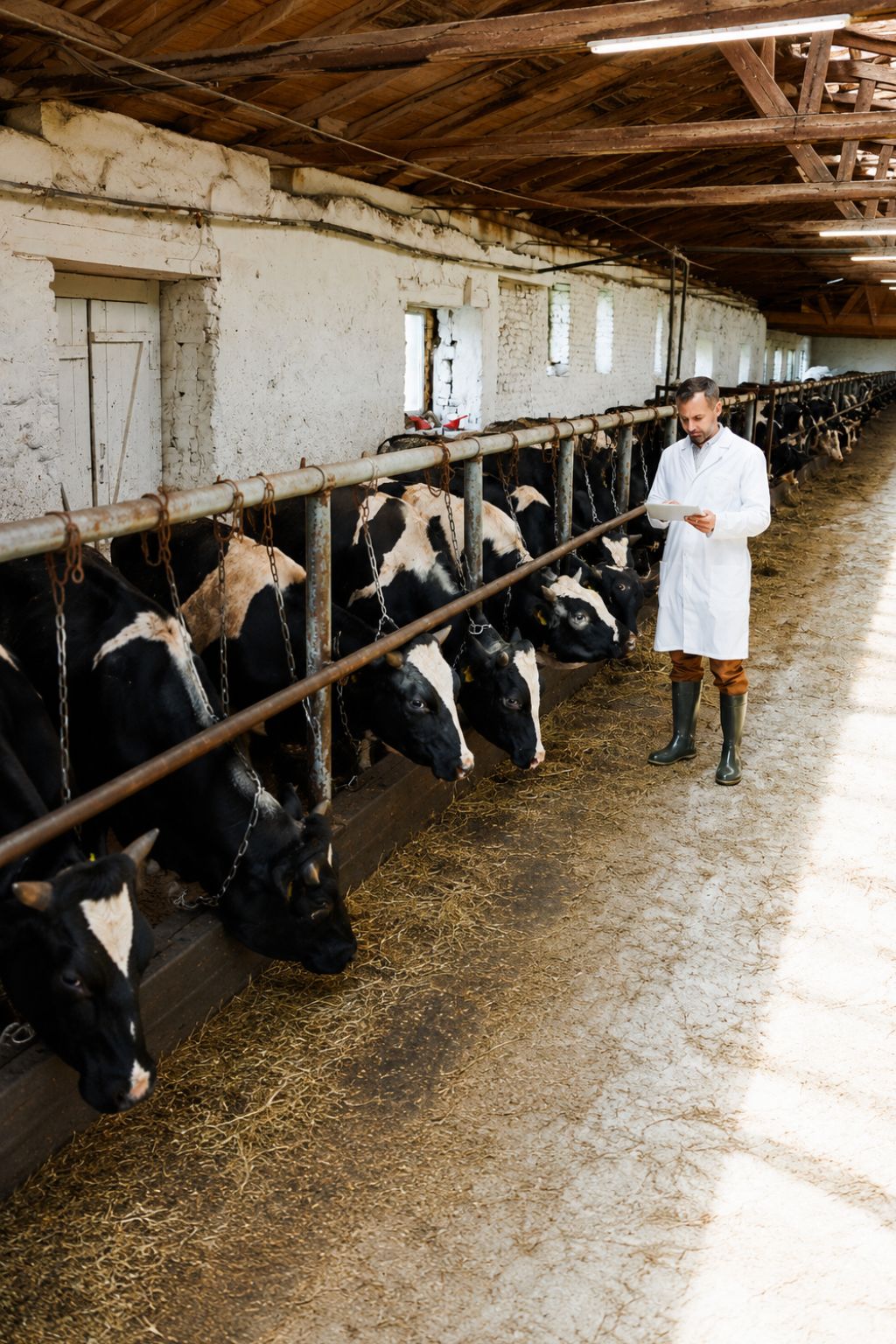
Farm water treatment systems may be used across a wide range of agricultural environments depending on the condition of the private water supply, operational requirements and daily water usage.
Supported Agricultural Environments
- Dairy farms
- Beef and livestock farms
- Poultry operations
- Equine facilities and stables
- Pig farms
- Horticulture and irrigation systems
- Mixed-use agricultural properties
- Farmhouses connected to private wells
Because agricultural water supplies and infrastructure vary from property to property, treatment systems should always be designed around the actual water conditions and operational needs of the site.
How Our Farm Water Treatment Process Works
Every agricultural property has different water conditions, infrastructure and operational requirements. That is why farm water treatment should follow a structured process based on testing, system design and long-term reliability — not guesswork or generic filtration packages.
| Stage | What Happens | Why It Matters |
|---|---|---|
| Water Testing | Laboratory and microbiological analysis of the private water supply. | Identifies the actual water problems before any equipment is recommended. |
| Site Assessment | Evaluation of water usage, livestock demand, pumps, pressure systems and building layout. | Ensures the system is correctly sized for the farm’s operational requirements. |
| System Design | Selection of appropriate treatment stages based on water analysis and usage conditions. | Prevents underperforming or incorrectly configured systems. |
| Installation | Professional installation of filtration, UV, softening or other treatment equipment. | Ensures reliable operation, proper flow rates and service accessibility. |
| Verification Testing | Post-installation checks and water quality verification where required. | Confirms the treatment system is operating correctly. |
| Ongoing Servicing | Scheduled maintenance, filter replacement, UV servicing and monitoring. | Helps maintain long-term system reliability and treatment performance. |
A properly designed agricultural water treatment system should continue performing reliably long after installation, which is why ongoing servicing and water monitoring remain an important part of the process.
Need reliable water treatment for your farm?
Start with water testing and a site assessment before investing in equipment.
Professional Water Treatment Systems for Commercial Properties
We install reliable water treatment systems designed to support the operational needs of commercial properties. From farms and hospitality businesses to rental buildings and production facilities, each system is selected based on water testing results to ensure it addresses the real conditions of your water supply.
Hard water is one of the most common water quality issues in both homes and businesses, leading to limescale buildup in pipes, heating systems, and appliances. Water softeners are designed to remove calcium and magnesium, helping to protect equipment and improve overall system performance.
✔️ Reduce limescale in pipes, boilers, and appliances
✔️ Improve efficiency of heating and water systems
✔️ Extend the lifespan of equipment
✔️ Suitable for residential and commercial properties
Filtration systems are used to remove sediment, particles, and other impurities that affect water clarity and quality. These systems are often installed at the main water entry point to provide whole-property protection.
✔️ Remove sediment and suspended particles
✔️ Protect pipework and water-using equipment
✔️ Improve water clarity and consistency
✔️ Suitable for a wide range of water conditions
Iron and manganese are commonly found in groundwater and private wells. These minerals can cause staining, unpleasant taste, and buildup in plumbing systems if not properly treated.
✔️ Prevent staining on fixtures and surfaces
✔️ Improve water appearance and taste
✔️ Protect plumbing and equipment
✔️ Ideal for private well water supplies
→ Learn About Iron & Manganese Removal
Nitrates can be present in certain water sources, particularly in rural areas and private wells. Dedicated treatment systems help reduce nitrate levels and improve overall water quality for safe daily use.
✔️ Reduce nitrate levels in water
✔️ Improve water safety and quality
✔️ Suitable for private wells and rural properties
✔️ Reliable long-term solution
→ Learn About Nitrate Removal
UV disinfection systems provide chemical-free protection against bacteria and microorganisms. They are widely used where microbiological safety is a concern, especially in private water supplies.
✔️ Effective protection against bacteria and viruses
✔️ Continuous disinfection without chemicals
✔️ Works alongside filtration systems
✔️ Ideal for well water and untreated sources
The right water treatment solution depends on the specific characteristics of your water. Since many issues are not visible, professional water testing is the most reliable way to identify the problem and select the correct technology or combination of systems.
A test-based approach ensures that your investment delivers effective, long-term results — without unnecessary costs or guesswork.
• Professional Water Testing (Home & Business)
• Private Well Water Analysis
• Bacteria, Nitrate, Iron & Hardness Testing
• Pre-Installation Water Assessment
• Post-Treatment Verification Testing
• Water Softeners (Hard Water Treatment)
• Whole-Property Filtration Systems
• Iron & Manganese Removal
• Nitrate Reduction Systems
• UV Water Disinfection
• Well Disinfection (Shock Chlorination)
• Sediment & Borehole Filtration
• Bacteria Protection Systems
• Combined Treatment for Multiple Issues
• Custom Water Treatment System Design
• Professional Installation
• System Configuration for Optimal Performance
• Integration of Multiple Technologies
• Post-Installation Performance Checks
• Scheduled Servicing & System Checks
• Filter Replacement Programmes
• UV Lamp Replacement
• System Performance Monitoring
• Water Quality Re-Testing
• Long-Term Support
Serving Clare, Limerick, Galway & Tipperary
- County Clare (Shannon, Ennis, Killaloe, Kilrush, Scarriff, Tulla, Newmarket‑on‑Fergus, Sixmilebridge, Bunratty, Clarecastle, Quin , Cratloe and more)
- County Limerick (including Limerick city and surrounding areas)
- County Galway (Gort & especially the southern and eastern areas)
- County Tipperary (Nenagh, Borrisokane, and nearby)
If you’re not sure whether we serve your area, just send us a message — we’ll do our best to assist.

FAQ About Farm Water Treatment
Private well water should be tested regularly, especially on agricultural properties where water conditions may change over time due to rainfall, groundwater movement or surrounding land activity. The appropriate testing frequency depends on the type of water source, previous results and how the water is being used across the farm.
UV disinfection systems can be highly effective for microbiological treatment when correctly designed and properly maintained. However, UV systems require suitable water conditions and often need pre-filtration to remove sediment, iron or turbidity before disinfection can work reliably.
Nitrates may enter groundwater through natural conditions, shallow wells, surrounding land activity or agricultural runoff. Because nitrates cannot be seen, smelled or tasted, laboratory testing is required to determine whether elevated levels are present.
Yes. Hard water may cause scale buildup inside dairy equipment, heating systems, washdown systems, plate coolers and pipework. Over time, this can reduce efficiency, increase maintenance requirements and shorten equipment lifespan.
Heavy rainfall can affect groundwater conditions and introduce additional sediment, turbidity or microbiological contamination into vulnerable private wells. Changes after rainfall may indicate that the water source requires further assessment or additional treatment stages.
Yes. UV systems, filtration equipment and softeners all require ongoing maintenance to remain effective. Regular servicing may include filter replacement, UV lamp replacement, sanitisation, performance checks and water quality monitoring.
Not usually. Agricultural water supplies often involve multiple overlapping issues such as bacteria, sediment, hardness, iron or nitrates. In many cases, effective treatment requires several treatment stages working together as part of a properly designed system.
No. Many contaminants, including bacteria and nitrates, cannot be seen by appearance alone. Water that looks clean may still require testing to determine whether treatment is necessary.
Whether you’re just curious or urgently need answers — we’re here to help.
Tell us about your home, well, or business, and we’ll recommend the right test or filtration solution.
