
Commercial Water Treatment for Food & Beverage Production
Water quality in food production environments directly affects hygiene control, process stability, equipment reliability and audit readiness.
DryZone provides evidence-based commercial water treatment for food production facilities, including laboratory testing, process water assessment, system design, installation, verification testing and ongoing servicing across Clare, Limerick, Galway and Tipperary.
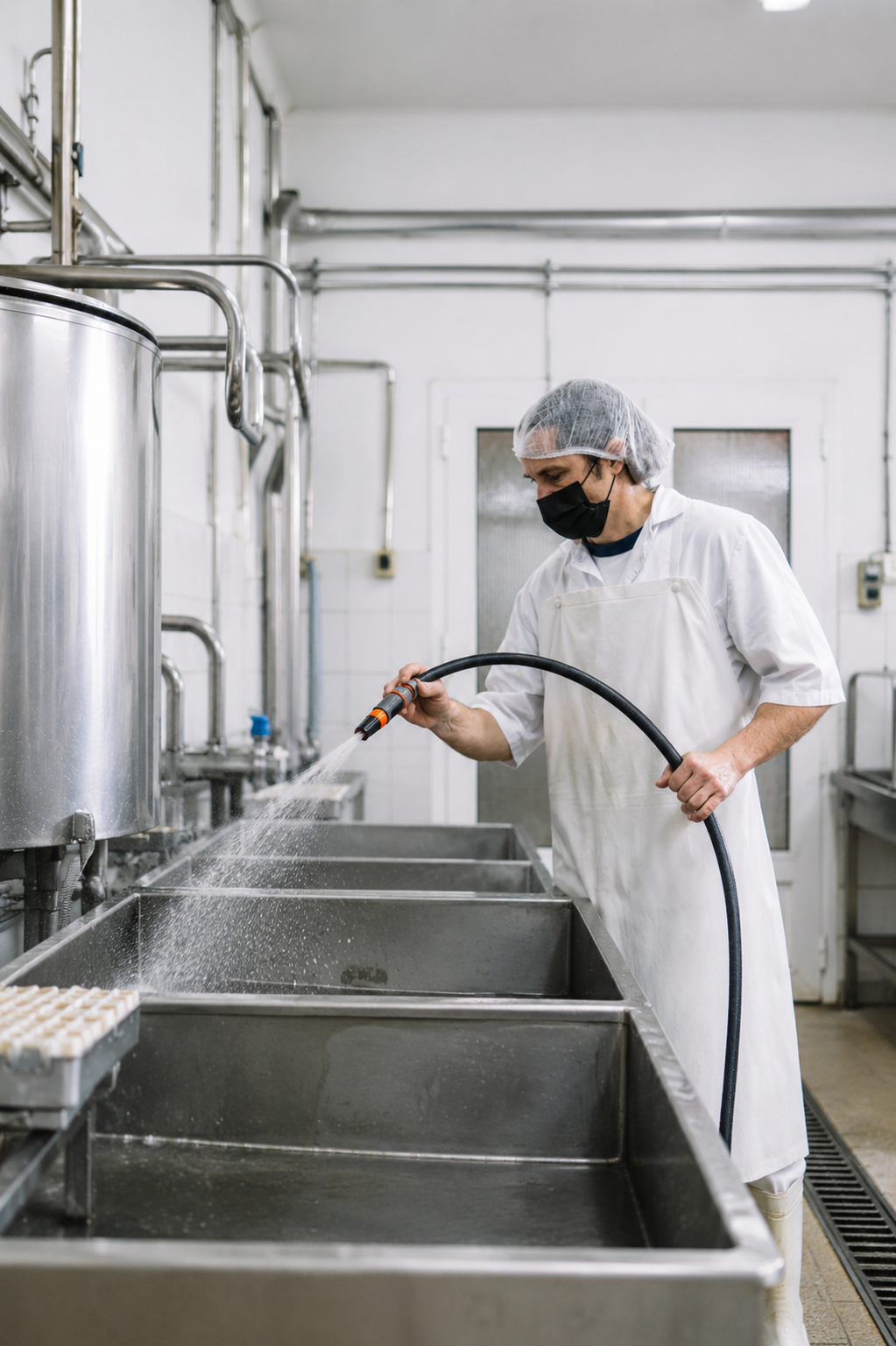
Where Water Is Used in Food Production Facilities?
Water may be used across multiple operational stages within food production environments, often serving different technical and hygiene-related functions throughout the facility simultaneously. Depending on the type of production process, water treatment requirements may vary between different areas of the same building.
Common applications may include:
-
Ingredient preparation & product-contact water
-
Washdown & hygiene systems
-
Final rinse applications
-
Steam generation & hot water systems
-
Heat exchange equipment
-
Ice machines & beverage preparation
-
CIP (Clean-In-Place) systems
-
Staff welfare facilities
-
Process equipment supply
-
Cooling systems & storage infrastructure
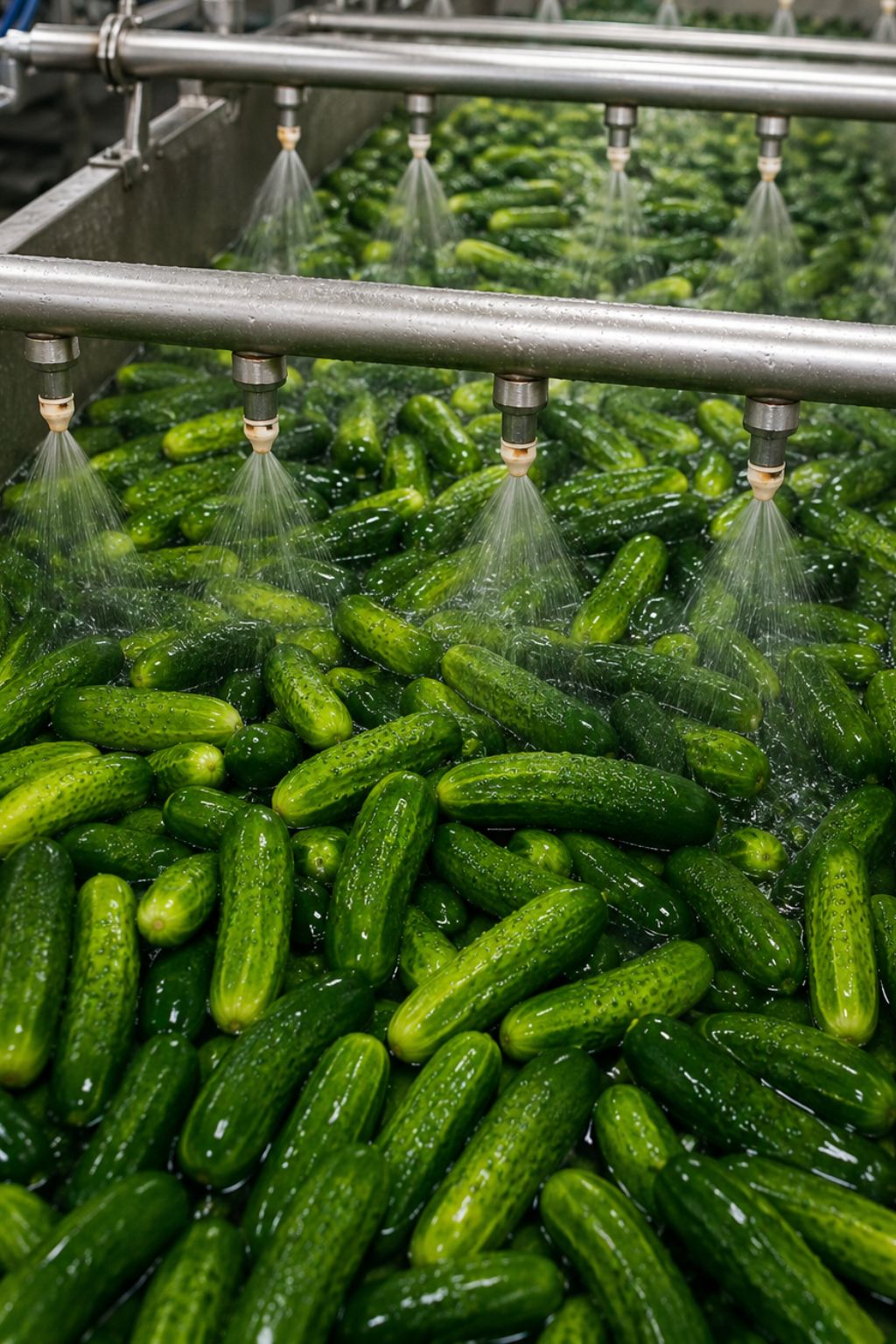
Process Water Requirements May Differ Across Production Stages
In food production environments, not all water is required to meet the same operational parameters. Different production stages may place different demands on microbiological stability, mineral content, suspended solids, chlorine residuals or overall process-water consistency depending on how water interacts with the production environment.
Because of this, commercial systems are often designed around the specific application rather than treating the entire facility to a single uniform standard.
| Production Application | Typical Water Priorities | Common Treatment Focus |
|---|---|---|
| Ingredient preparation | Stable taste, odour and microbiological quality | Carbon filtration, UV disinfection, reverse osmosis |
| Final rinse applications | Low microbiological risk and particulate control | Fine filtration, UV protection |
| Washdown systems | Stable pressure, sediment reduction, hardness management | Sediment filtration, softening systems |
| Steam generation & heating systems | Scale prevention and thermal efficiency | Water softening, TDS management |
| Beverage preparation | Mineral stability and chlorine reduction | Activated carbon, RO systems |
| Ice machines | Low hardness and reduced sediment loading | Carbon filtration, softening, fine filtration |
| Process equipment protection | Stable flow conditions and reduced fouling | Multi-stage filtration, pressure management |
| CIP (Clean-In-Place) systems | Consistent chemical compatibility and flow stability | Softening, dosing systems, filtration |
| Staff welfare facilities | General microbiological safety and usability | UV disinfection, filtration, hardness reduction |
In many production environments, attempting to treat every application identically may increase unnecessary operational costs while still failing to address the most critical process requirements.
For example:
- water suitable for washdown systems may not be appropriate for ingredient-contact applications
- hardness control required for steam equipment may differ from drinking-water priorities
- UV-protected rinse water may still require upstream particulate reduction to maintain disinfection performance
- chlorine removal required for flavour-sensitive production may not be necessary across all facility usage points
Because of this, commercial food production systems are often divided into separate treatment zones, staged filtration circuits or process-specific supply lines depending on operational requirements throughout the facility.
Proper system planning helps ensure that each production stage receives water treatment appropriate to its actual technical and hygiene demands rather than relying on oversized or poorly targeted whole-building solutions.
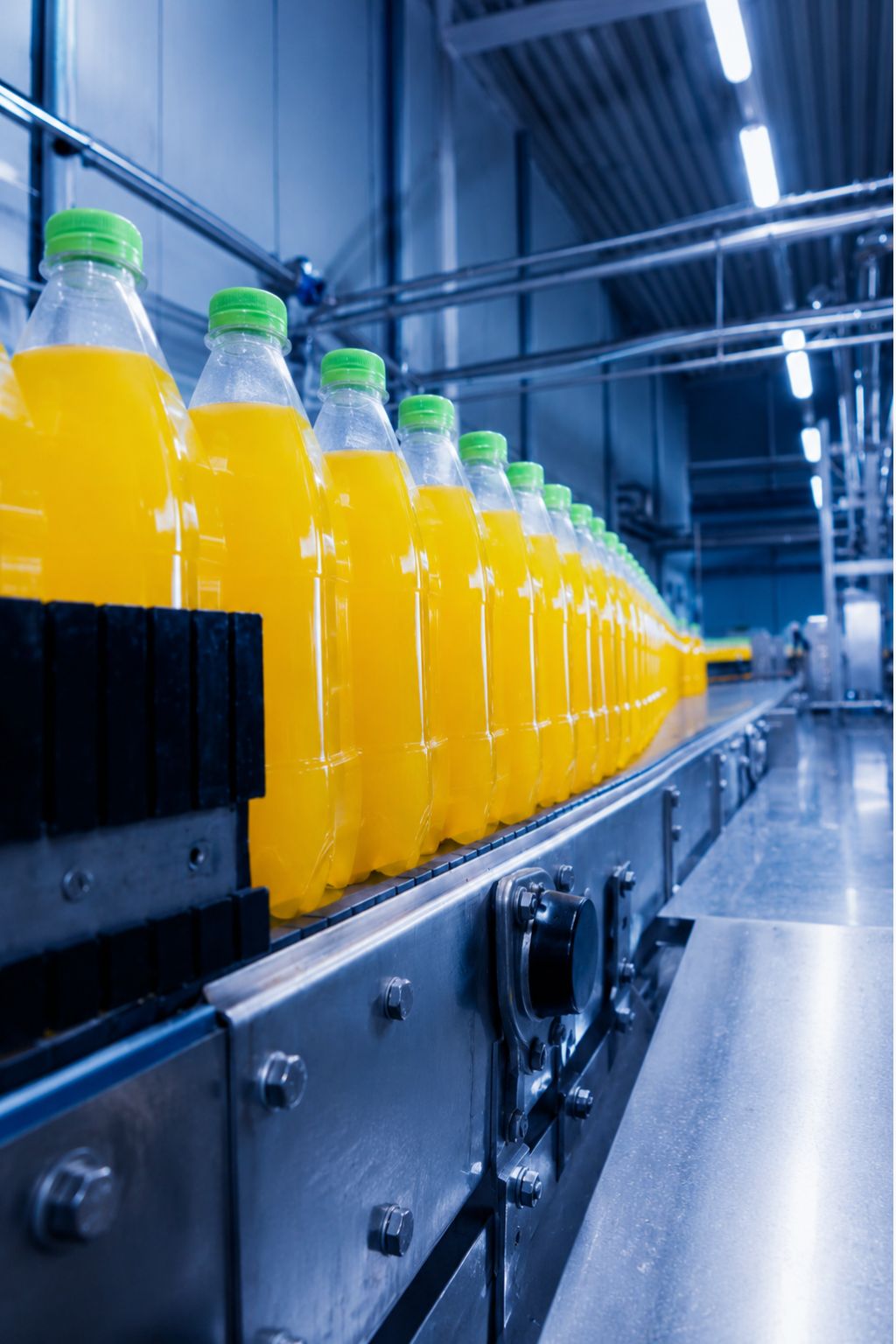
Why Water Quality Can Affect Food Production Operations?
Water used in food production environments may influence hygiene control, process stability, equipment performance and long-term operational reliability. Depending on the source water conditions and how water is used throughout the facility, untreated or unstable water quality may gradually introduce operational risks affecting both production infrastructure and day-to-day process consistency.
Common water-related risks in food production environments may include:
Microbiological Contamination & Biofilm Development
Microbiological instability may develop in systems with inadequate disinfection performance, stagnant pipe sections, oversized storage capacity or intermittent water usage patterns. In food production environments, untreated bacterial contamination may include coliform bacteria, E. coli or opportunistic pathogens
Once microorganisms begin attaching to internal pipe surfaces, storage tanks or dead-leg sections of the system, biofilm layers may gradually develop. These biological layers can protect bacteria from normal disinfection exposure, making ongoing contamination significantly more difficult to eliminate through routine flushing or temporary chlorination alone.
In production environments, unmanaged microbiological contamination may contribute to failed verification testing, hygiene non-conformities, increased sanitisation requirements and long-term operational risk within process water infrastructure.
Hardness & Mineral Scale Accumulation
Elevated calcium and magnesium concentrations are common in many groundwater supplies and may lead to progressive mineral scale accumulation inside heating elements, steam systems, plate heat exchangers, hot water cylinders and process pipework.
As scale thickness increases, thermal transfer efficiency decreases, forcing equipment to operate at higher energy demand in order to maintain production temperatures. Even relatively thin scale deposits can significantly reduce heating efficiency while increasing operational costs and placing additional stress on pumps, valves, heating elements and circulation equipment.
Over time, hardness-related scaling may contribute to premature equipment wear, restricted flow conditions, overheating risks and increased maintenance downtime across production systems.
Iron, Manganese & Sediment Loading
Untreated groundwater supplies may contain elevated iron, manganese or suspended solids capable of affecting both water appearance and system performance. When oxidised, dissolved metals may form particulate deposits that accumulate inside filters, valves, solenoid controls, washdown equipment and process pipework.
Sediment loading may also accelerate cartridge fouling, reduce filtration efficiency and create unstable operating conditions across downstream treatment stages.
In hygiene-sensitive environments, iron contamination may contribute to visible orange or dark staining on production surfaces, sinks, fittings or rinse systems, particularly where water is exposed to air or oxidising conditions.
Reduced UV Disinfection Efficiency
Commercial UV disinfection systems rely on sufficient UV transmittance and controlled hydraulic conditions to achieve effective microbial inactivation. Elevated turbidity, suspended solids, iron contamination or inadequate pre-filtration may interfere with UV penetration through the water column.
Particles suspended within the water may physically shield microorganisms from ultraviolet exposure, reducing effective disinfection performance even when the UV reactor itself remains operational.
In many commercial UV applications, turbidity levels above approximately 1 NTU may begin reducing optimal UV efficiency, particularly where water also contains elevated iron, manganese or organic contamination.
Flow rates exceeding reactor design parameters may further reduce UV contact time, increasing the risk of incomplete microbial inactivation within production-critical environments.
Seasonal Changes in Source Water Quality
Private wells and vulnerable groundwater supplies may experience seasonal fluctuations caused by rainfall influence, agricultural runoff, groundwater movement or changing aquifer conditions. Following prolonged rainfall, shallow groundwater systems may become increasingly vulnerable to surface contamination ingress, sediment loading or short-term microbiological deterioration.
These fluctuations may alter turbidity, mineral composition, nitrate concentrations, bacterial stability or overall source-water chemistry throughout the year.
Without periodic laboratory testing and verification monitoring, gradual water quality changes may remain undetected until operational problems, hygiene concerns or equipment-related issues begin affecting the facility.
Chlorine Imbalance & Process Compatibility Issues
In some food and beverage production environments, unstable chlorine residuals or excessive oxidising conditions may interfere with flavour-sensitive processes, ingredient consistency or downstream treatment compatibility.
Elevated chlorine exposure may also accelerate degradation of rubber seals, membranes, dosing components and specialised process equipment not designed for continuous oxidant exposure.
Where activated carbon systems are used for chlorine reduction, insufficient servicing or media exhaustion may result in inconsistent residual control and unstable downstream water quality conditions.
Nitrates & Vulnerable Groundwater Sources
Facilities supplied by shallow private wells or agriculturally influenced groundwater sources may be exposed to elevated nitrate concentrations associated with fertiliser runoff, slurry infiltration or vulnerable aquifer conditions.
While nitrates themselves may not create visible water quality changes, elevated concentrations can indicate broader source-water vulnerability and increased exposure to surface influence or environmental contamination pathways.
Hydraulic Instability & Pressure Variability
Inconsistent flow conditions, undersized pipework, pressure fluctuations or incorrectly configured booster systems may create unstable hydraulic behaviour throughout treatment infrastructure and production equipment.
Hydraulic instability can directly affect filtration efficiency, UV reactor exposure time, dosing accuracy and overall treatment consistency, particularly in facilities with simultaneous high-demand production processes or variable washdown requirements.
In severe cases, unstable pressure conditions may contribute to equipment stress, valve wear, inconsistent process performance or premature failure of treatment components operating outside intended design conditions.
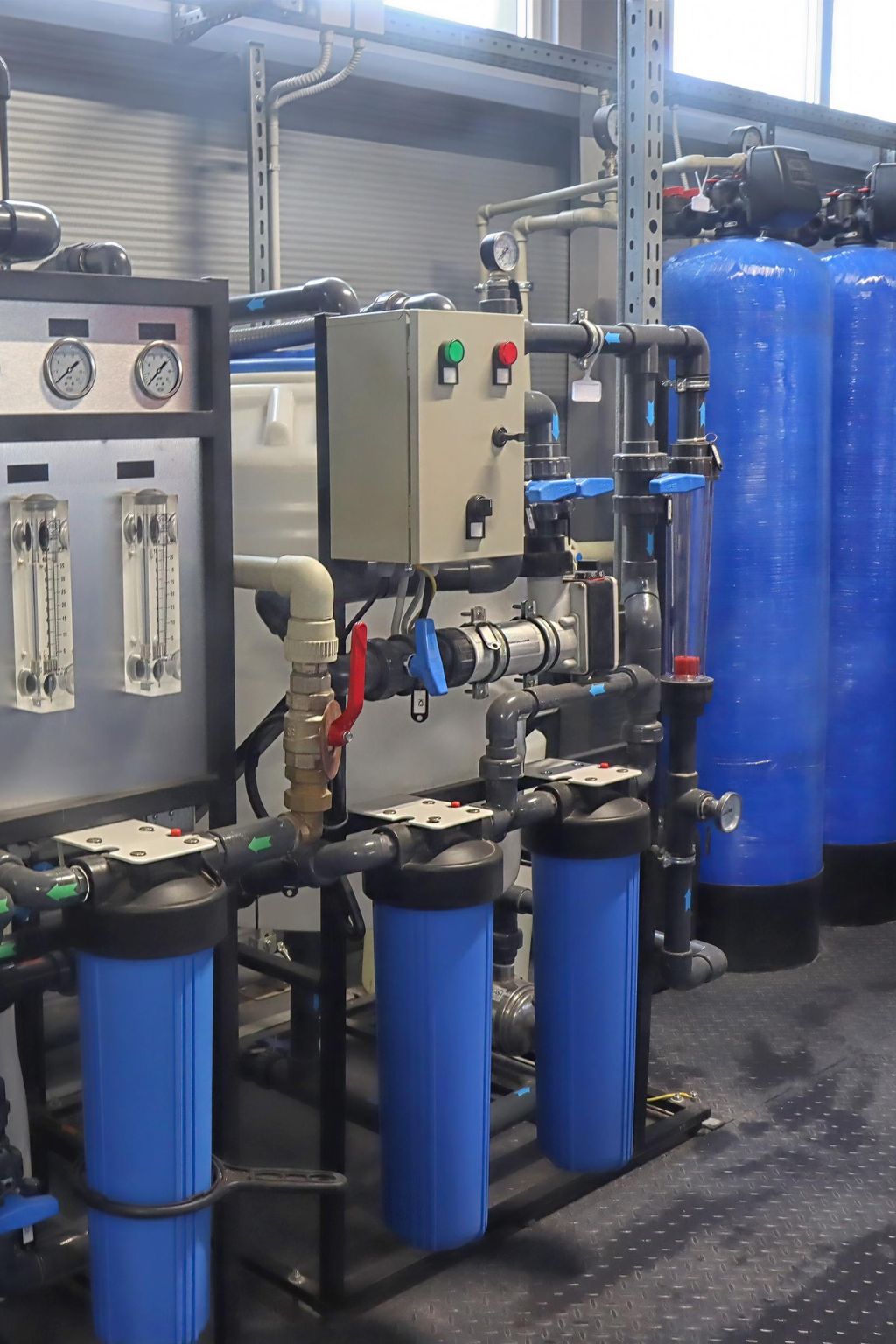
Water Treatment Systems Used in Food Production Facilities
Food production environments often require multiple treatment stages working together as part of an integrated process water strategy. The correct configuration depends on source-water conditions, microbiological risk profile, production requirements, hydraulic demand and how water is used throughout the facility.
| Treatment System | Primary Function | Common Production Applications |
|---|---|---|
| Sediment filtration | Removes suspended solids, sand, silt and particulate contamination | Pre-filtration, washdown systems, UV protection, process pipework |
| Activated carbon filtration | Reduces chlorine, taste, odour and organic compounds | Beverage production, ingredient preparation, downstream equipment protection |
| Commercial UV disinfection | Reduces microbiological contamination risks | Private well protection, final rinse stages, hygiene barrier applications |
| Water softening systems | Reduces calcium and magnesium hardness minerals | Steam systems, calorifiers, heat exchangers, hot water infrastructure |
| Iron & manganese removal | Reduces oxidised metals and staining contaminants | Groundwater treatment, rural production facilities, washdown systems |
| Reverse osmosis systems | Produces low-mineral or controlled process water | Ingredient-sensitive production, specialised processing applications |
| Chemical dosing systems | Controls pH, disinfectant residuals or scale inhibition | Process stabilisation, chemical balancing, specialised treatment stages |
| Break tanks & booster systems | Maintains stable hydraulic conditions and pressure | High-demand facilities, simultaneous production usage, washdown infrastructure |
| Multi-stage media filtration | Combines multiple filtration stages for complex water conditions | Variable groundwater supplies, high sediment loading, mixed contamination profiles |
Why Food Production Facilities Often Require Multi-Stage Treatment
In commercial food production environments, water quality problems rarely involve a single isolated issue. Groundwater supplies, private wells and process water systems may contain multiple overlapping conditions affecting microbiological stability, mineral content, suspended solids, hydraulic behaviour and equipment reliability at the same time.
Because of this, commercial treatment systems are often designed as integrated multi-stage solutions rather than standalone filters targeting only one parameter.
For example:
| Water Condition | Typical Treatment Combination |
|---|---|
| Hard water + microbiological contamination | Water softener + sediment filtration + UV disinfection |
| Iron contamination + bacterial instability | Oxidation stage + media filtration + UV system |
| Sediment loading + chlorine imbalance | Sediment filtration + activated carbon system |
| High turbidity + UV protection requirements | Multi-stage pre-filtration + UV reactor |
| Variable groundwater quality | Break tank + booster system + staged filtration |
| Ingredient-sensitive production water | Activated carbon + reverse osmosis + post-treatment stabilisation |
The correct configuration depends not only on laboratory water analysis, but also on:
- flow demand
- production schedules
- simultaneous usage
- equipment sensitivity
- process criticality
- servicing accessibility
- future operational expansion
In many facilities, improperly combined systems may create hydraulic instability, maintenance complications or inconsistent treatment performance even when individual treatment components appear correctly selected in isolation.

Water Testing Before System Design
Water treatment systems used in food production environments should never be selected based on assumptions alone. In many facilities, underlying water quality problems may remain partially hidden until operational issues begin affecting hygiene control, equipment performance or production consistency.
Because different contaminants behave differently under varying production conditions, effective system design should always begin with proper water analysis rather than generic filtration selection.
Microbiological Testing
Microbiological testing may be required to assess the presence of indicators such as total coliforms, E. coli or broader bacterial contamination risks within private supplies, stored water systems or vulnerable groundwater sources.
In food production environments, microbiological instability may not always create immediate visible symptoms, particularly where contamination develops intermittently due to rainfall influence, stagnant sections or fluctuating source-water conditions.
Water Chemistry & Mineral Analysis
Detailed water chemistry assessment helps identify operational conditions that may contribute to hardness scaling, corrosion potential, oxidisation staining, UV performance reduction or process instability.
Parameters commonly assessed may include:
- Hardness
- Iron
- Manganese
- pH
- Conductivity
- Turbidity
- Total Dissolved Solids (TDS)
- Nitrates
- Chlorine residuals
- Suspended solids
Understanding how these parameters interact is important when selecting appropriate treatment stages, media configurations and flow requirements for commercial systems.
Not sure about the quality of your water?
Order a water test
Hygiene, Compliance & Documentation
In food production environments, water treatment is not limited to filtration performance alone. Ongoing hygiene management, servicing records, verification procedures and operational documentation may all form part of wider production control, audit preparation and facility risk management processes.
Where water is used for ingredient preparation, rinse applications, hygiene systems or process equipment, treatment infrastructure should operate as part of a controlled and maintainable system rather than an isolated filtration installation without ongoing verification.
Water Safety Documentation
Depending on the facility type and production environment, documentation may include:
- Water Safety File
- Laboratory test reports
- Pre-installation water analysis
- Post-installation verification testing
- Service logs
- Filter replacement records
- UV servicing records
- Pressure and flow verification
- Microbiological monitoring schedules
- Annual servicing documentation
Maintaining organised servicing and verification records may help demonstrate ongoing system management and operational consistency over time.
HACCP & Process Awareness
In many food production facilities, water may form part of wider hygiene management, contamination control or operational monitoring procedures linked to HACCP-based systems and internal quality management processes.
Because water quality may fluctuate seasonally or operationally, periodic verification testing and servicing may help identify developing issues before they begin affecting production infrastructure or hygiene-sensitive processes.
Verification & Ongoing Monitoring
Initial installation alone does not guarantee long-term treatment performance. Commercial systems operating under changing production demand, variable groundwater conditions or continuous daily usage may gradually experience changes in filtration efficiency, UV performance, pressure stability or microbiological control.
Ongoing verification may include:
| Verification Area | Purpose |
|---|---|
| Microbiological retesting | Confirm ongoing bacterial control |
| Hardness monitoring | Assess softener performance and scaling prevention |
| UV servicing verification | Maintain effective microbial inactivation |
| Pressure & flow checks | Confirm hydraulic stability |
| Sediment inspection | Identify source-water changes or filtration overload |
| Chemical parameter testing | Monitor nitrates, pH, conductivity or chlorine balance |
Planned Servicing & Operational Reliability
Commercial food production systems should be maintained according to actual operational demand rather than only reactive breakdown servicing. Inadequate maintenance intervals may gradually reduce treatment effectiveness while increasing operational risks within production infrastructure.
Routine servicing may involve:
- filter replacement
- UV lamp replacement
- quartz sleeve cleaning
- sanitisation procedures
- pressure vessel checks
- valve inspection
- dosing calibration
- hydraulic performance assessment
In production-critical environments, preventative servicing may help reduce unexpected downtime, equipment stress and long-term treatment instability across the facility.
Why Businesses Choose DryZone
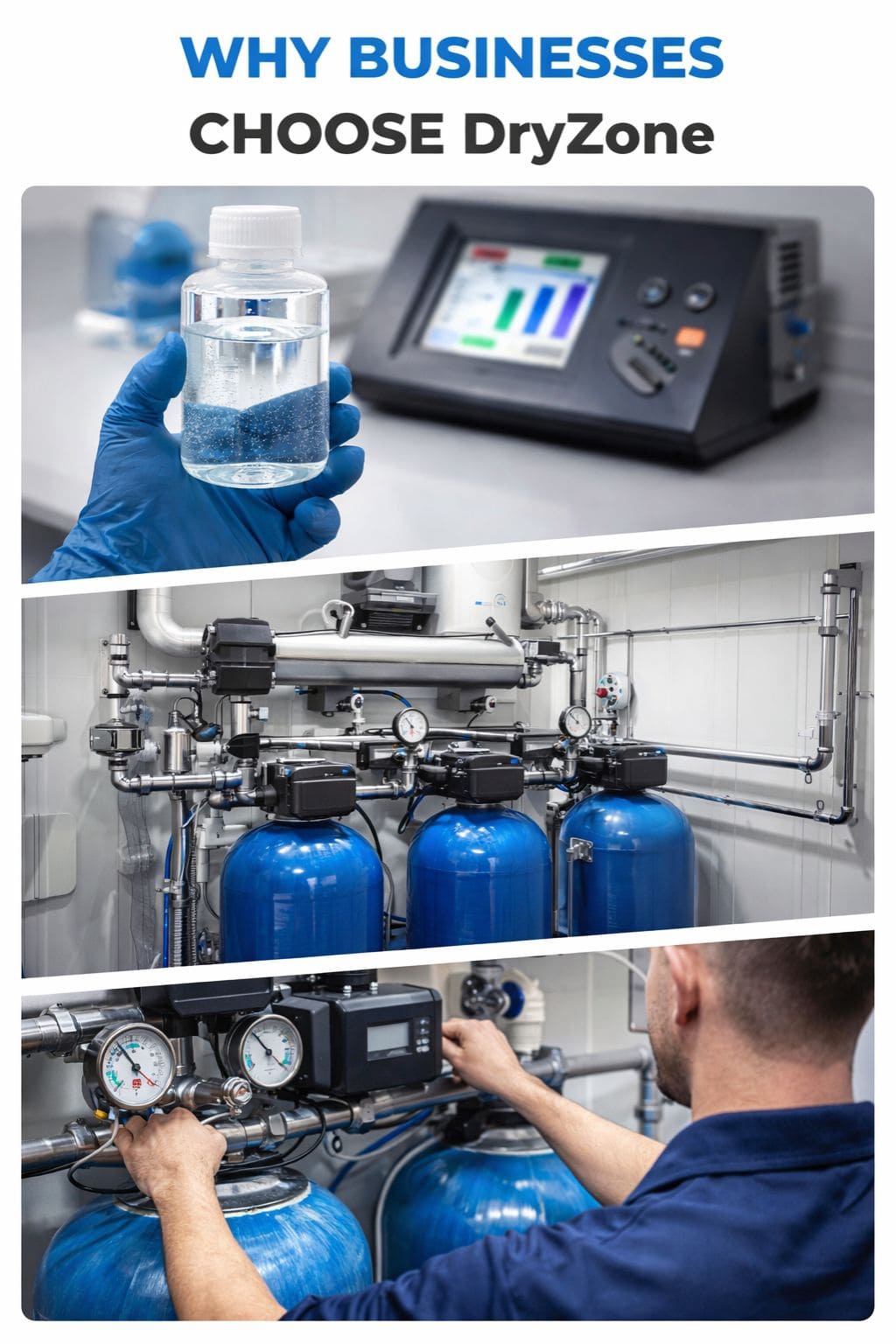
Businesses rely on stable water quality to keep their operations running smoothly. From protecting equipment and maintaining hygiene standards to ensuring safe water for staff and customers, the right treatment approach makes a significant difference.
At DryZone, we focus on practical, evidence-based water treatment solutions that address the real conditions of your water supply. Our approach combines professional testing, reliable treatment systems, and ongoing support to help businesses maintain dependable water quality over the long term.
What Makes DryZone Different
| Advantage | What It Means | Why It Matters for Businesses | Long-Term Value |
|---|---|---|---|
| Professional Water Testing | Water is analysed before any treatment system is installed | Ensures the correct solution is selected | Avoids unnecessary or ineffective systems |
| Proven Treatment Systems | We install reliable, industry-tested filtration and treatment equipment | Provides stable water quality | Reduces operational disruptions |
| Experience with Commercial Properties | Work with farms, hotels, schools, rental properties, and commercial buildings | Understanding of industry-specific needs | Solutions adapted to real business environments |
| Support for Private Water Supplies | Many rural businesses rely on wells | Safe water for staff, customers, and operations | Reduced health and compliance risks |
| Ongoing Service & Maintenance | Regular system checks and servicing | Maintains system performance | Protects equipment and long-term investment |
Professional Water Treatment Systems for Commercial Properties
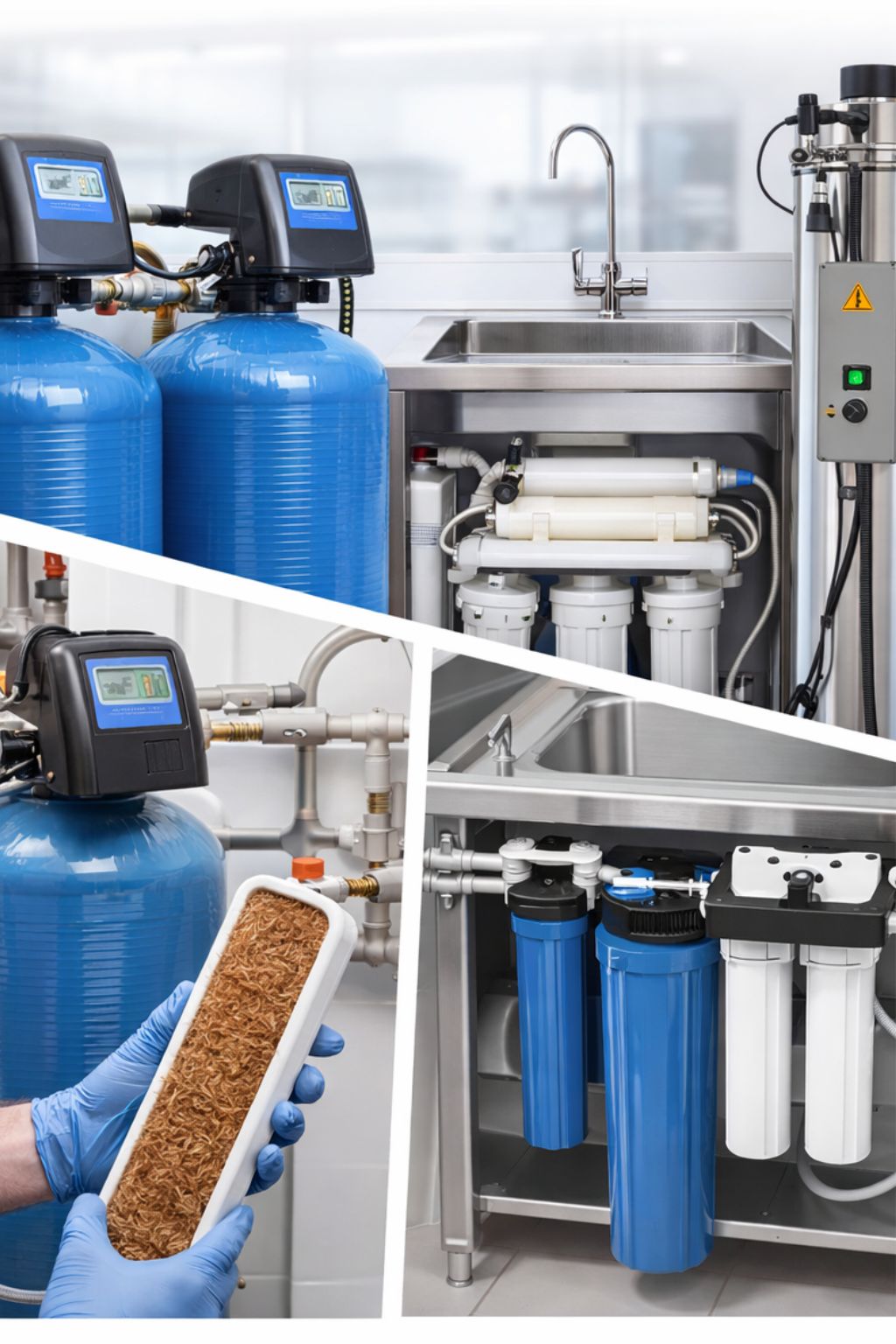
We install reliable water treatment systems designed to support the operational needs of commercial properties. From farms and hospitality businesses to rental buildings and production facilities, each system is selected based on water testing results to ensure it addresses the real conditions of your water supply.
Hard water is one of the most common water quality issues in both homes and businesses, leading to limescale buildup in pipes, heating systems, and appliances. Water softeners are designed to remove calcium and magnesium, helping to protect equipment and improve overall system performance.
✔️ Reduce limescale in pipes, boilers, and appliances
✔️ Improve efficiency of heating and water systems
✔️ Extend the lifespan of equipment
✔️ Suitable for residential and commercial properties
Filtration systems are used to remove sediment, particles, and other impurities that affect water clarity and quality. These systems are often installed at the main water entry point to provide whole-property protection.
✔️ Remove sediment and suspended particles
✔️ Protect pipework and water-using equipment
✔️ Improve water clarity and consistency
✔️ Suitable for a wide range of water conditions
Iron and manganese are commonly found in groundwater and private wells. These minerals can cause staining, unpleasant taste, and buildup in plumbing systems if not properly treated.
✔️ Prevent staining on fixtures and surfaces
✔️ Improve water appearance and taste
✔️ Protect plumbing and equipment
✔️ Ideal for private well water supplies
→ Learn About Iron & Manganese Removal
Nitrates can be present in certain water sources, particularly in rural areas and private wells. Dedicated treatment systems help reduce nitrate levels and improve overall water quality for safe daily use.
✔️ Reduce nitrate levels in water
✔️ Improve water safety and quality
✔️ Suitable for private wells and rural properties
✔️ Reliable long-term solution
→ Learn About Nitrate Removal
UV disinfection systems provide chemical-free protection against bacteria and microorganisms. They are widely used where microbiological safety is a concern, especially in private water supplies.
✔️ Effective protection against bacteria and viruses
✔️ Continuous disinfection without chemicals
✔️ Works alongside filtration systems
✔️ Ideal for well water and untreated sources
The right water treatment solution depends on the specific characteristics of your water. Since many issues are not visible, professional water testing is the most reliable way to identify the problem and select the correct technology or combination of systems.
A test-based approach ensures that your investment delivers effective, long-term results — without unnecessary costs or guesswork.
• Professional Water Testing (Home & Business)
• Private Well Water Analysis
• Bacteria, Nitrate, Iron & Hardness Testing
• Pre-Installation Water Assessment
• Post-Treatment Verification Testing
• Water Softeners (Hard Water Treatment)
• Whole-Property Filtration Systems
• Iron & Manganese Removal
• Nitrate Reduction Systems
• UV Water Disinfection
• Well Disinfection (Shock Chlorination)
• Sediment & Borehole Filtration
• Bacteria Protection Systems
• Combined Treatment for Multiple Issues
• Custom Water Treatment System Design
• Professional Installation
• System Configuration for Optimal Performance
• Integration of Multiple Technologies
• Post-Installation Performance Checks
• Scheduled Servicing & System Checks
• Filter Replacement Programmes
• UV Lamp Replacement
• System Performance Monitoring
• Water Quality Re-Testing
• Long-Term Support
Serving Clare, Limerick, Galway & Tipperary
- County Clare (Shannon, Ennis, Killaloe, Kilrush, Scarriff, Tulla, Newmarket‑on‑Fergus, Sixmilebridge, Bunratty, Clarecastle, Quin , Cratloe and more)
- County Limerick (including Limerick city and surrounding areas)
- County Galway (Gort & especially the southern and eastern areas)
- County Tipperary (Nenagh, Borrisokane, and nearby)
If you’re not sure whether we serve your area, just send us a message — we’ll do our best to assist.

FAQ About Water Treatment for Food Production Facilities
In many production environments, periodic water testing helps identify microbiological instability, mineral fluctuations, sediment loading or changing groundwater conditions before they begin affecting production processes, hygiene control or equipment performance. Facilities supplied by private wells may require additional monitoring due to seasonal source-water variability.
Yes. Commercial UV disinfection systems are commonly used for microbiological protection in process water, final rinse stages and private water supplies. However, effective UV performance depends heavily on proper pre-filtration, stable flow conditions and sufficient UV transmittance within the incoming water supply.
Untreated hardness may contribute to mineral scale accumulation inside heating systems, calorifiers, steam equipment, plate heat exchangers and process pipework. Over time, this may reduce thermal efficiency, increase energy consumption and accelerate equipment wear or maintenance requirements.
Different contaminants require different treatment approaches. Installing commercial filtration without proper water analysis may result in undersized equipment, unstable treatment performance or incomplete contaminant reduction. Laboratory testing helps ensure that treatment systems are designed around actual source-water conditions and operational requirements.
Yes. Private wells and vulnerable groundwater supplies may experience seasonal fluctuations caused by rainfall influence, agricultural runoff, groundwater movement or changing aquifer conditions. These changes may affect turbidity, microbiological stability, nitrate levels and overall water chemistry.
Yes. Elevated iron or manganese concentrations may contribute to oxidisation staining, sediment accumulation, fouling of valves and filtration overload within treatment infrastructure and process equipment. In some applications, contamination may also affect rinse systems, washdown performance or visible surface cleanliness.
Servicing intervals depend on water quality, production demand, equipment type and operational conditions. Commercial systems operating continuously or under variable groundwater conditions may require more frequent monitoring, filter replacement, UV servicing or verification testing.
Yes. UV systems require routine lamp replacement, quartz sleeve cleaning, performance checks and upstream filtration maintenance to maintain effective microbial inactivation over time. Reduced UV transmittance or unstable flow conditions may gradually affect disinfection performance if systems are not properly maintained.
In many production environments, multiple overlapping water conditions exist simultaneously. Facilities may require combined treatment stages addressing microbiological protection, hardness reduction, sediment filtration, iron removal, hydraulic stability and process-specific water quality requirements together rather than relying on a single standalone filter.
Whether you’re just curious or urgently need answers — we’re here to help.
Tell us about your home, well, or business, and we’ll recommend the right test or filtration solution.
