
What Water Treatment System Do I Need?
Choosing a water treatment system can be confusing. The right solution depends on your water source, test results and the specific problem you want to address. A system that works well for one property may be ineffective for another.
Private wells, public water supplies and commercial water systems can all present different challenges, including hardness, iron, manganese, bacteria, nitrate, chlorine or taste concerns. Identifying the actual cause is often the first step towards selecting appropriate treatment.
DryZone follows a testing → assessment → treatment → verification approach, helping homeowners and businesses choose systems based on measured results rather than assumptions.
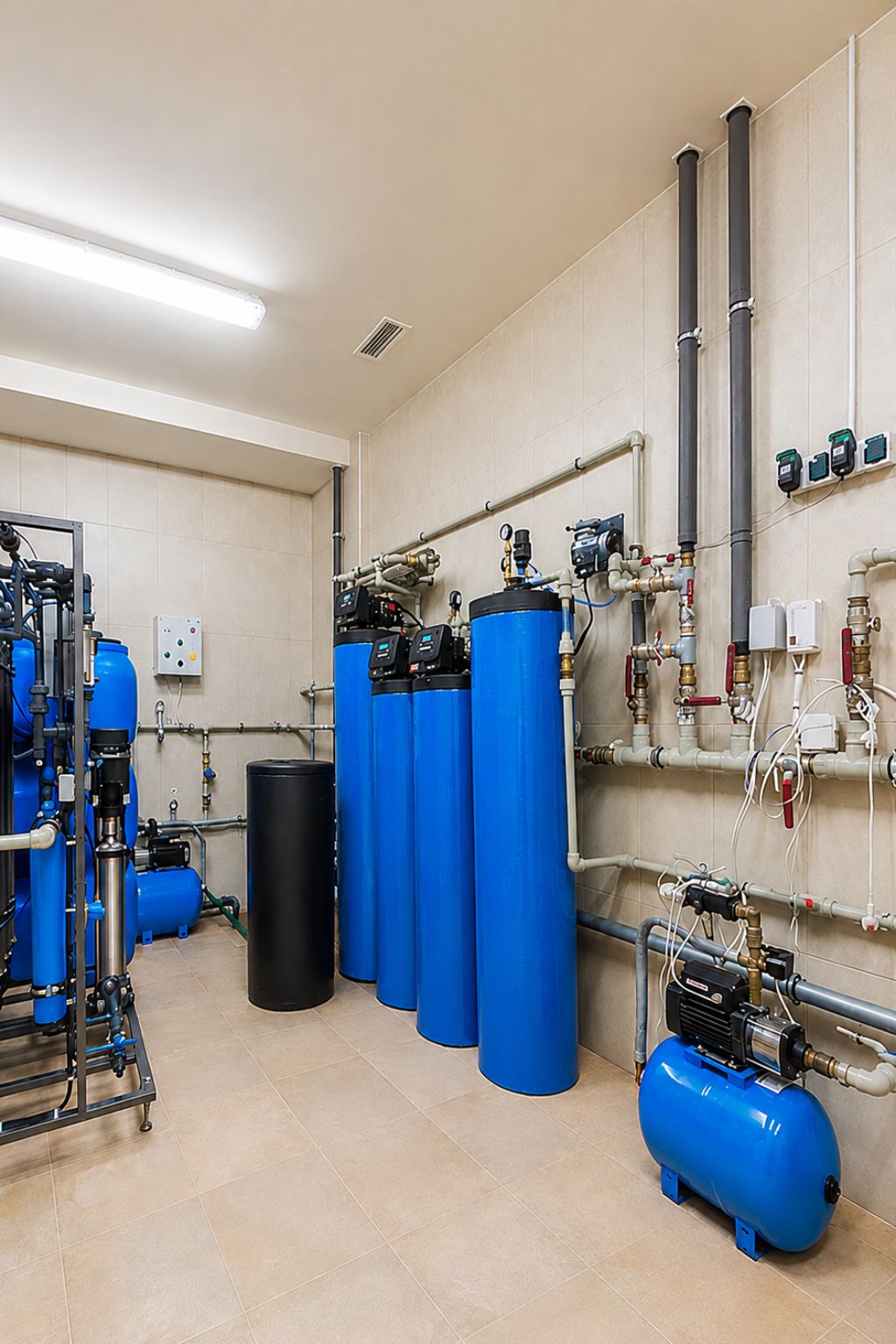
Why There Is No Single Water Treatment System for Every Property
The system that works effectively for one property may be unsuitable for another, even within the same area.
Different treatment technologies are designed to address different water quality issues. Some systems are intended to reduce hardness, while others target iron, manganese, bacteria, nitrate or unwanted tastes and odours. In some cases, more than one treatment stage may be required to achieve the desired water quality.
Choosing equipment without first understanding the underlying issue can lead to unnecessary costs, increased maintenance or disappointing results. Effective water treatment begins with identifying the problem before selecting the technology.
Your Water Source Matters
The type of water supply serving a property often plays an important role in determining which treatment system may be suitable. Private wells and public water supplies can present very different water quality characteristics and treatment requirements.
Private Wells and Boreholes
Private water supplies are not treated by a municipal provider and may vary significantly from one property to another. Common issues can include naturally occurring minerals, bacterial contamination and agricultural influences.
Typical concerns may include:
- Iron and manganese
- Hard water
- Bacteria and microbiological contamination
- Nitrate
- Low pH
- Sediment
Public Water Supplies
Water supplied through public networks is treated before distribution, but homeowners may still experience issues affecting taste, appearance or appliance performance.
Common concerns may include:
- Chlorine taste or odour
- Hard water and limescale
- Sediment following mains works
- Drinking water quality preferences
- Improvement of taste and clarity
Understanding the water source is often an important first step when considering water treatment options.
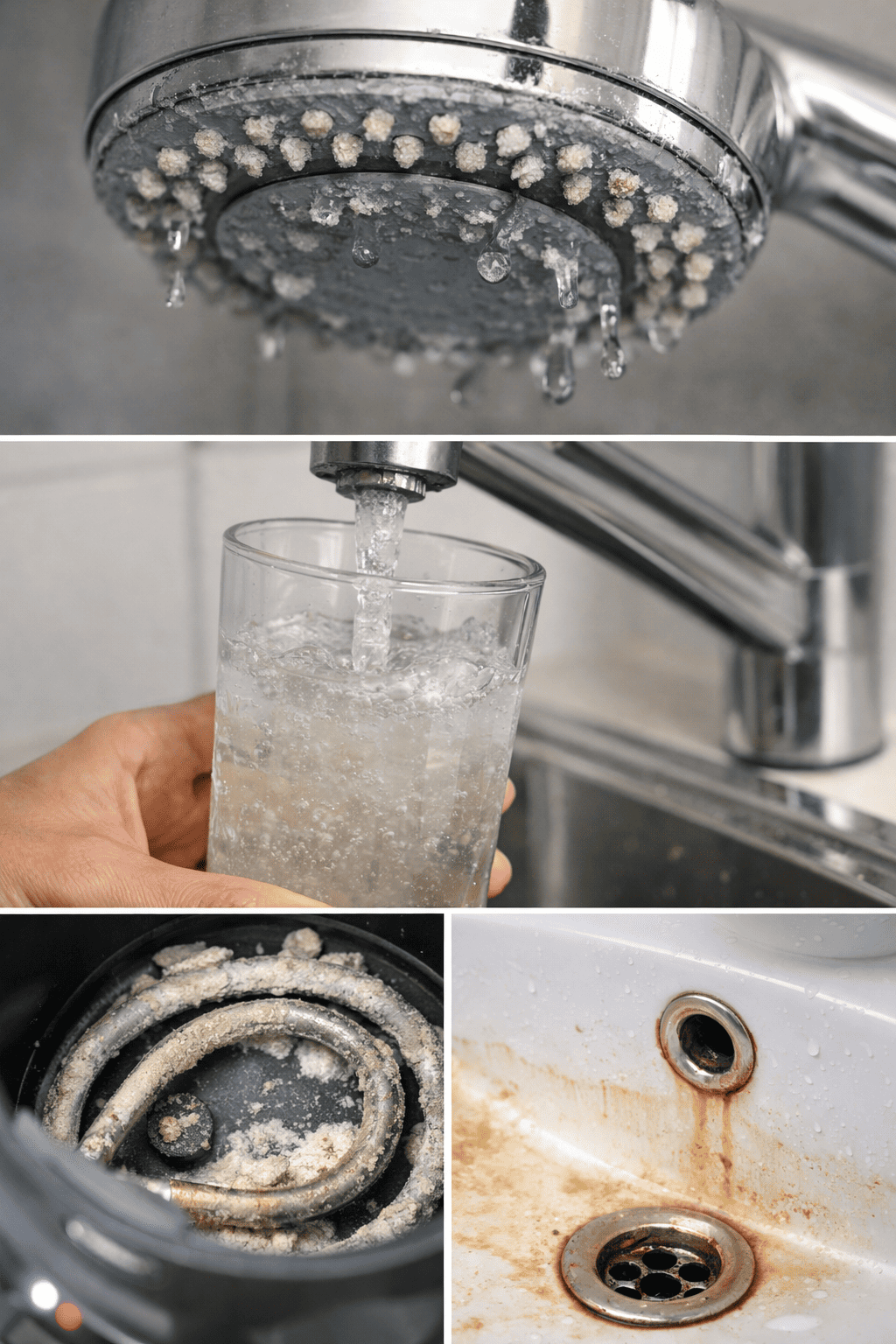
From Water Problem to Treatment Solution
Many water quality concerns can appear similar, but the underlying cause may differ. The same symptom can sometimes be linked to different contaminants or water conditions. Identifying the actual cause is often the first step in selecting an appropriate treatment system.
| What You Notice | Possible Cause | Typical Treatment |
|---|---|---|
| White scale on taps and appliances | Hard water | Water Softener |
| Orange or brown staining | Iron or manganese | Iron & Manganese Removal |
| Unusual taste or odour | Chlorine, sulphur or organic matter | Carbon Filtration or Further Assessment |
| Concerns about bacteria | Private water supply contamination | UV Disinfection |
| High nitrate levels | Agricultural influence | Nitrate Removal |
| Poor drinking water quality | Multiple dissolved contaminants | Reverse Osmosis |
| Cloudy or discoloured water | Sediment or suspended particles | Whole House Filtration |
Important: The same symptom does not always indicate the same problem. Water testing can help identify the underlying cause before treatment equipment is selected.

Why Water Testing Comes Before Treatment
Water quality issues are not always visible. Two properties experiencing similar symptoms may require completely different treatment approaches depending on the underlying water chemistry or microbiological conditions.
For example, orange staining may be caused by iron, manganese or a combination of both. Unusual taste or odour can result from chlorine, organic compounds, sulphur or bacterial activity. Installing equipment without understanding the actual cause may lead to ineffective treatment or unnecessary expense.
Water testing helps identify the characteristics of the water supply and provides information that can be used when selecting treatment options. Depending on the water source and property type, testing may include chemical, microbiological or specialist analysis.
At DryZone, water treatment recommendations follow a structured process:
Test → Assess → Treat → Verify → Maintain
This approach helps ensure that treatment decisions are based on measured results rather than assumptions.
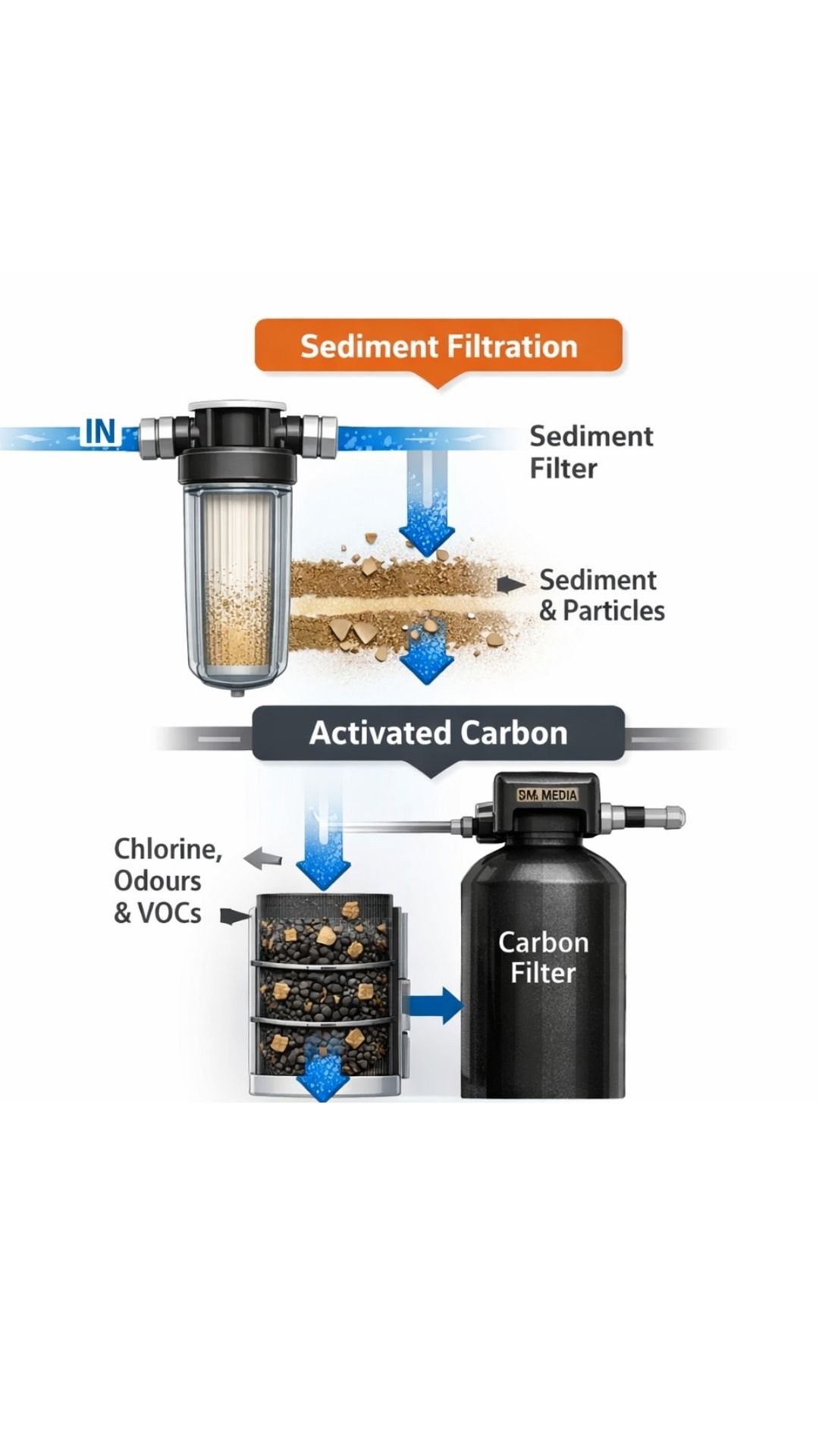
Water Treatment Systems Are Often Combined
Water treatment systems are frequently designed as part of a multi-stage process rather than a single piece of equipment. Different technologies may be combined to address several water quality concerns at the same time.
For example, a private well with iron and bacterial contamination may require both iron removal and UV disinfection. Similarly, a public water supply may benefit from a combination of carbon filtration, water softening and drinking water filtration.
The appropriate configuration depends on the water source, water quality and how the water is used within the property.
Examples of Combined Treatment Systems
| Water Source or Issue | Typical Treatment Combination |
|---|---|
| Private well with bacteria and iron | Iron Removal + UV Disinfection |
| Hard water with drinking water concerns | Water Softener + Reverse Osmosis |
| Chlorinated public water supply | Carbon Filtration + Drinking Water System |
| Sediment and iron in well water | Sediment Filtration + Iron Removal |
| Multiple water quality concerns | Whole House Filtration + Additional Treatment |
Treatment systems can be designed to improve water quality throughout the entire property, at specific points of use or both.
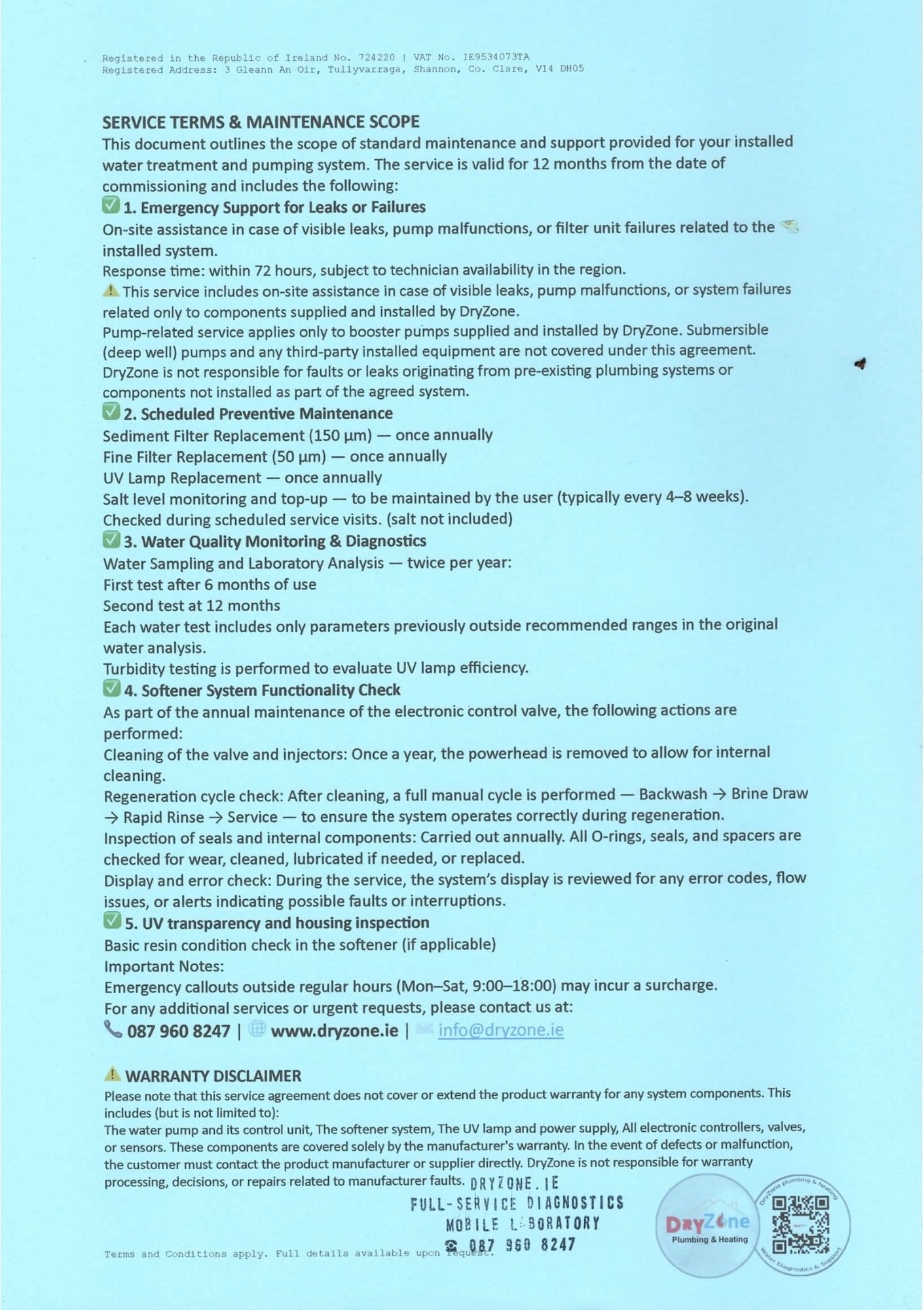
What’s Included With a Water Treatment Installation?
Selecting and installing a water treatment system is only part of the process. Long-term performance depends on correct setup, regular maintenance and ongoing verification that the system continues to operate as intended.
Depending on the type of system installed and water conditions, ongoing maintenance may include filter replacement, UV lamp replacement, performance checks and periodic water testing.
At DryZone, qualifying installations include ongoing support designed to help maintain system performance over time.
Every qualifying installation may include:
✓ Professional system design
✓ Installation & commissioning
✓ 12 months of support
✓ Filter replacement where applicable
✓ UV lamp replacement where installed
✓ Annual water testing
✓ Performance verification
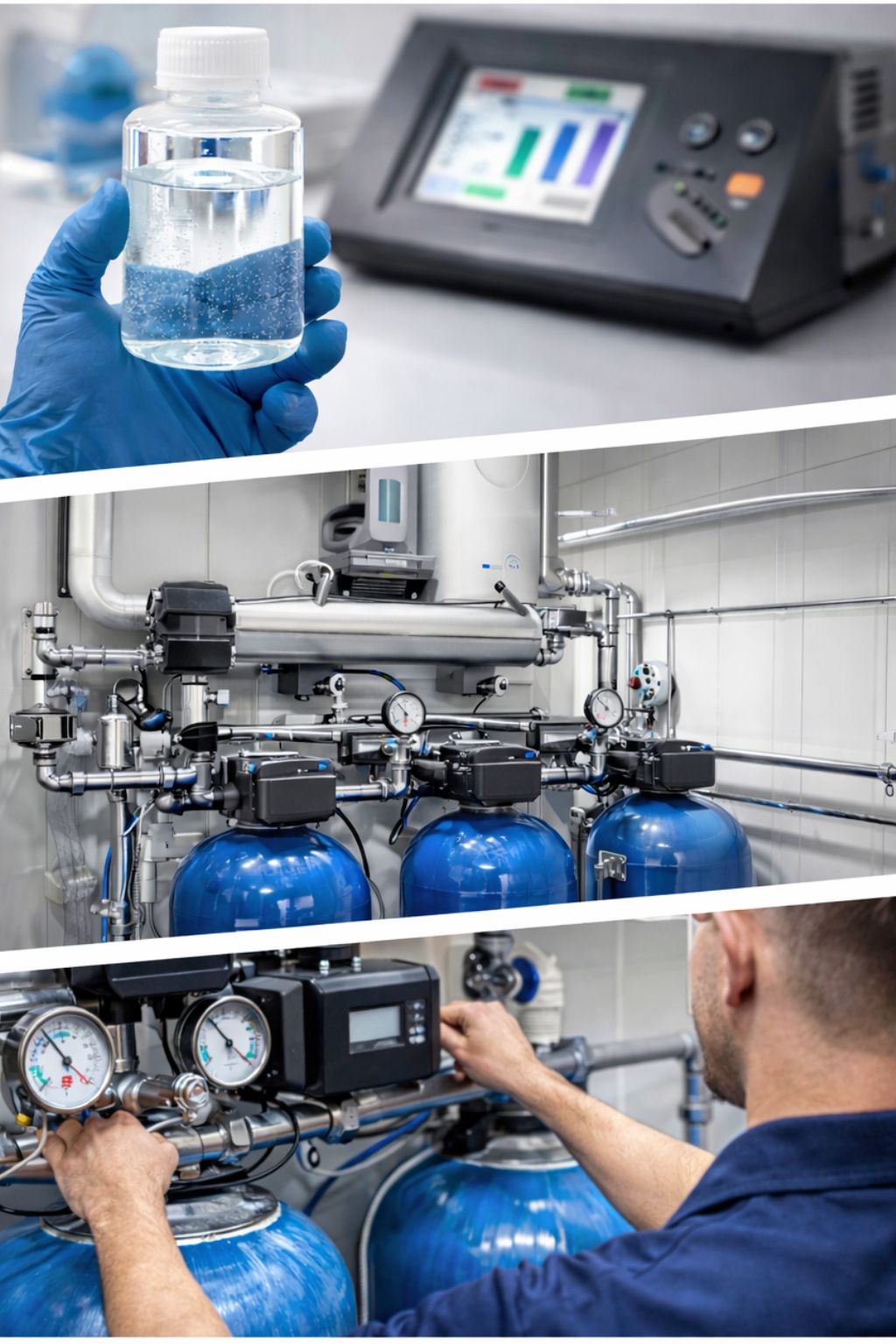
Why Choose DryZone for Water Treatment?
Choosing a water treatment system is not only about selecting equipment. It is also about understanding the water supply, identifying the underlying issue and ensuring that treatment continues to perform as expected over time.
DryZone combines water testing, treatment selection and ongoing support to help homeowners and businesses make informed decisions about their water quality.
Why Customers Choose DryZone
✓ Water testing and treatment under one provider
✓ Solutions for both private wells and public water supplies
✓ Residential and commercial water treatment experience
✓ System recommendations based on measured results
✓ Support for homes, farms and businesses
✓ Ongoing servicing and performance verification
✓ Annual water testing available following installation
Rather than recommending equipment based on assumptions, DryZone follows an evidence-based approach to water treatment, helping ensure that systems are selected according to actual water conditions.
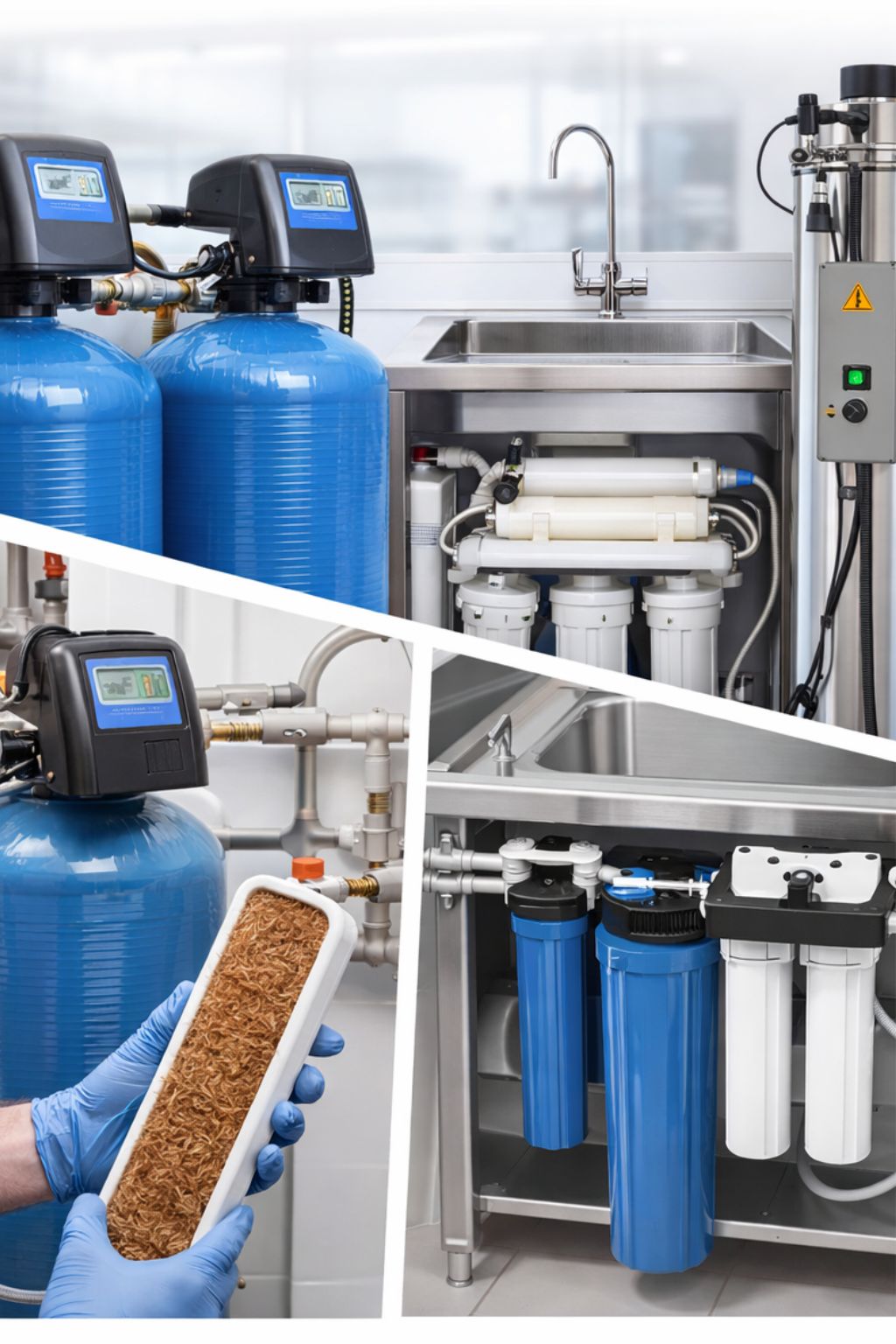
Professional Water Treatment Technologies for Homes and Businesses
We provide reliable water treatment solutions designed to suit both residential and commercial properties.
Hard water is one of the most common water quality issues in both homes and businesses, leading to limescale buildup in pipes, heating systems, and appliances. Water softeners are designed to remove calcium and magnesium, helping to protect equipment and improve overall system performance.
✔️ Reduce limescale in pipes, boilers, and appliances
✔️ Improve efficiency of heating and water systems
✔️ Extend the lifespan of equipment
✔️ Suitable for residential and commercial properties
Filtration systems are used to remove sediment, particles, and other impurities that affect water clarity and quality. These systems are often installed at the main water entry point to provide whole-property protection.
✔️ Remove sediment and suspended particles
✔️ Protect pipework and water-using equipment
✔️ Improve water clarity and consistency
✔️ Suitable for a wide range of water conditions
Iron and manganese are commonly found in groundwater and private wells. These minerals can cause staining, unpleasant taste, and buildup in plumbing systems if not properly treated.
✔️ Prevent staining on fixtures and surfaces
✔️ Improve water appearance and taste
✔️ Protect plumbing and equipment
✔️ Ideal for private well water supplies
→ Learn About Iron & Manganese Removal
Nitrates can be present in certain water sources, particularly in rural areas and private wells. Dedicated treatment systems help reduce nitrate levels and improve overall water quality for safe daily use.
✔️ Reduce nitrate levels in water
✔️ Improve water safety and quality
✔️ Suitable for private wells and rural properties
✔️ Reliable long-term solution
→ Learn About Nitrate Removal
UV disinfection systems provide chemical-free protection against bacteria and microorganisms. They are widely used where microbiological safety is a concern, especially in private water supplies.
✔️ Effective protection against bacteria and viruses
✔️ Continuous disinfection without chemicals
✔️ Works alongside filtration systems
✔️ Ideal for well water and untreated sources
The right water treatment solution depends on the specific characteristics of your water. Since many issues are not visible, professional water testing is the most reliable way to identify the problem and select the correct technology or combination of systems.
A test-based approach ensures that your investment delivers effective, long-term results — without unnecessary costs or guesswork.
• Professional Water Testing (Home & Business)
• Private Well Water Analysis
• Bacteria, Nitrate, Iron & Hardness Testing
• Pre-Installation Water Assessment
• Post-Treatment Verification Testing
• Water Softeners (Hard Water Treatment)
• Whole-Property Filtration Systems
• Iron & Manganese Removal
• Nitrate Reduction Systems
• UV Water Disinfection
• Well Disinfection (Shock Chlorination)
• Sediment & Borehole Filtration
• Bacteria Protection Systems
• Combined Treatment for Multiple Issues
• Custom Water Treatment System Design
• Professional Installation
• System Configuration for Optimal Performance
• Integration of Multiple Technologies
• Post-Installation Performance Checks
• Scheduled Servicing & System Checks
• Filter Replacement Programmes
• UV Lamp Replacement
• System Performance Monitoring
• Water Quality Re-Testing
• Long-Term Support
Serving Clare, Limerick, Galway & Tipperary
- County Clare (Shannon, Ennis, Killaloe, Kilrush, Scarriff, Tulla, Newmarket‑on‑Fergus, Sixmilebridge, Bunratty, Clarecastle, Quin , Cratloe and more)
- County Limerick (including Limerick city and surrounding areas)
- County Galway (Gort & especially the southern and eastern areas)
- County Tipperary (Nenagh, Borrisokane, and nearby)
If you’re not sure whether we serve your area, just send us a message — we’ll do our best to assist.

FAQ What Water Treatment System Do I Need?
Water testing is often the most reliable way to identify the cause of a water quality issue. Similar symptoms can have different causes, and testing helps select treatment based on measured results rather than assumptions.
Not usually. Different systems are designed to address different water quality concerns. In some cases, multiple technologies may be combined to achieve the desired water quality.
Chlorine taste and odour are commonly reduced using activated carbon filtration. The most suitable option depends on whether treatment is required for drinking water only or for the entire property.
Clear water is not necessarily free from bacteria. UV disinfection is often used for private water supplies where microbiological contamination may be present.
Service requirements vary depending on the system and water conditions. Maintenance may include filter replacement, UV lamp replacement, performance checks and periodic water testing.
In many cases, yes. Existing systems can sometimes be modified or expanded if water conditions change or additional treatment is required.
Periodic water testing and routine servicing can help confirm that a system continues to perform as intended and maintain the desired water quality.
