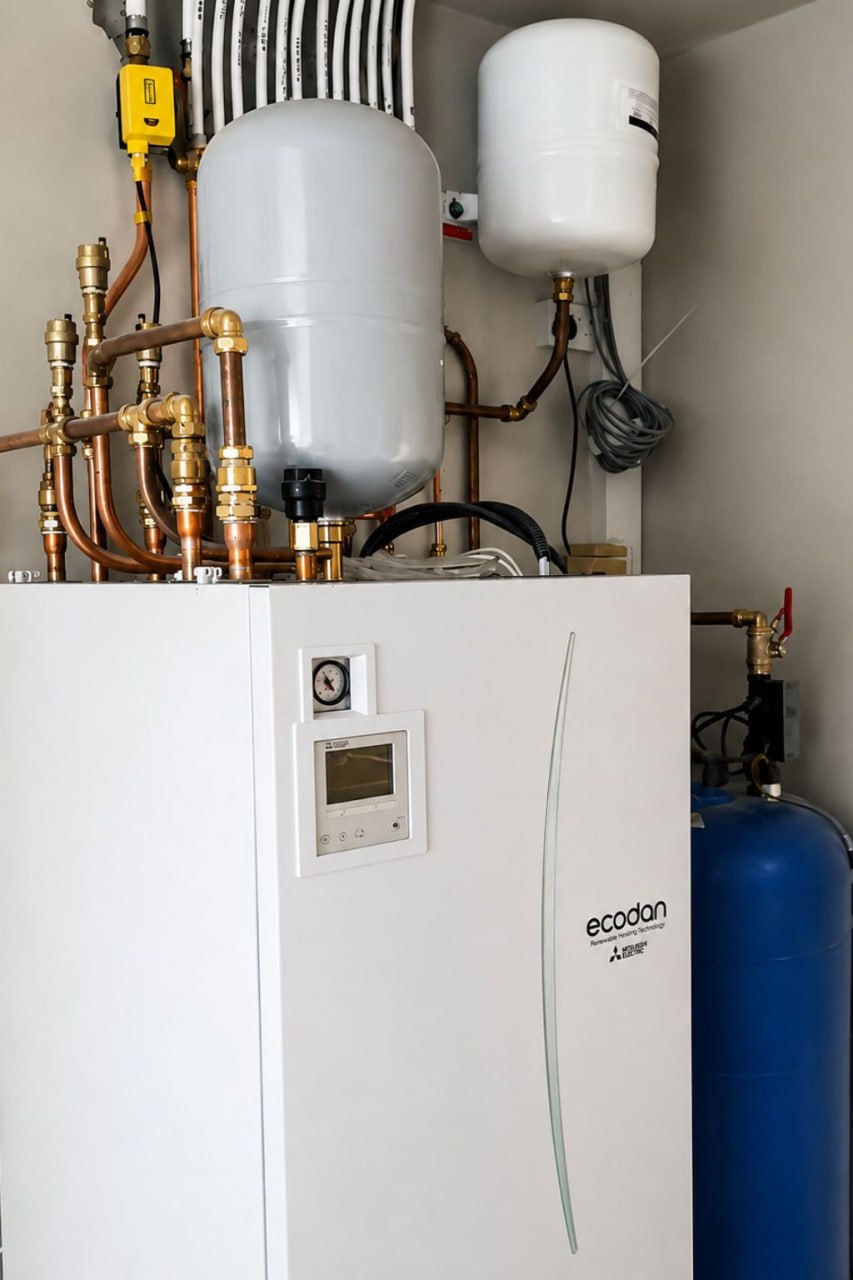
Professional Heating System Cleaning
What Is Heating System Cleaning and Why Is It Needed?
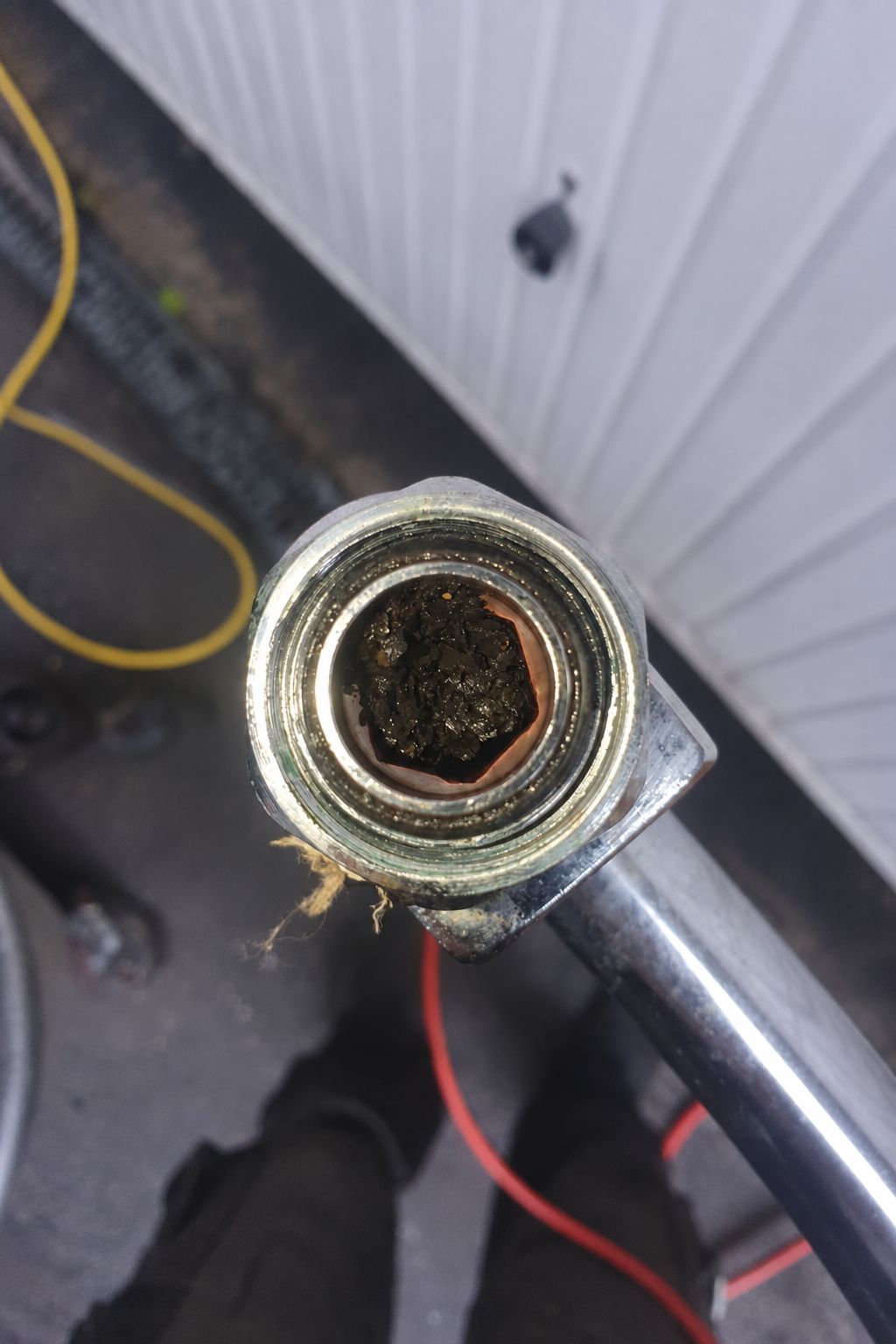
Heating system cleaning removes sludge, magnetite and other internal deposits that can build up inside radiators, pipework and other components over time.
These contaminants often develop as the heating fluid ages and corrosion occurs within metal parts of the system. Protective properties of the fluid can gradually reduce, allowing debris and corrosion products to circulate or settle in areas with slower flow.
Unlike routine heating servicing, which focuses mainly on checking and maintaining the heating equipment, system cleaning deals with contamination inside the heating circuit itself.
When deposits begin to accumulate, they can restrict circulation and interfere with effective heat distribution throughout the system.
Signs Your Heating System May Need Cleaning
Problems caused by internal contamination often appear gradually rather than as a sudden system failure.
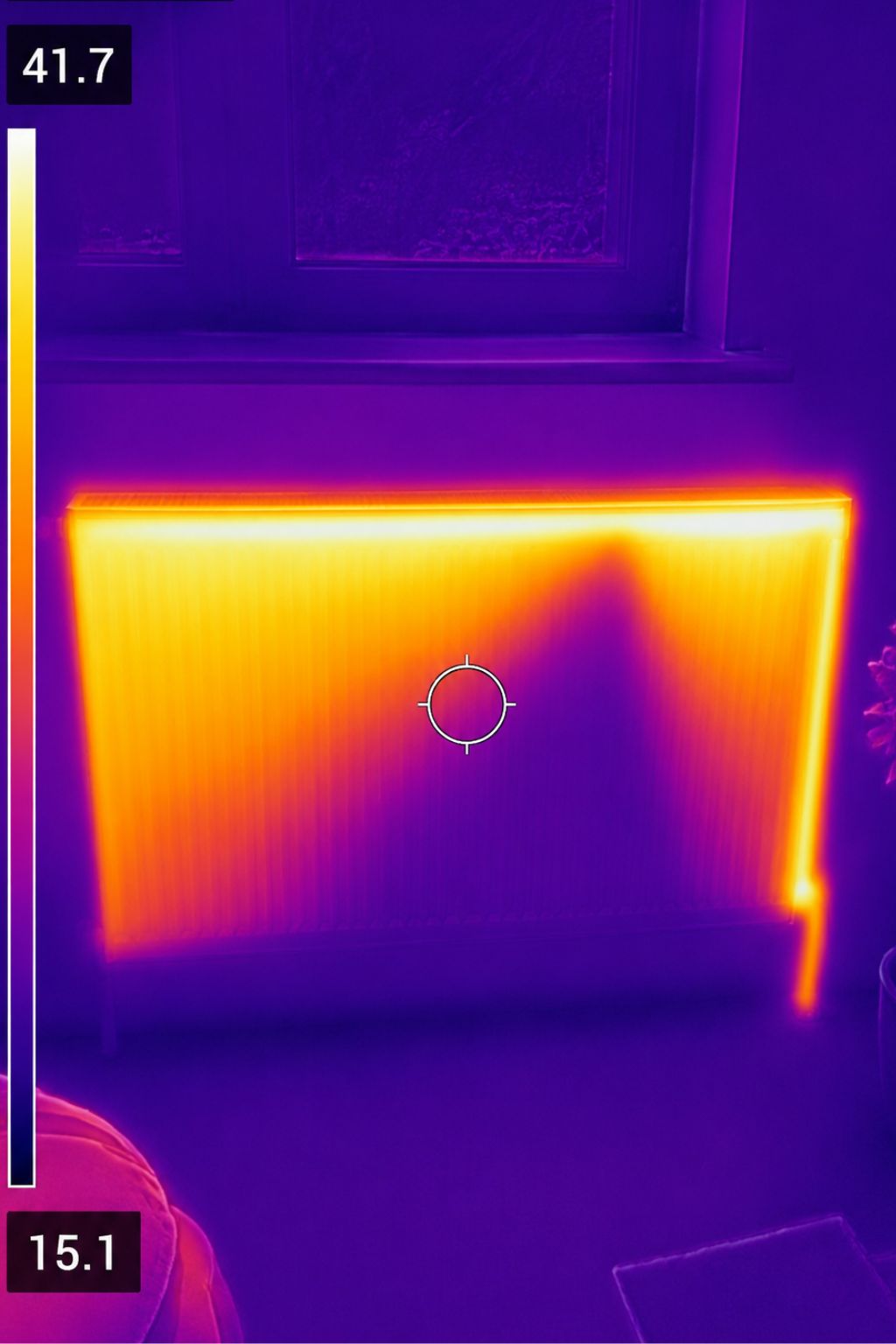
Common signs include radiators with cold areas, rooms taking longer to warm up, uneven heating across the property, unusual noises from radiators or pipework, and visibly dirty or discoloured heating fluid.
Restricted circulation can also make the system work harder to distribute heat. If several of these symptoms appear together, the condition of the heating circuit should be assessed before deciding whether cleaning is necessary.
Heating System Assessment & Cleaning Process
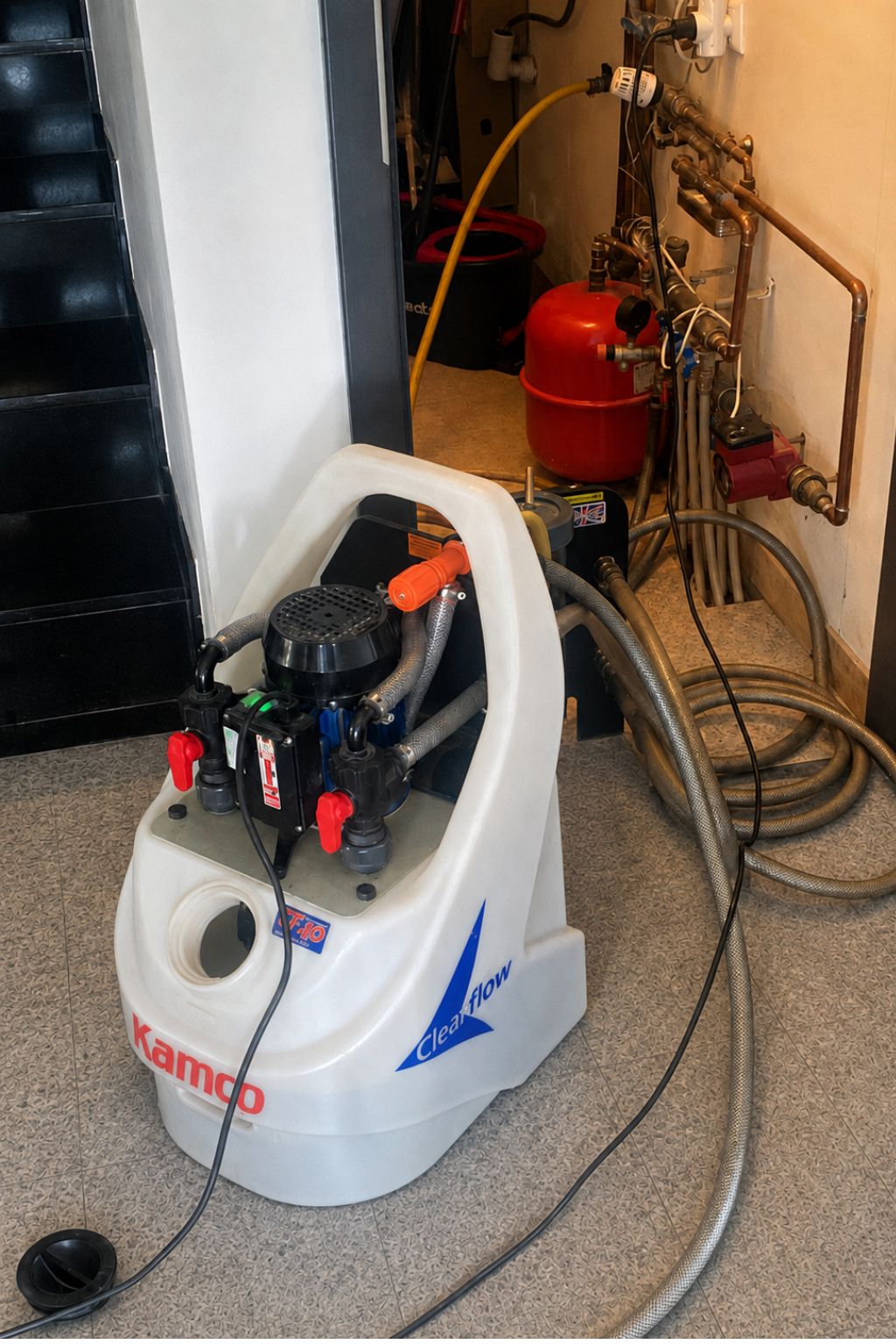
Heating Fluid Replacement
Heating system cleaning and heating fluid replacement are related, but they are not the same service.
Depending on the condition of the existing fluid and the type of system, it may be possible to retain it, partially replace it or carry out a complete refill. This decision is made as part of the system assessment rather than automatically replacing the fluid every time cleaning is performed.
Where a full replacement is required, the old fluid is removed, the circuit is flushed and the system is refilled with the appropriate heating fluid. The correct level of corrosion inhibitor is then added to provide ongoing protection after cleaning.
Systems using glycol or other specialist fluids require additional consideration, as the concentration and condition of the fluid must be suitable for the particular installation.
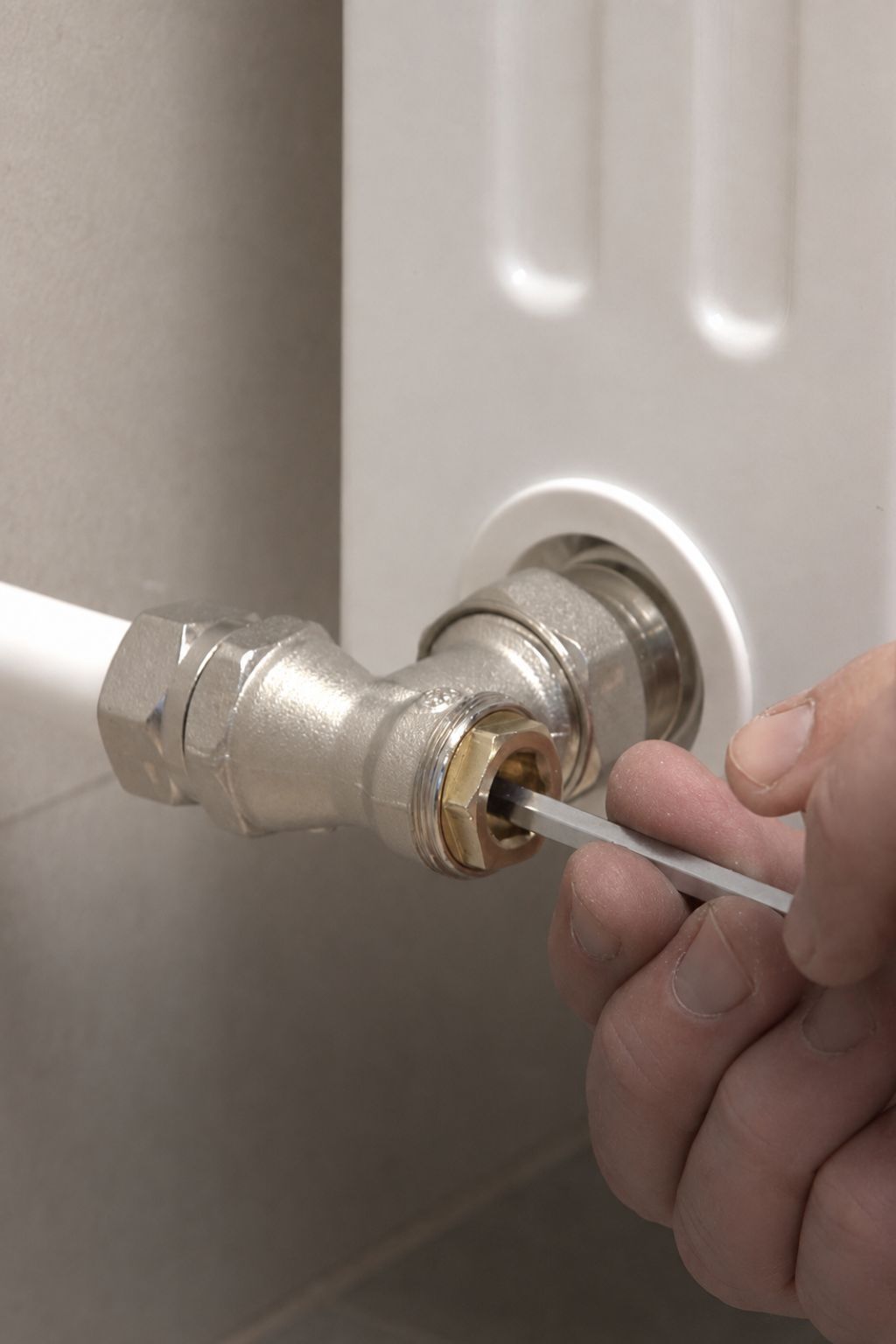
Systems We Clean
Heating system cleaning can be carried out across a wide range of installations, but the approach needs to match the design and operating conditions of each system.
We work with:
- Radiator heating systems – including systems affected by sludge, magnetite and restricted circulation.
- Underfloor heating systems – where contamination or poor flow can affect individual loops and overall heat distribution.
- Heat pump heating systems – where clean, unrestricted circulation is especially important for low-temperature operation.
- Oil-fired heating systems – including older systems where internal deposits may have built up over many years.
- Hybrid heating systems – combining more than one heat source, where different components and operating temperatures need to be considered during cleaning.
The cleaning method is selected according to the system rather than applying the same procedure to every installation.
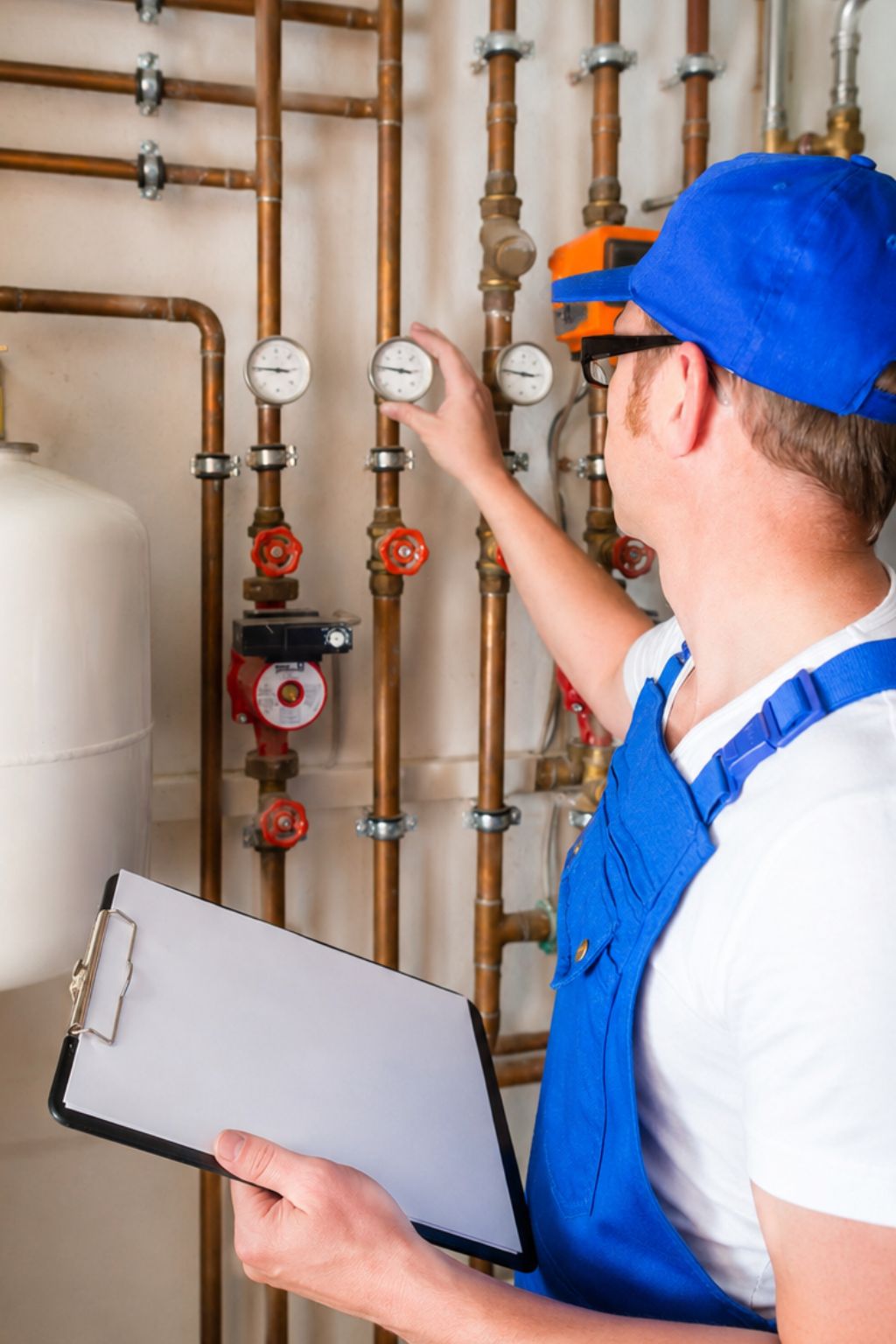
When Heating System Cleaning Is NOT Required
Not every heating problem is caused by contamination, and cleaning should not be recommended simply because a system is old or performing poorly.
Problems such as incorrect system balancing, faulty controls, pump issues, trapped air, undersized radiators or problems with the heat source itself may produce symptoms that look similar to restricted circulation.
In these cases, cleaning may provide little or no benefit because it does not address the actual cause of the problem.
This is why assessment comes first. The purpose is to determine whether contamination is genuinely affecting the system and recommend cleaning only when there is a clear technical reason to do so.
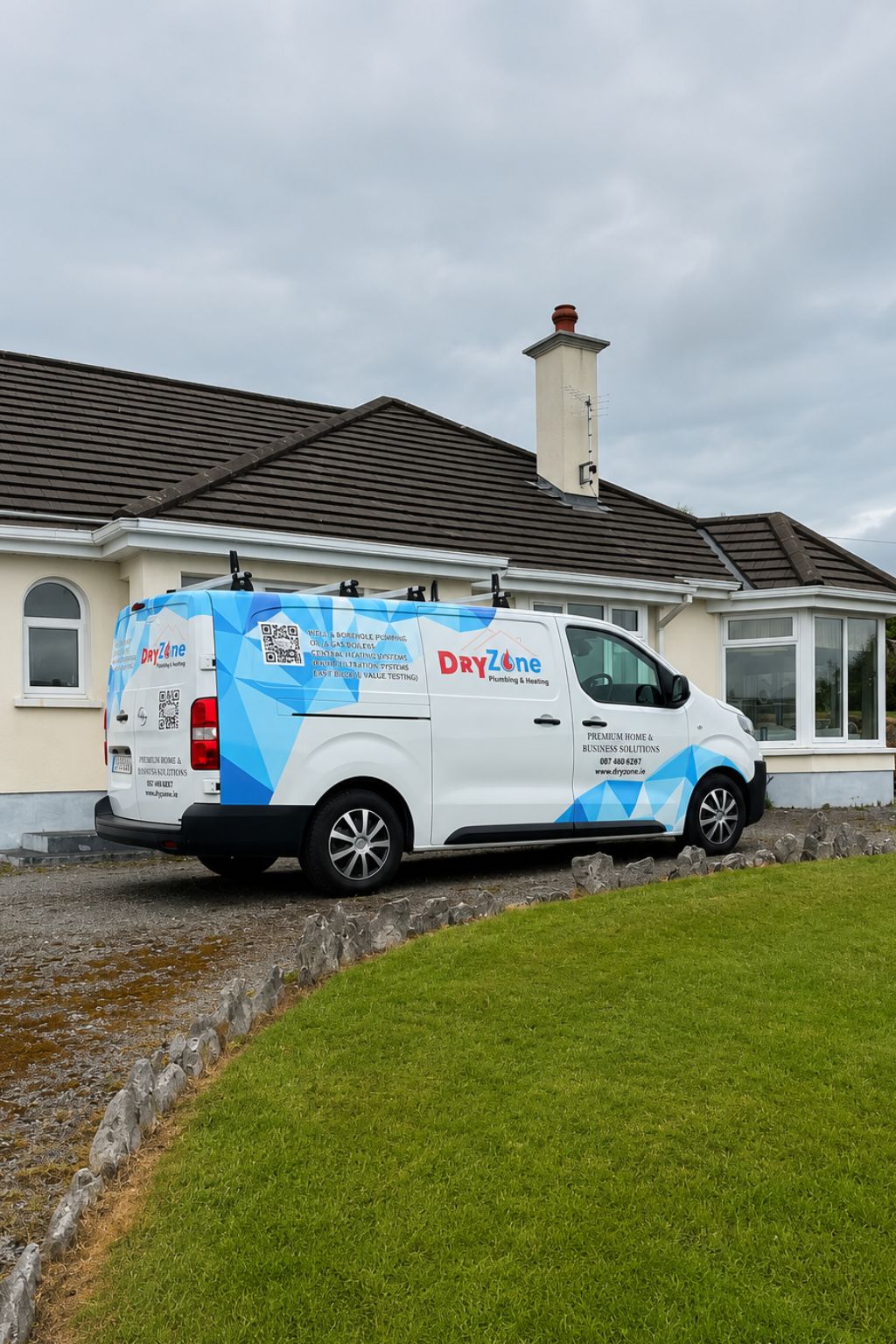
Why Choose DryZone for Heating System Cleaning?
DryZone approaches heating system cleaning as part of a wider system restoration process, not simply as a one-off power flush.
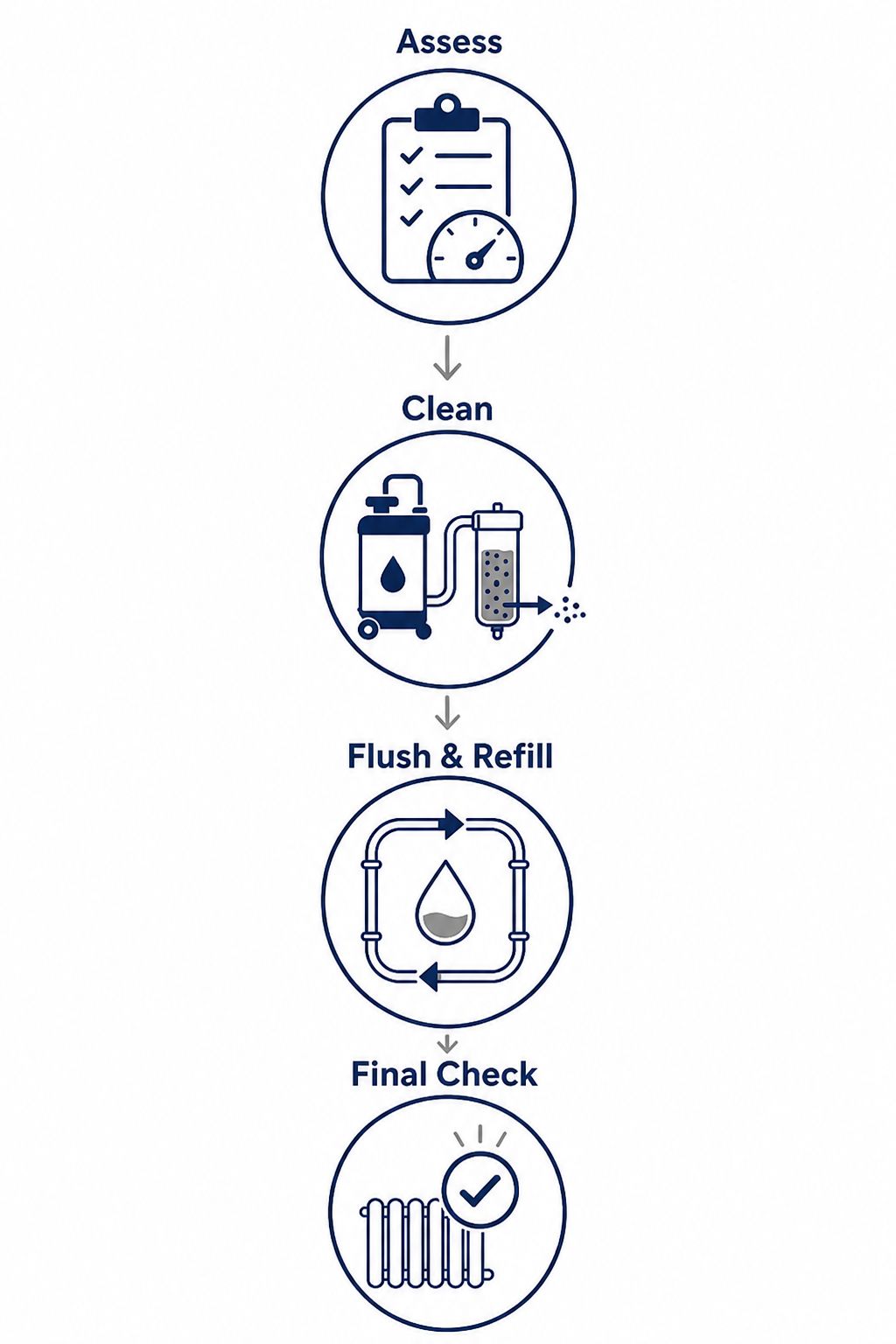
Before cleaning begins, we assess the heating system to understand what is actually affecting circulation and performance. This can include checking system pressure, radiator temperatures, circulation, pump operation, expansion vessel condition, automatic air vents and other components that may produce symptoms similar to contamination.
Where the condition of the heating fluid is relevant, we can also assess the fluid itself. This helps us understand whether corrosion, degraded inhibitor protection, glycol condition or other fluid-related issues may be contributing to the condition of the system.
If cleaning is required, the work can include a full system power flush, chemical cleaning, sequential flushing of individual circuits or radiators, flow reversal and magnetic filtration during the cleaning process. The method is selected according to the system rather than applying the same procedure to every installation.
Cleaning is followed by a fresh-water flush and, where required, complete replacement of the heating fluid. The system can then be refilled with correctly treated water or an appropriate glycol mixture, with corrosion inhibitor added where necessary.
But the work does not end when the flushing machine is disconnected.
After cleaning, DryZone can recommission the heating system by removing trapped air, restoring the correct operating pressure and checking circulation throughout the system. Where required, radiator lockshield valves can be adjusted, flow rates optimised and temperature differences across the system checked to improve hydraulic performance.
We can also verify the results by checking radiator temperatures, system flow, operating pressure, thermal performance and signs of leakage.
Depending on the level of service required, this can be supported by an engineering report, before-and-after photographs, thermal imaging records and heating fluid test results.
Heating System Service Zones
DryZone is based in Shannon, Co. Clare, and provides professional heating system cleaning and power flushing across County Clare and County Limerick.
If you’re not sure whether we serve your area, just send us a message—we’ll do our best to help you.

FAQs
Common signs include cold areas on radiators, uneven heating, slow warm-up, unusual system noise and visibly dirty heating fluid. These symptoms can also have other causes, so the system should be assessed before cleaning is recommended.
Not necessarily. Power flushing is one method of cleaning a heating system, but it is not suitable or required in every case. The cleaning approach should depend on the type, age and condition of the system.
There is no fixed interval that suits every installation. Cleaning should be based on system condition, fluid quality and evidence of contamination rather than carried out automatically every few years.
It can help where cold areas are caused by sludge, magnetite or restricted circulation. If the cause is trapped air, poor balancing, a valve problem or another fault, cleaning alone may not solve it.
No. The existing fluid should be assessed first. Depending on its condition and the cleaning work required, it may be retained, partially replaced or completely replaced.
Yes. Underfloor heating circuits can develop flow and contamination problems, but they need to be approached differently from conventional radiator systems because of their pipework layout and individual loops.
Yes. Heat pump systems rely on effective circulation and can be cleaned where contamination is affecting the heating circuit. The method and fluid used must be appropriate for the particular installation.
Cleaning can improve circulation and heat distribution where contamination is restricting system performance. However, energy consumption also depends on factors such as controls, system balancing, insulation, heat loss and the condition of the heating appliance, so a specific reduction cannot be guaranteed.